Go Back
CMS(1)
Page 2
arXiv:2607.23352
CMS-HIG-25-003
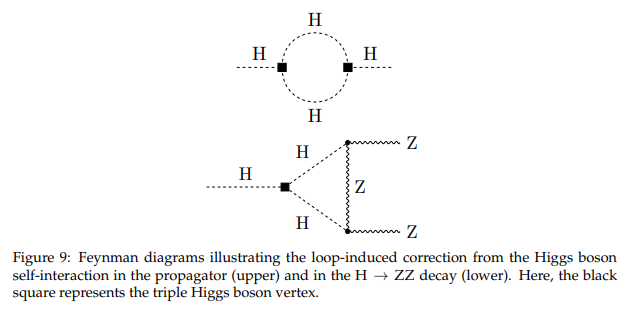
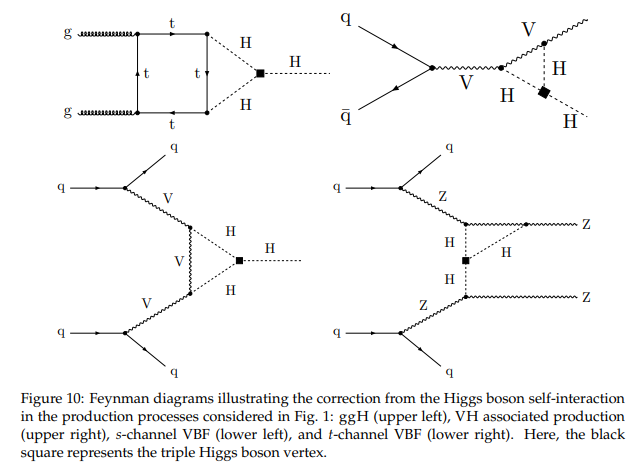
Measurements of Higgs boson production in the off-shell region are presented, using the four-lepton decay channel. Data from proton-proton collisions at the CERN LHC, collected by the CMS experiment and corresponding to an integrated luminosity of 138 fb−1 at a center-of-mass energy of 13 TeV, are utilized. The first direct test of composite Higgs boson models is performed, with a lower limit on the compositeness scale ΛH set at 870 GeV at the 95% confidence level. Tests of gluon-fusion production within the standard model effective field theory framework are performed. The first constraint on the Higgs boson self-coupling in the off-shell region is obtained. By combining on- and off-shell measurements, the analysis sets the tightest constraints to date on light-quark Yukawa couplings, while relaxing assumptions such as the bound on the Higgs boson coupling to vector bosons, thereby providing more model-independent results. Constraints on the Higgs boson width are provided while accounting for a range of beyond-the-standard-model effects, including both light and heavy particles in the gluon-fusion production loop, as well as modified couplings to vector bosons. A combined analysis of the H→ZZ and PH→WW channels is performed to improve sensitivity to the Higgs boson width, yielding ΓH = 5.1 +2.0 −1.8 MeV. The scenario of no off-shell Higgs boson production is excluded at a confidence level exceeding 5 standard deviations.
CMS(2)
Page 4
arXiv:2607.25653
CMS-SMP-25-005
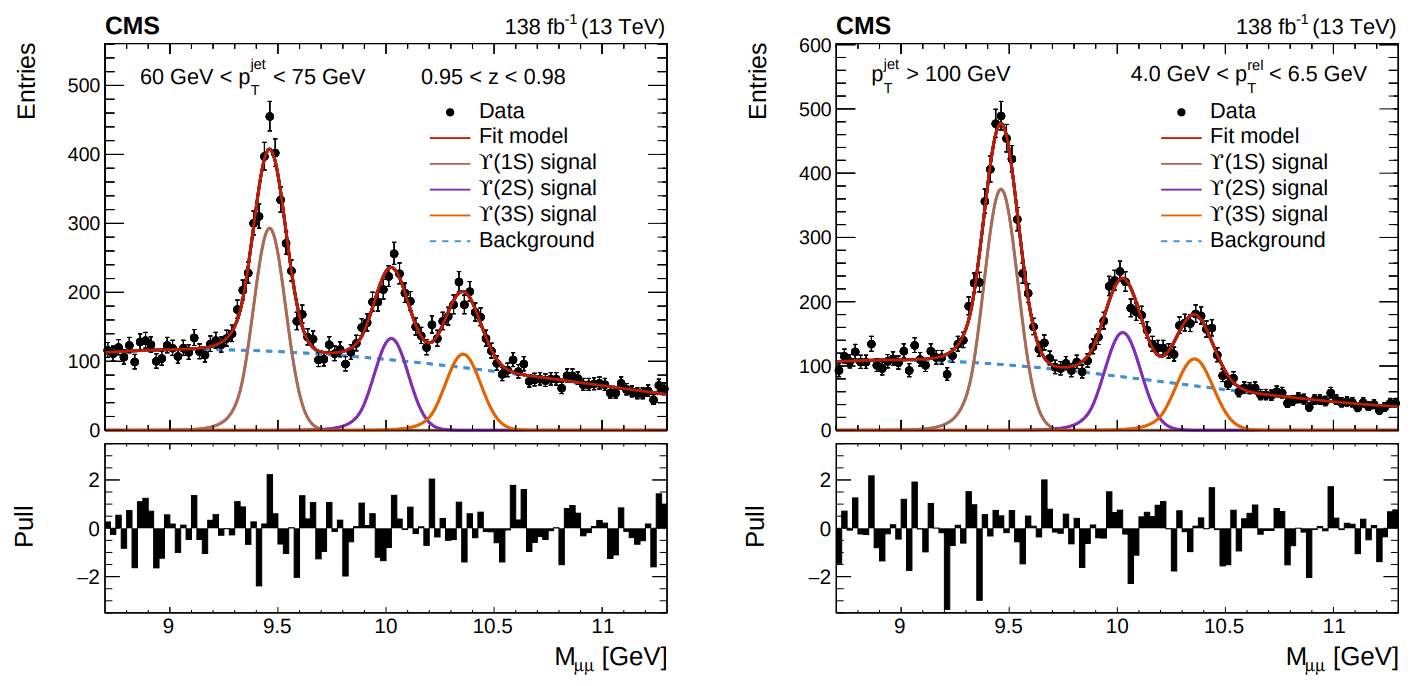
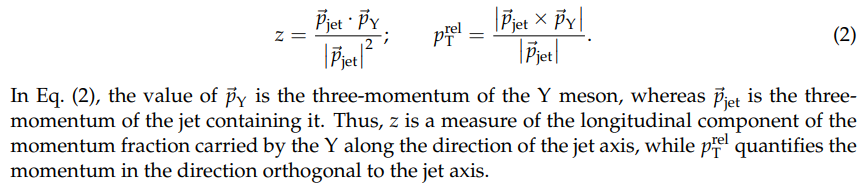
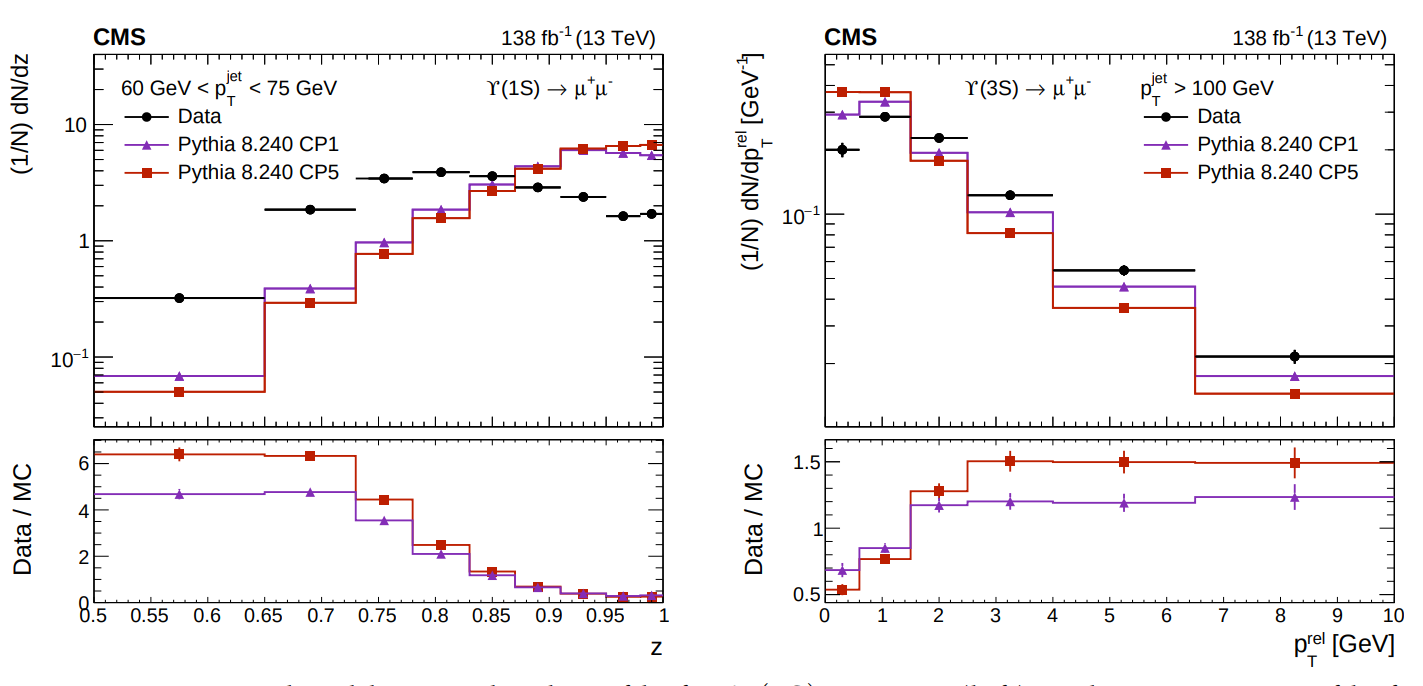
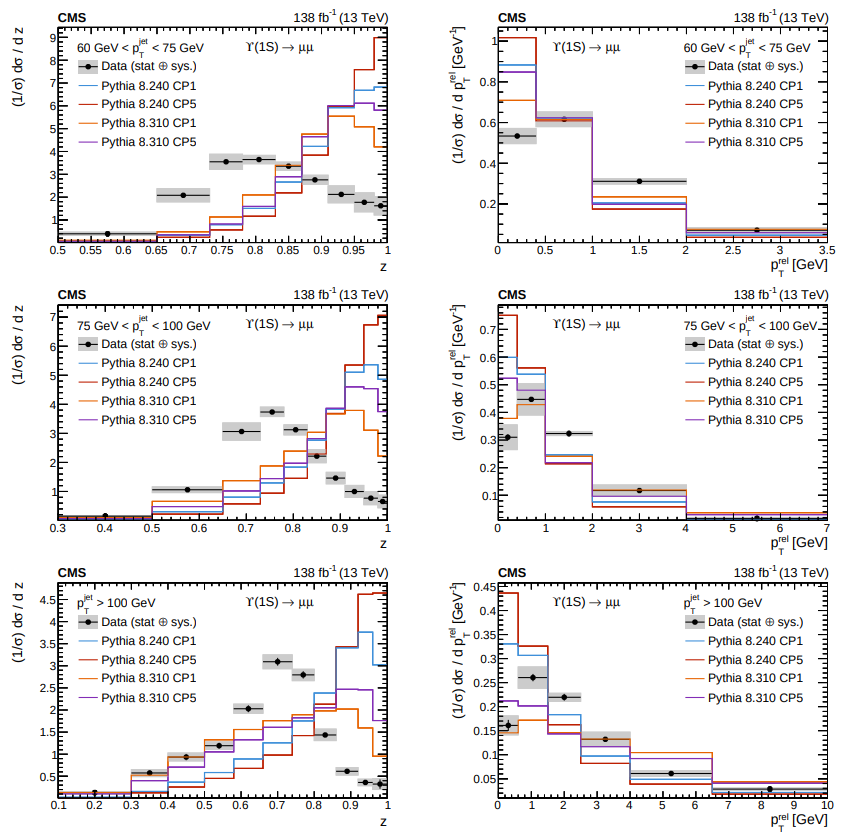
A measurement of the fragmentation properties of jets containing Υ(nS) mesons using proton-proton collision data at √s = 13 TeV, corresponding to an integrated luminosity of 138 fb−1, is presented. The Υ(nS) mesons associated with jets are reconstructed via their decays producing pairs of oppositely charged muons. The longitudinal and transverse projections of the momenta of the Υ(nS) mesons along the momenta of the corresponding jets are studied. The results are compared with Monte Carlo predictions, including recent developments in the modelling of quarkonia production in parton showers. The description of the data by these Monte Carlo predictions is found to be unsatisfactory, leaving room for improvements in the modelling of such processes.
CMS(3)
Page 8
arXiv:2607.28396
CMS-HIG-24-007
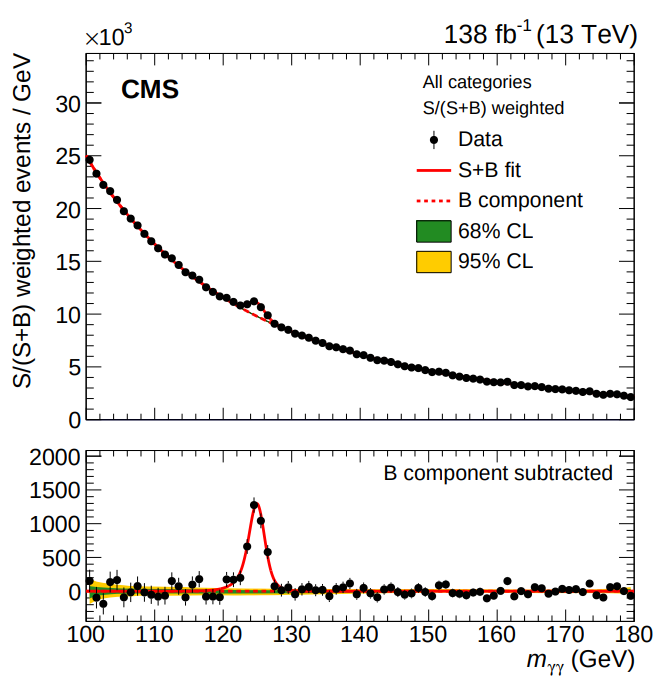
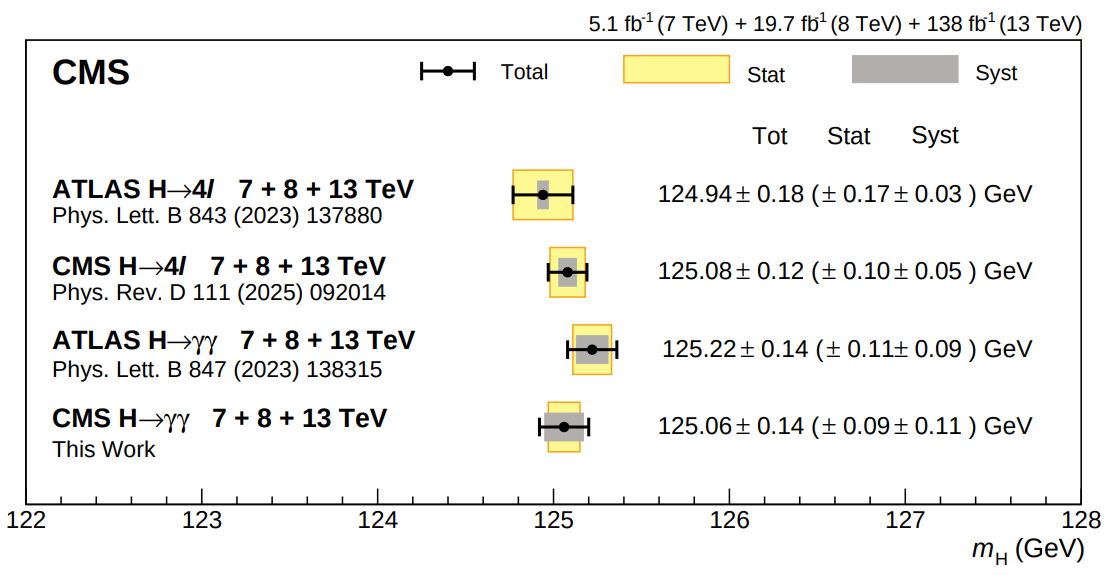
A measurement of the Higgs boson mass in the diphoton decay channel is performed using proton-proton collision data at a center-of-mass energy of 13 TeV. The data set recorded with the CMS detector between 2016 and 2018 is used, corresponding to an integrated luminosity of 138 fb−1. A refined detector calibration and new analysis techniques are employed to improve the precision of the results compared to earlier measurements. The Higgs boson mass is measured to be mH = 125.13 ± 0.15 GeV = 125.13 ± 0.10 (stat) ± 0.12 (syst) GeV.
In addition, a combination with the mass measurement at center-of-mass energies of 7 and 8 TeV in the diphoton final state is performed resulting in
mH = 125.06 ± 0.14 GeV = 125.06 ± 0.09 (stat) ± 0.11 (syst) GeV.
Expt(1)
Page 10
arXiv:2607.28334
Search for high-mass dilepton resonances in pp collisions at √s=13.6 TeV combined with 13 TeV results using the ATLAS detector
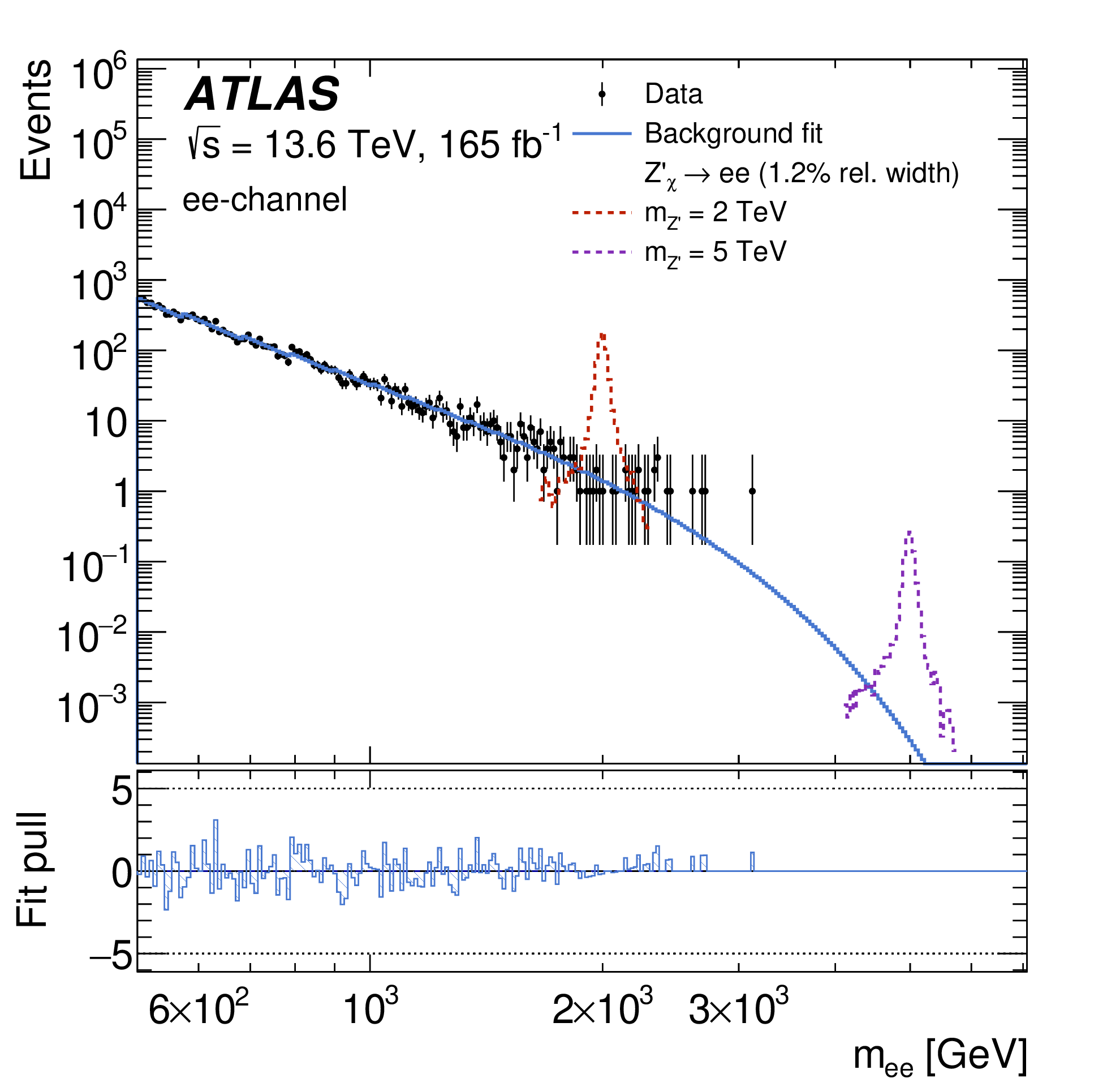
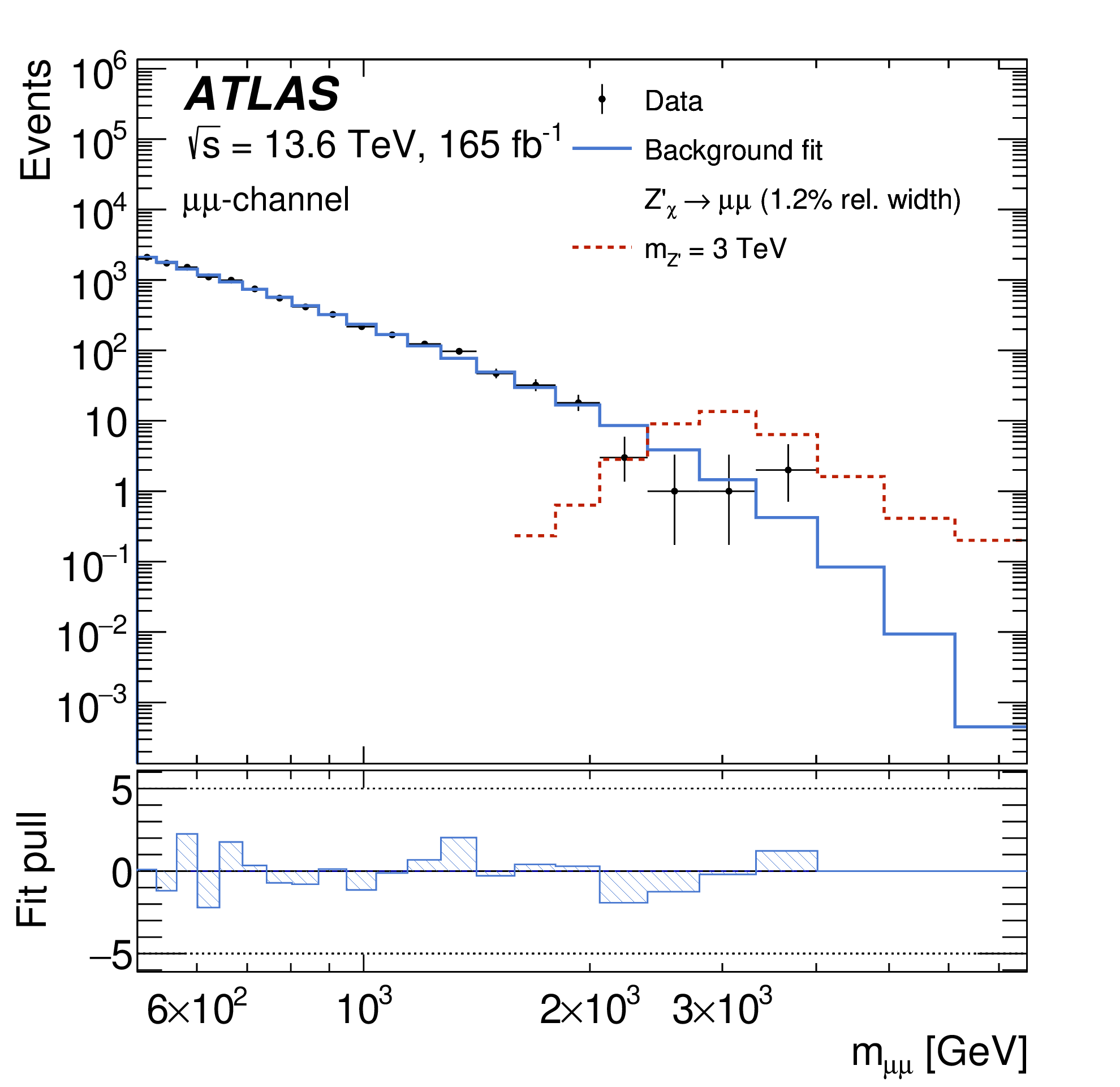
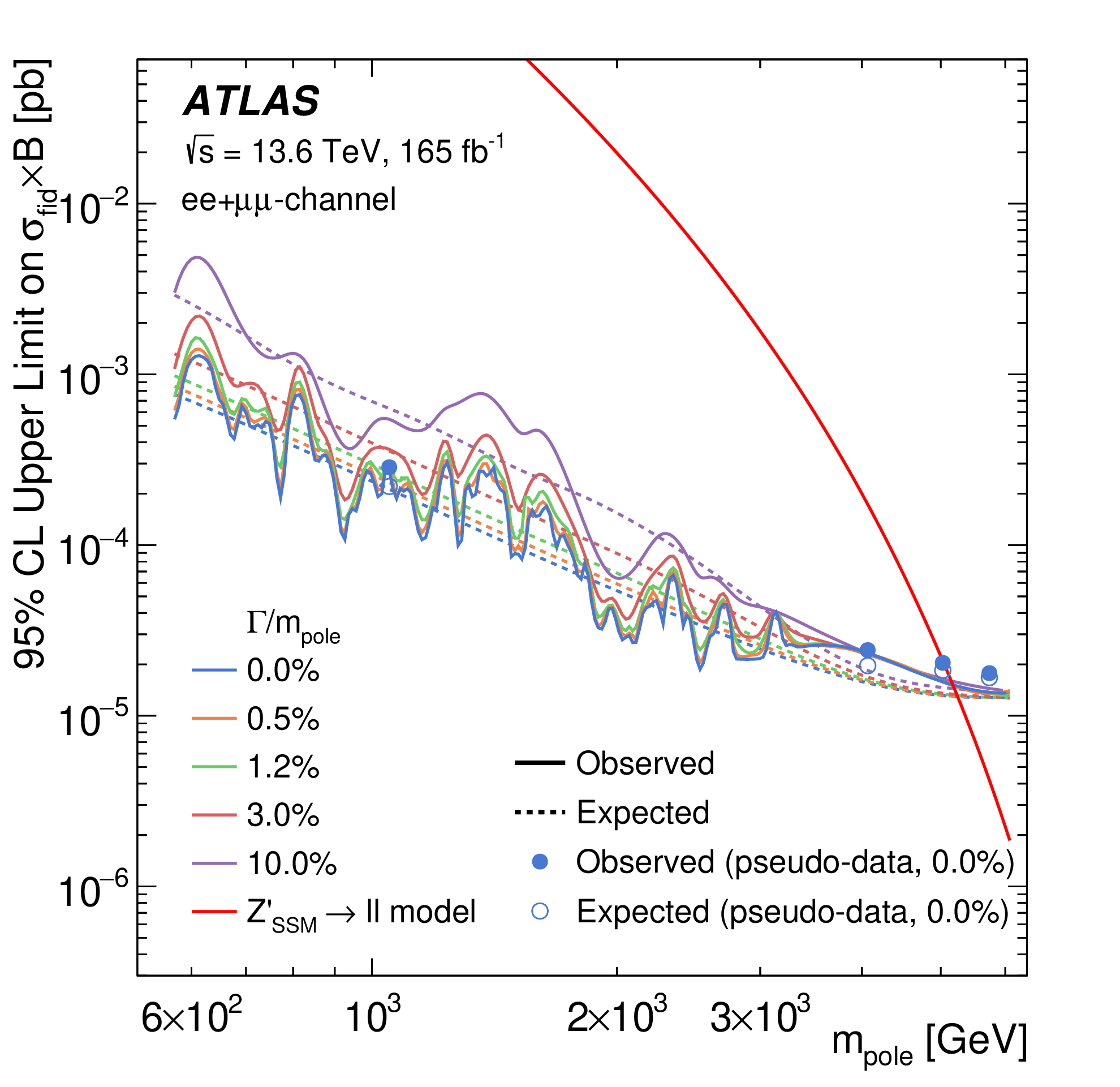
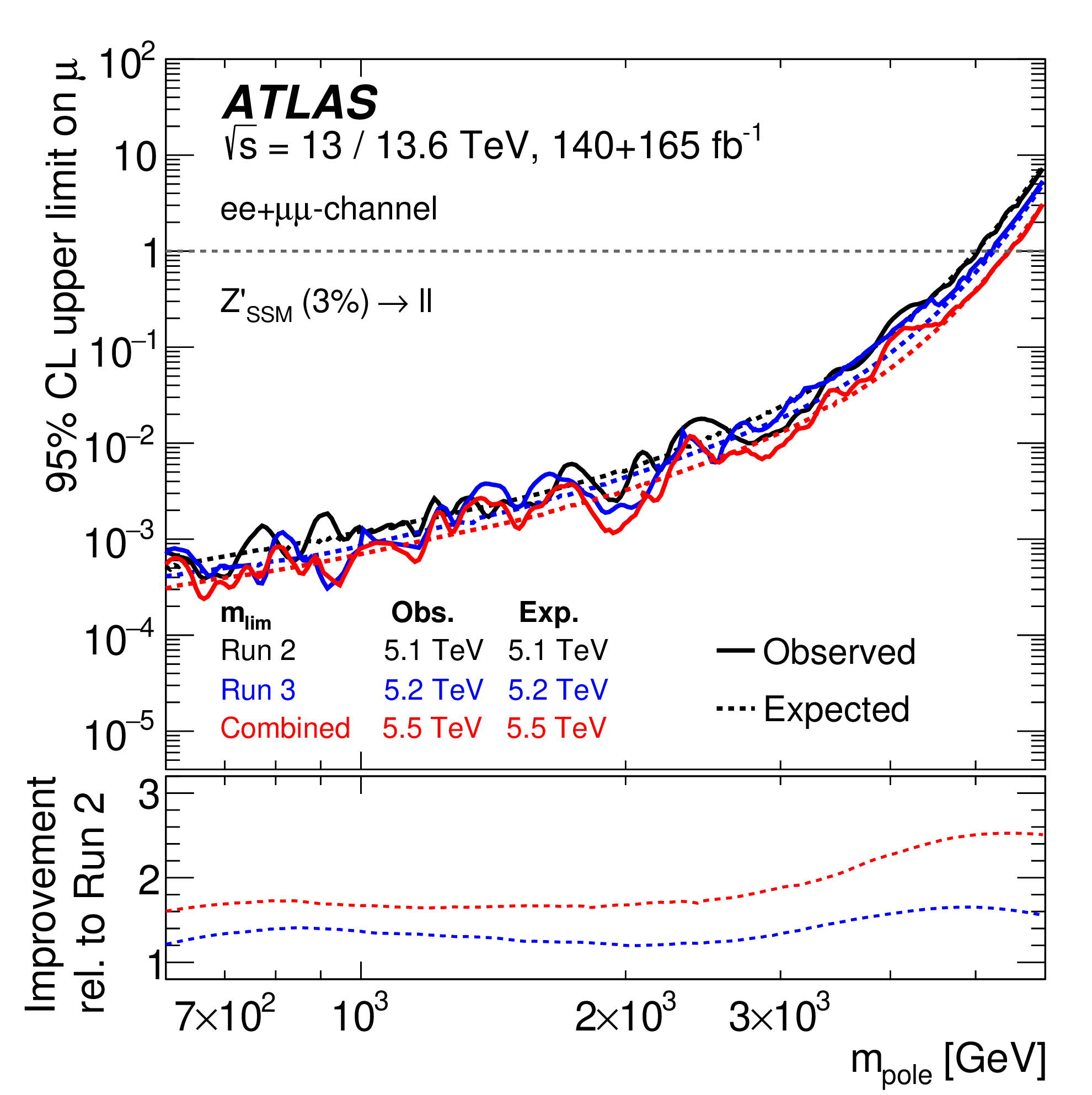
A search for spin-1 ee and μμ resonances in the high-mass range is presented. Two proton-proton (pp) collision datasets recorded by the ATLAS detector at CERN's Large Hadron Collider are utilised. A search is first performed using a dataset recorded at a center-of-mass energy of 13.6 TeV between 2022 and 2024, corresponding to an integrated luminosity of 165 fb−1. The results of this search are subsequently statistically combined with results using 140 fb−1 of data recorded between 2015 and 2018 at 13 TeV. The dilepton invariant mass spectrum is fitted with a functional form to model the contribution from Standard Model background processes. A generic spin-1 signal shape is used to determine the significance of observed deviations from the background expectation. No significant deviation is observed, therefore upper limits are placed at the 95% confidence level on the fiducial cross-section times branching ratio for a spin-1 resonance with various width hypotheses, individually for ee, μμ final states and for their combination. From the combined 13 TeV and 13.6 TeV results, mass limits are extracted for various benchmark model bosons, including a Z′SSM (5.5 TeV), Z′χ (5.1 TeV) and Z′ψ (4.8 TeV). These results represent the most stringent limits to date on high-mass dilepton resonances on the considered Z′ models.
Page 11
arXiv:2607.28334
Search for high-mass dilepton resonances in pp collisions at √s=13.6 TeV combined with 13 TeV results using the ATLAS detector
Page 12
arXiv:2607.28334
Search for high-mass dilepton resonances in pp collisions at √s=13.6 TeV combined with 13 TeV results using the ATLAS detector
Expt(2)
Page 13
arXiv:2607.28484
Search for Lorentz-boosted di-τ resonances produced in association with top quark pairs in √s=13 TeV pp collisions with the ATLAS detector
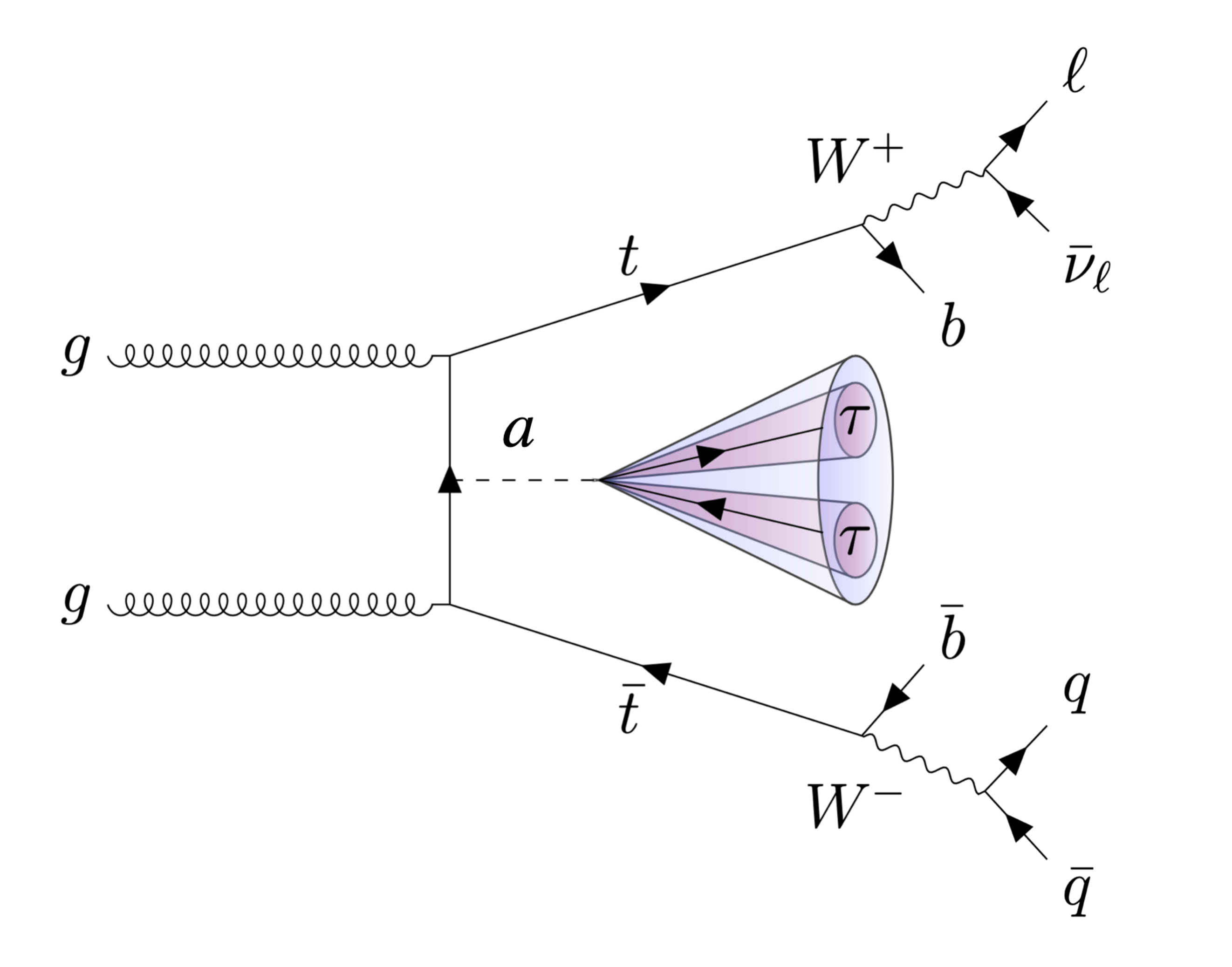
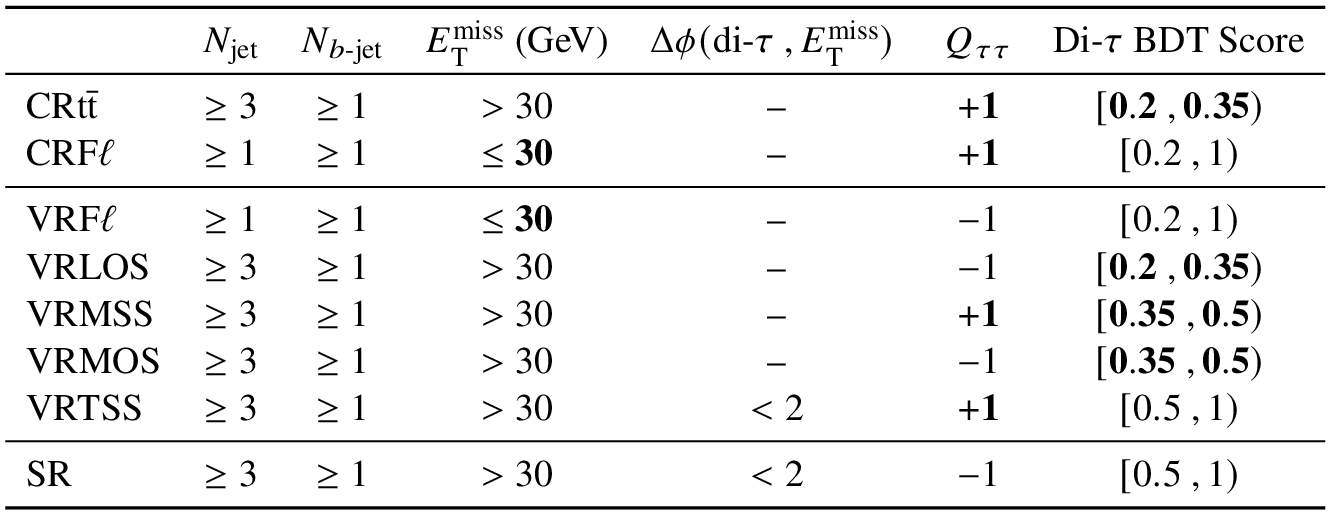
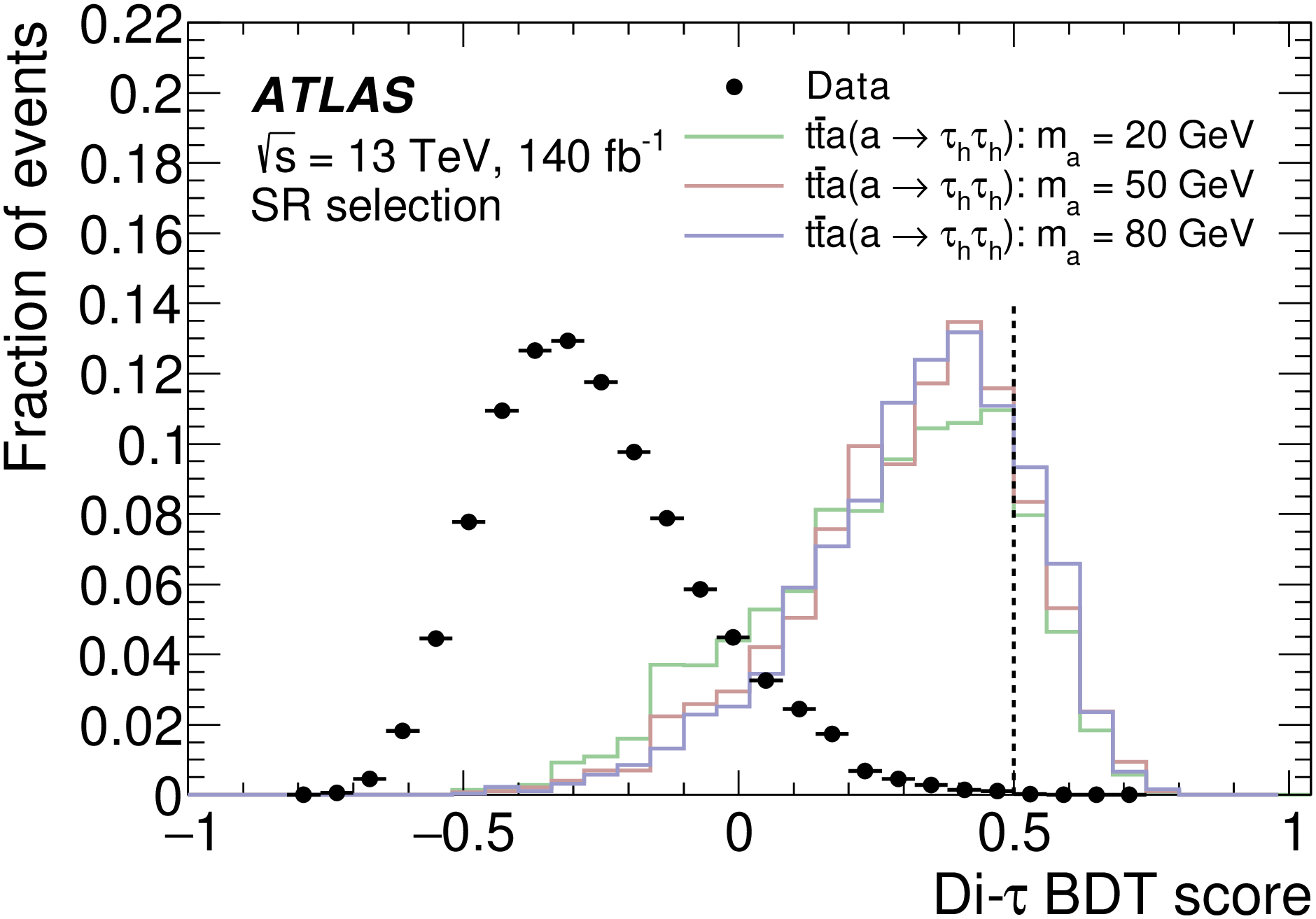
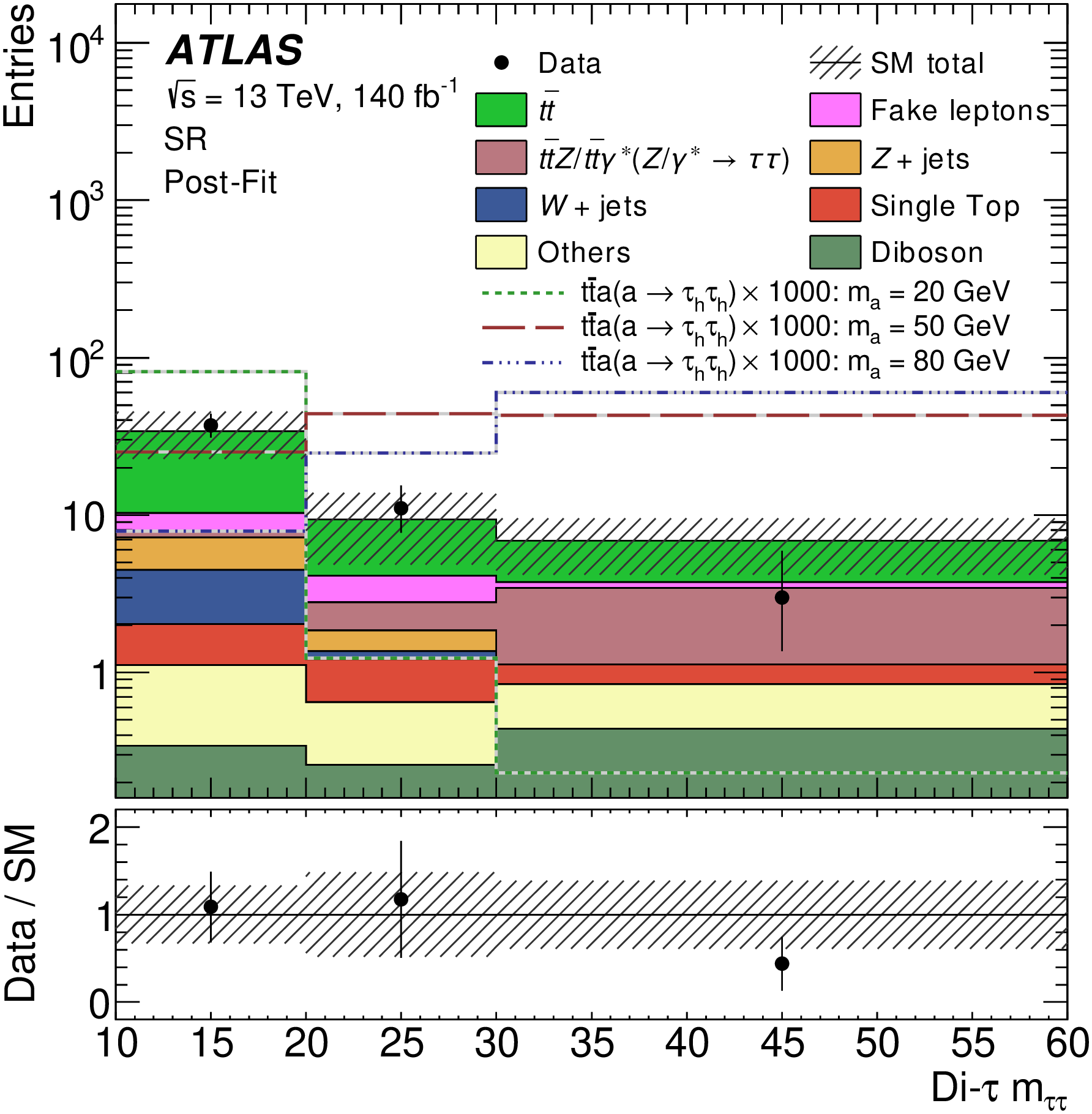
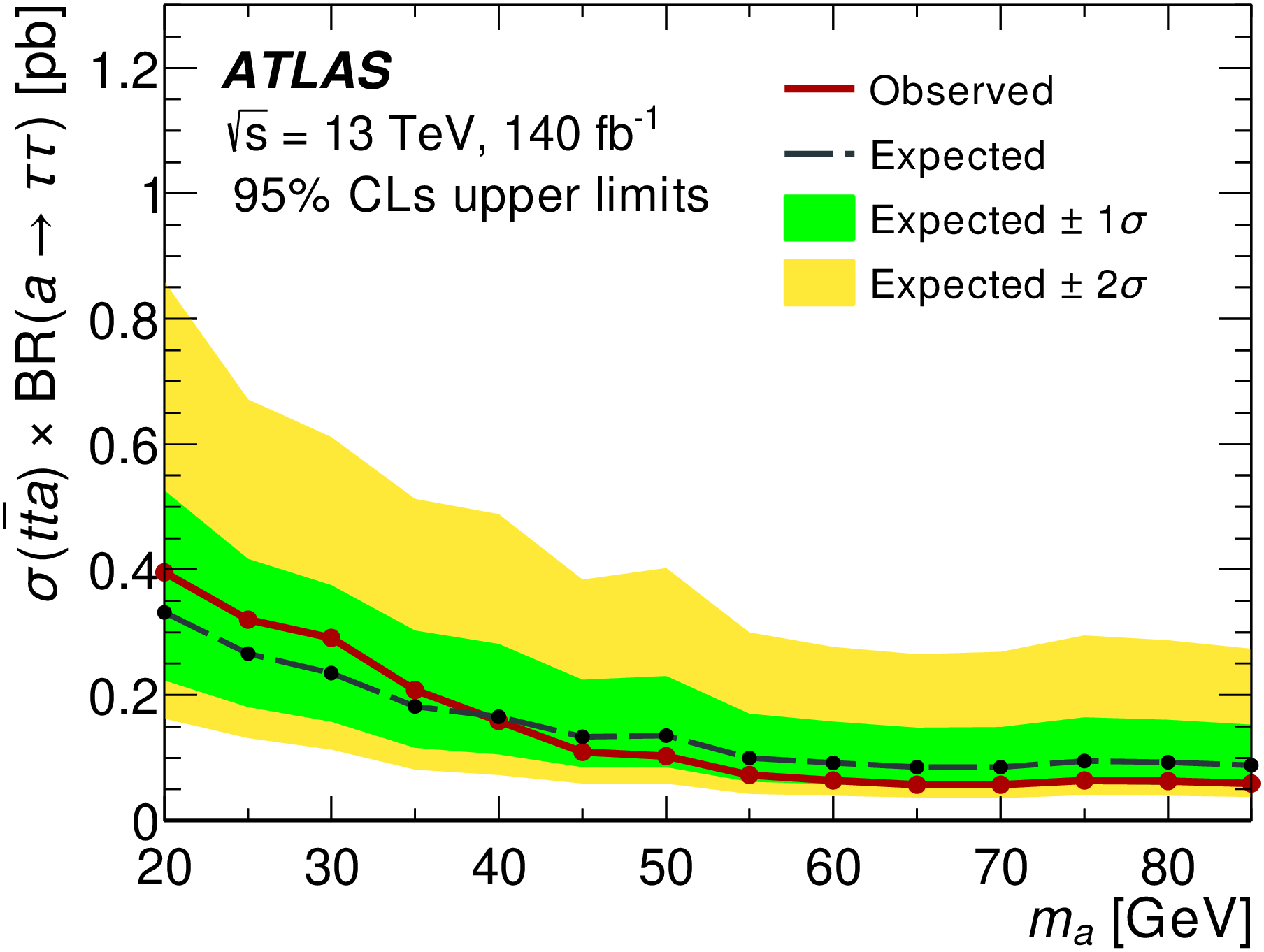
A search for a Lorentz-boosted pseudoscalar resonance 𝒂 in the mass range between 20 GeV and 85 GeV, produced in association with a top-antitop quark pair and decaying into a τ-lepton pair, is presented. Both τ-leptons are reconstructed in the hadronic decay mode. The boosted production of a results in a small angular separation between its decay products, requiring the use of dedicated boosted di-τ objects with custom reconstruction, energy calibration, and identification procedures. The analysis uses proton-proton collision data at a centre-of-mass-energy of √s=13 TeV collected with the ATLAS detector at the Large Hadron Collider, corresponding to an integrated luminosity of 140 fb−1. No significant deviation is observed over the expected Standard Model background, and a model independent upper limit of 0.19 fb is placed at the 95% confidence level on the visible cross-section. Limits on σ(tt𝒂)×BR(𝒂→ττ) are also obtained for a Two-Higgs-Doublet Model signal scenario, ranging from 0.4 pb at m𝒂=20 GeV to 0.05 pb at m𝒂=85 GeV.
Page 14
arXiv:2607.28484
Search for Lorentz-boosted di-τ resonances produced in association with top quark pairs in √s=13 TeV pp collisions with the ATLAS detector
Page 15
arXiv:2607.28484
Search for Lorentz-boosted di-τ resonances produced in association with top quark pairs in √s=13 TeV pp collisions with the ATLAS detector
Expt(3)
Page 16
arXiv:2607.27307
Search for heavy Majorana neutrinos in vector boson scattering with τ-lepton final states with the ATLAS detector
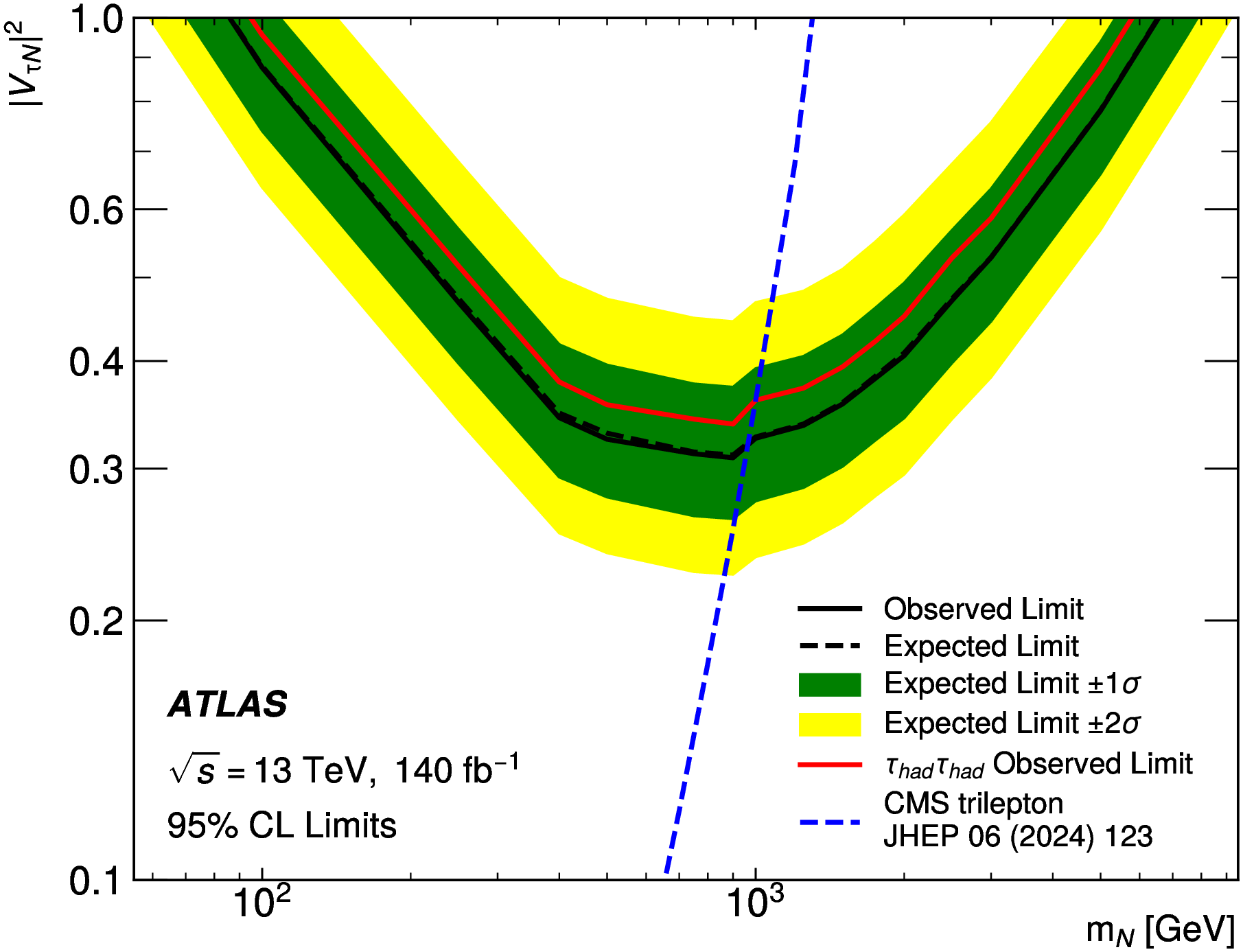
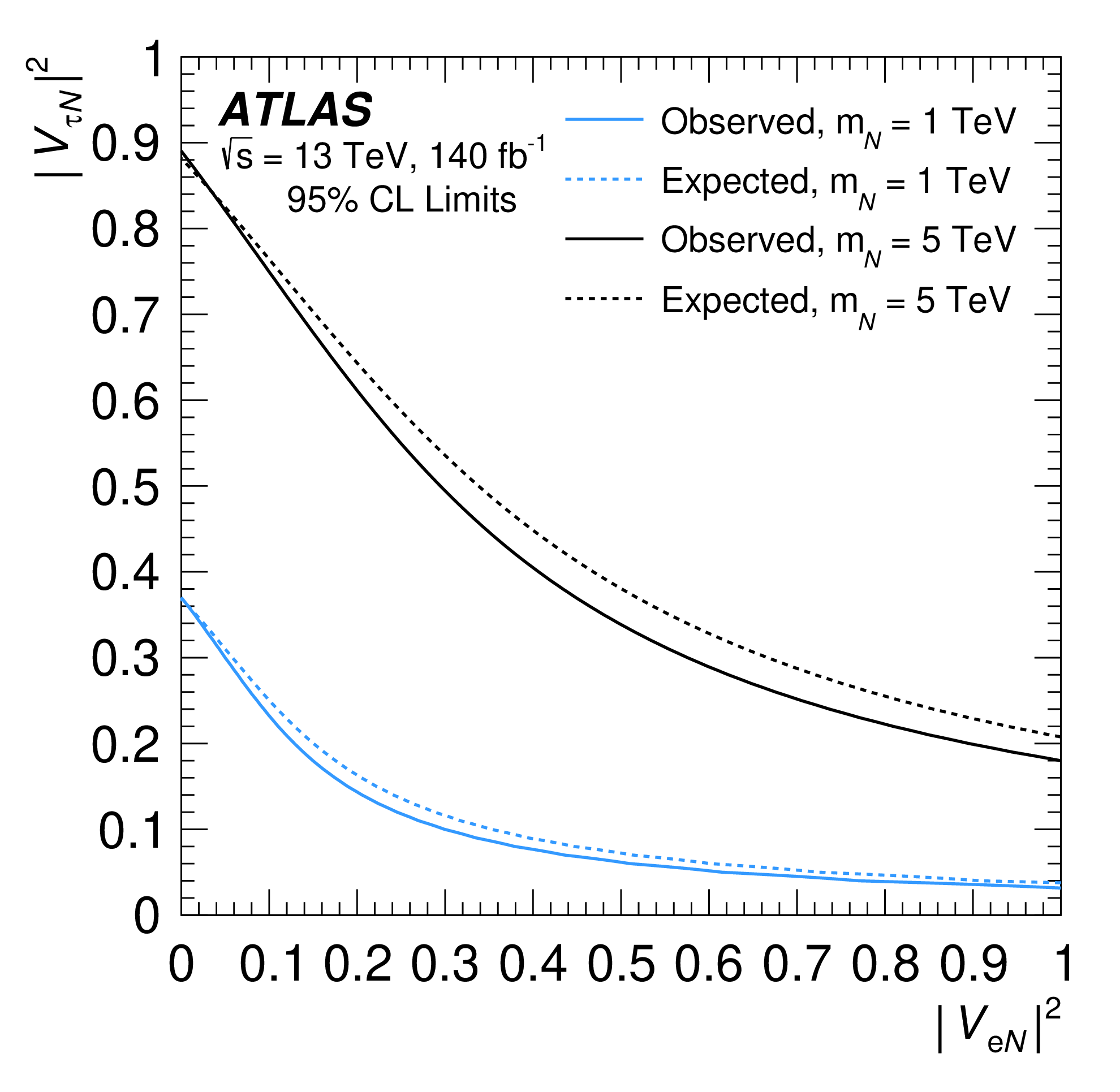
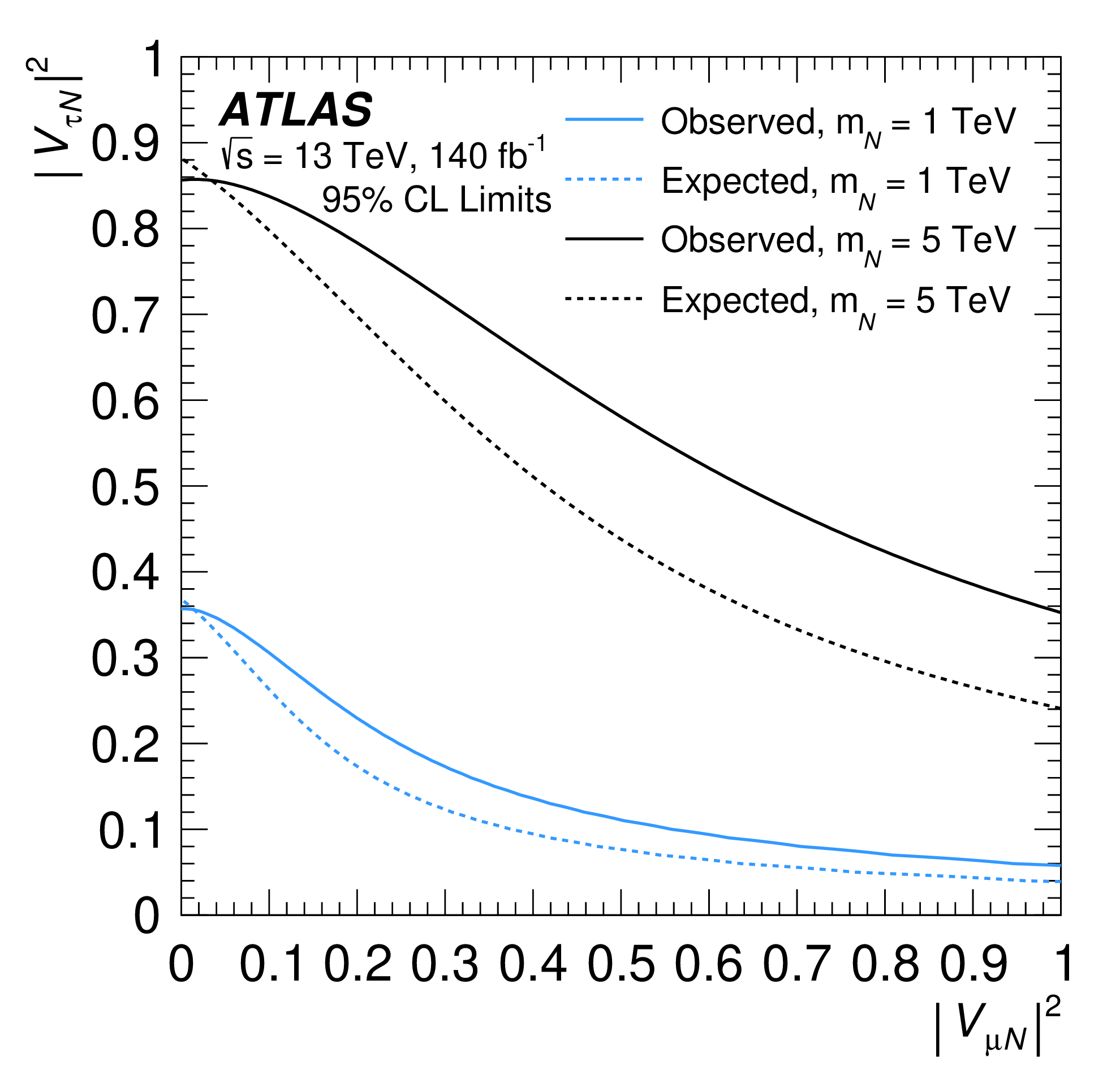
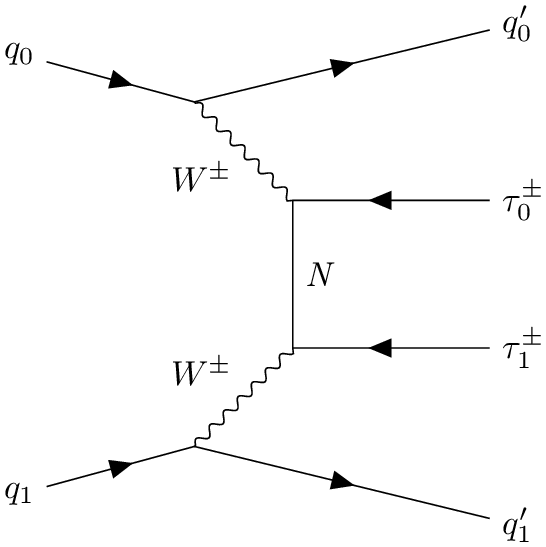
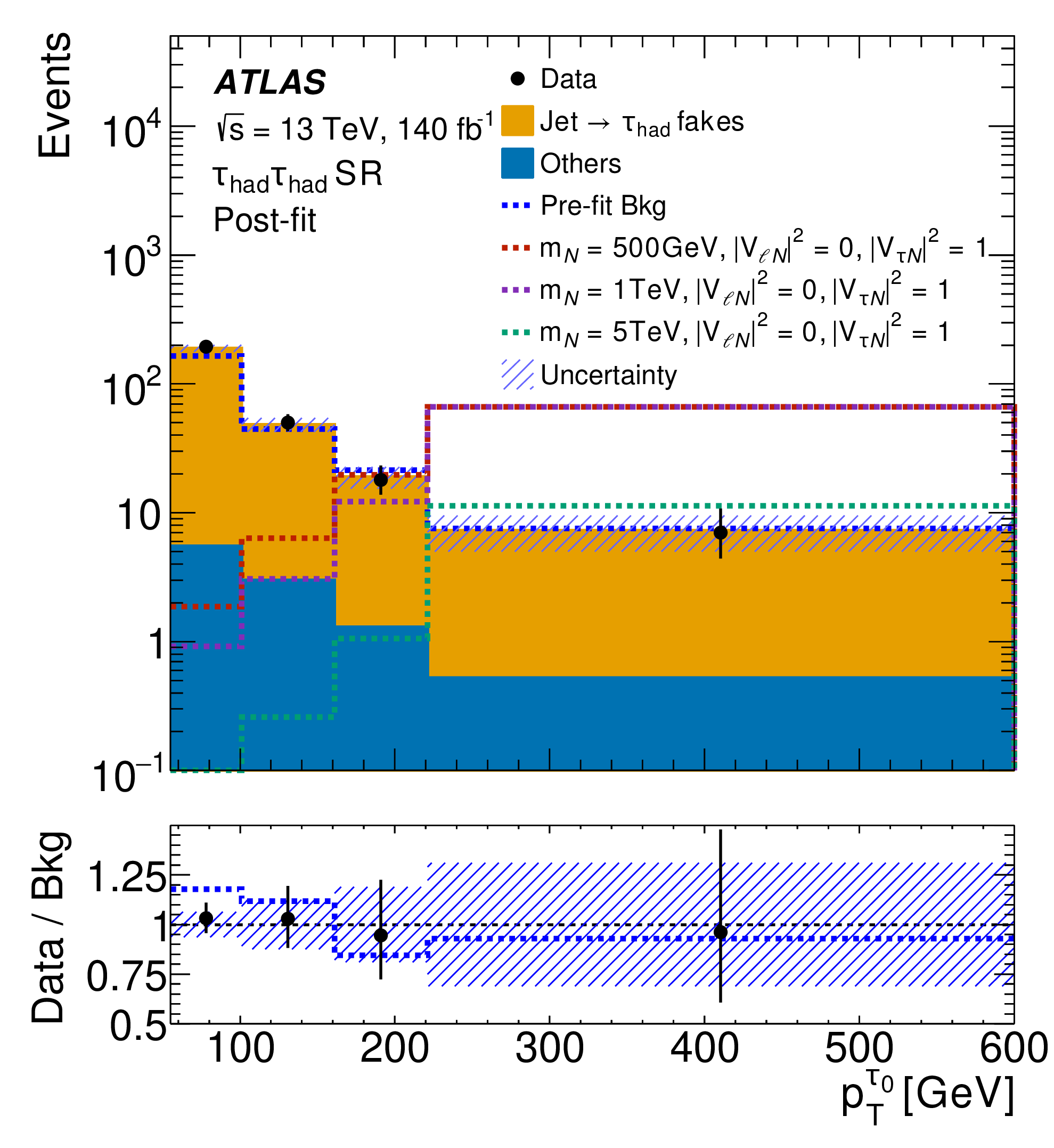
A search for heavy Majorana neutrinos coupling to third-generation leptons in vector boson scattering at the LHC is presented. The search is performed in the final state with a same-sign ττ, eτ or μτ pair using data of proton-proton collisions at √s = 13 TeV, recorded with the ATLAS detector and corresponding to an integrated luminosity of 140 fb−1. No significant deviation from the Standard Model background is observed. Constraints on the squared mixing matrix element between the τ-lepton and the heavy Majorana neutrino (|VτN|2) are derived for heavy Majorana neutrino masses between 92 GeV and 6.5 TeV. Additionally, two-dimensional constraints on (|VeN|2,|VτN|2) and (|VμN|2,|VτN|2) are set. These results improve the limits on heavy Majorana neutrinos coupling to third-generation leptons for heavy Majorana neutrino masses above 1.0 TeV, and extend the exclusion limits to an unexplored mass range above 1.5 TeV.
Page 17
arXiv:2607.27307
Search for heavy Majorana neutrinos in vector boson scattering with τ-lepton final states with the ATLAS detector
Expt(4)
Page 19
arXiv:2607.25869
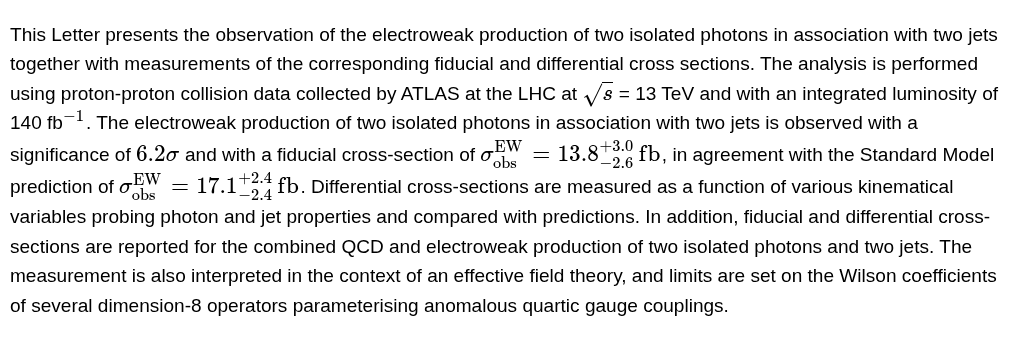
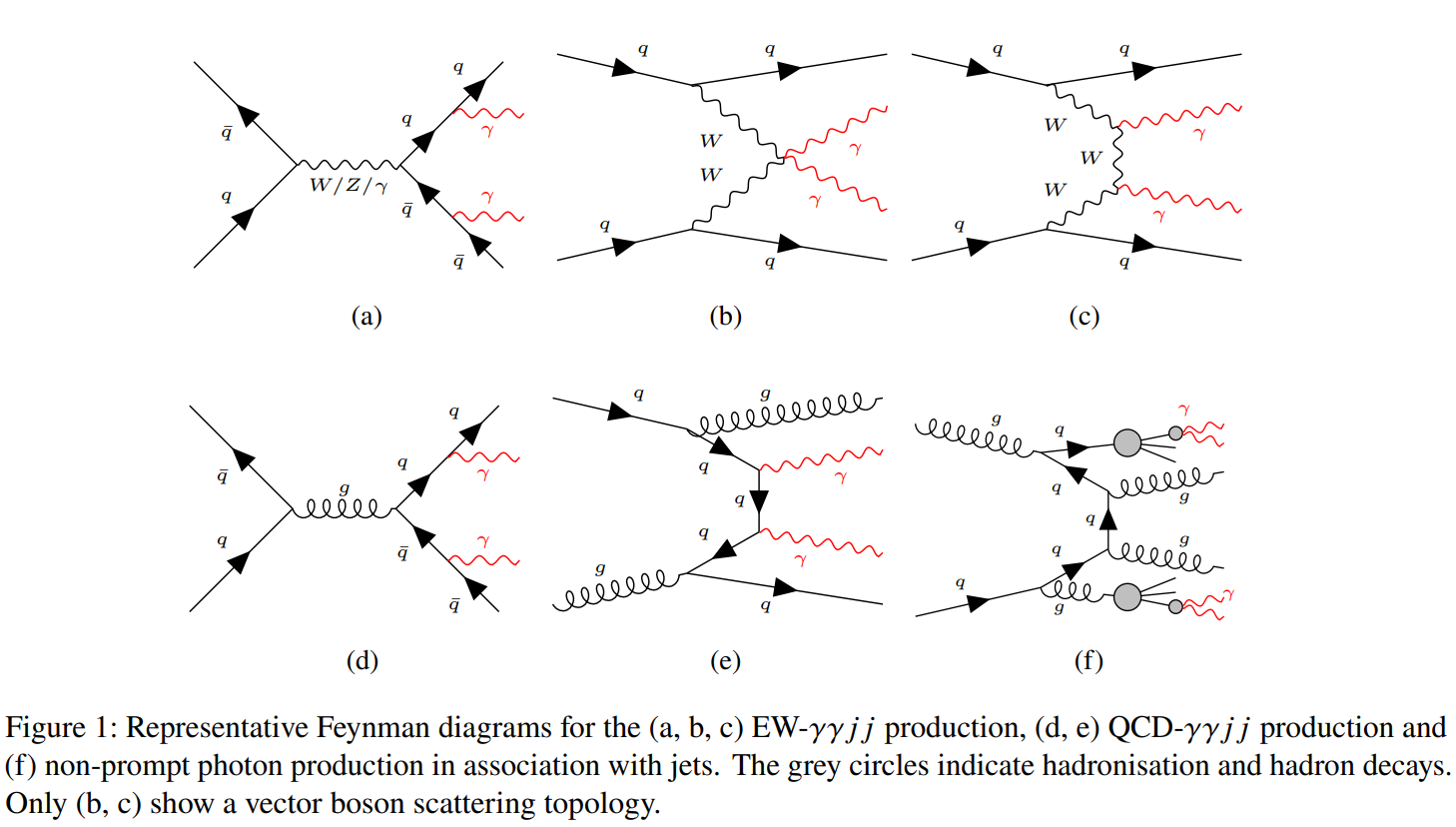
Observation of the electroweak production of γγjj at √s=13 TeV in 140 fb−1 of pp collision data with the ATLAS detector
Page 20
arXiv:2607.25869
Observation of the electroweak production of γγjj at √s=13 TeV in 140 fb−1 of pp collision data with the ATLAS detector
Pheno(1)
Page 21
arXiv:2607.27315
Nima Arkani-Hamed et al
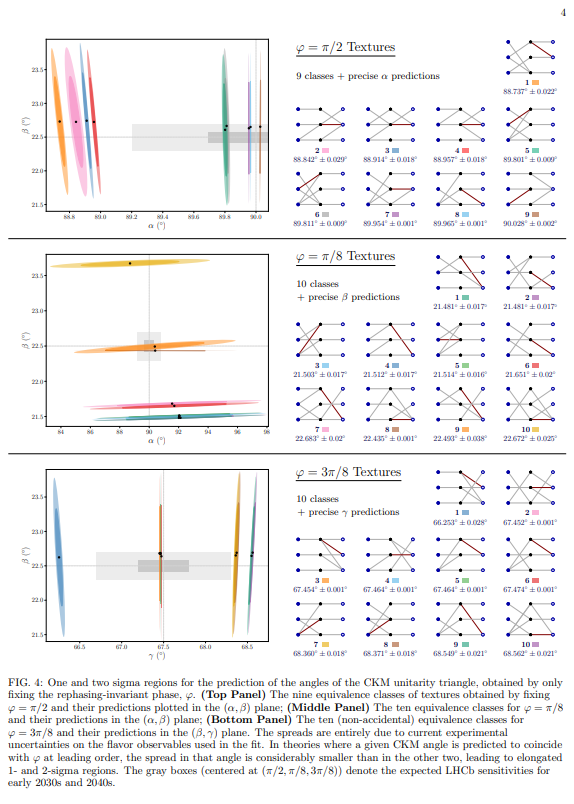
A striking empirical observation about the CKM matrix is that the angles of the unitarity triangle (α,β,γ) are very close to (π/2,π/8,3π/8), simple fractions of π that are suggestive of an underlying theory linking flavor and spontaneous CP violation. However, relating this empirical observation to an underlying theory of flavor is challenging, since the unitarity triangle is a complicated function of the Yukawa matrices. In this letter we present a simple picture for the Yukawas where this direct link is possible. We begin by parametrizing the ten-dimensional space of flavor data via "nine-link textures", full-rank Yu,d matrices with a total of nine non-zero entries, with a single CP violating phase. Fitting the ten parameters of all such textures to the flavor data reveals a wonderful surprise: the CP phases cluster tightly around multiples of π/8! This happens because the entries of Yu,d naturally define a "Yukawa triangle", in most cases identical to the unitarity triangle at leading order in small flavor parameters. Most interestingly, these two triangles are not the same beyond leading order, yielding precise predictions for (α,β,γ) with calculable deviation from (π/2,π/8,3π/8), which can be decisively excluded or strongly confirmed by the next generation of experimental measurements of the angles. The 9-link textures are sparse and their determinants are naturally real, which taken together with spontaneous CP violation can resolve the strong CP problem.
 Go Back