Go Back
Page 7
arXiv:2606.04855
ATLAS Collab.
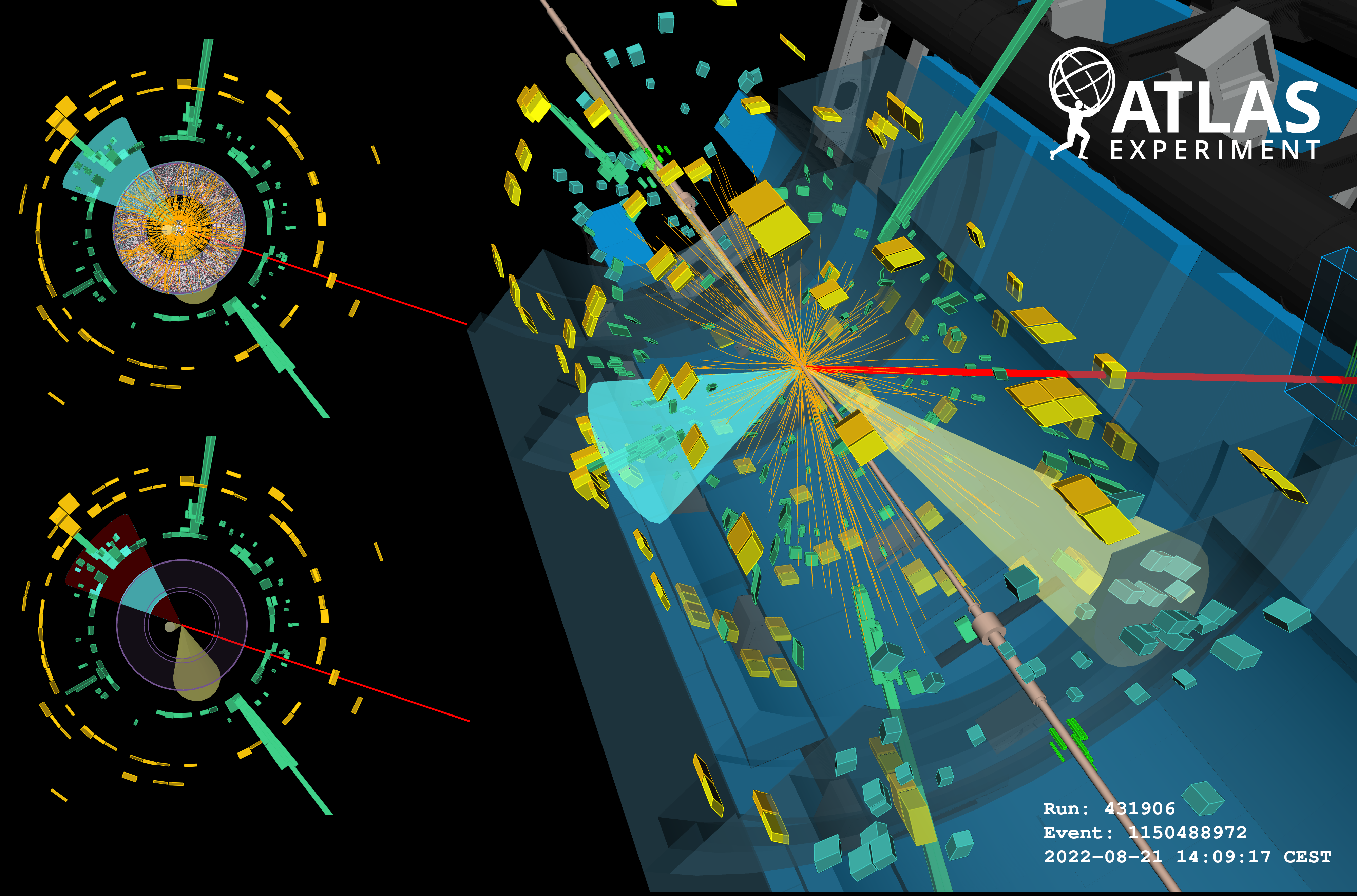
The event features two isolated photons reconstructed from large energy deposits in the electromagnetic calorimeter (green towers) and three jets (represented by cones) clustered from charged-particle tracks (orange lines) and energy deposits in the electromagnetic and hadronic calorimeters (yellow towers). One of the jets is tagged as originating from a bottom quark (cyan cone), characteristic of top-quark production. A muon (red line) is shown passing through an innermost muon detector station. A forward jet with pT = 67.05 GeV and η = −4.20, reconstructed from energy deposits in the forward calorimeter (green towers), is shown near the beampipe, typical of t-channel tHjb production. Orange lines depict charged-particle tracks with transverse momentum larger than 1.5 GeV.
Expt(2)
Page 8
arXiv:2606.03222
ATLAS Collab.
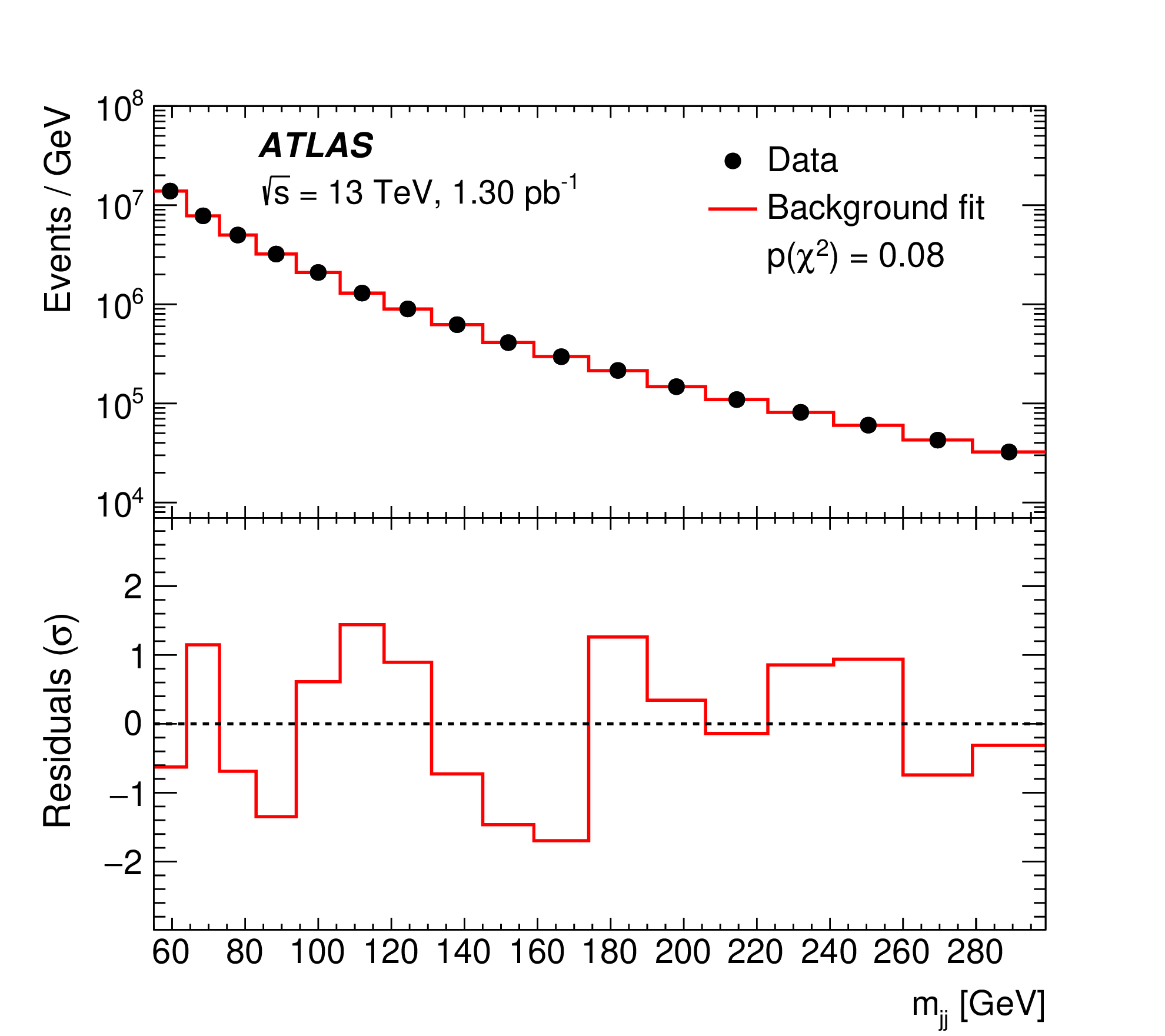
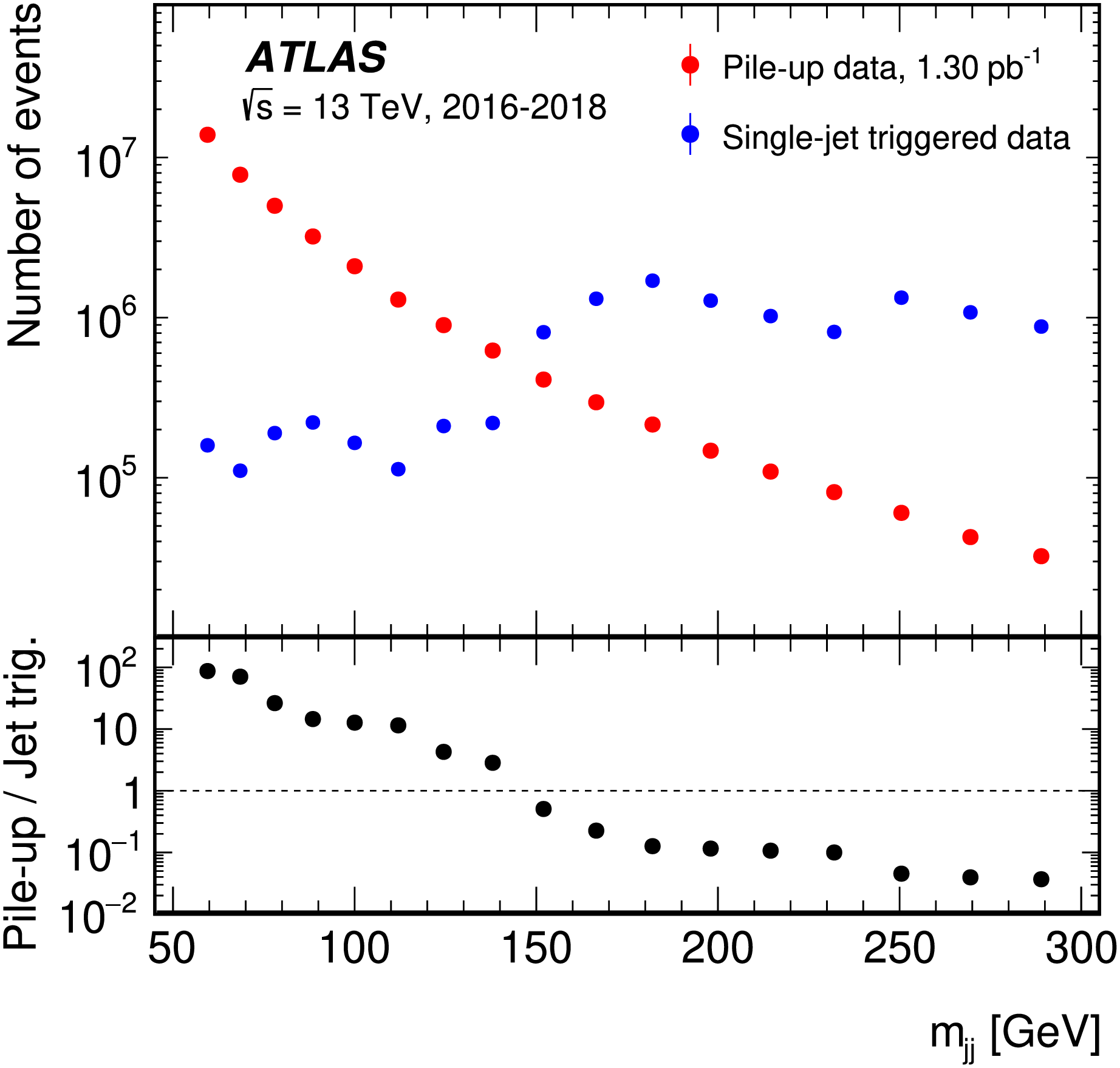
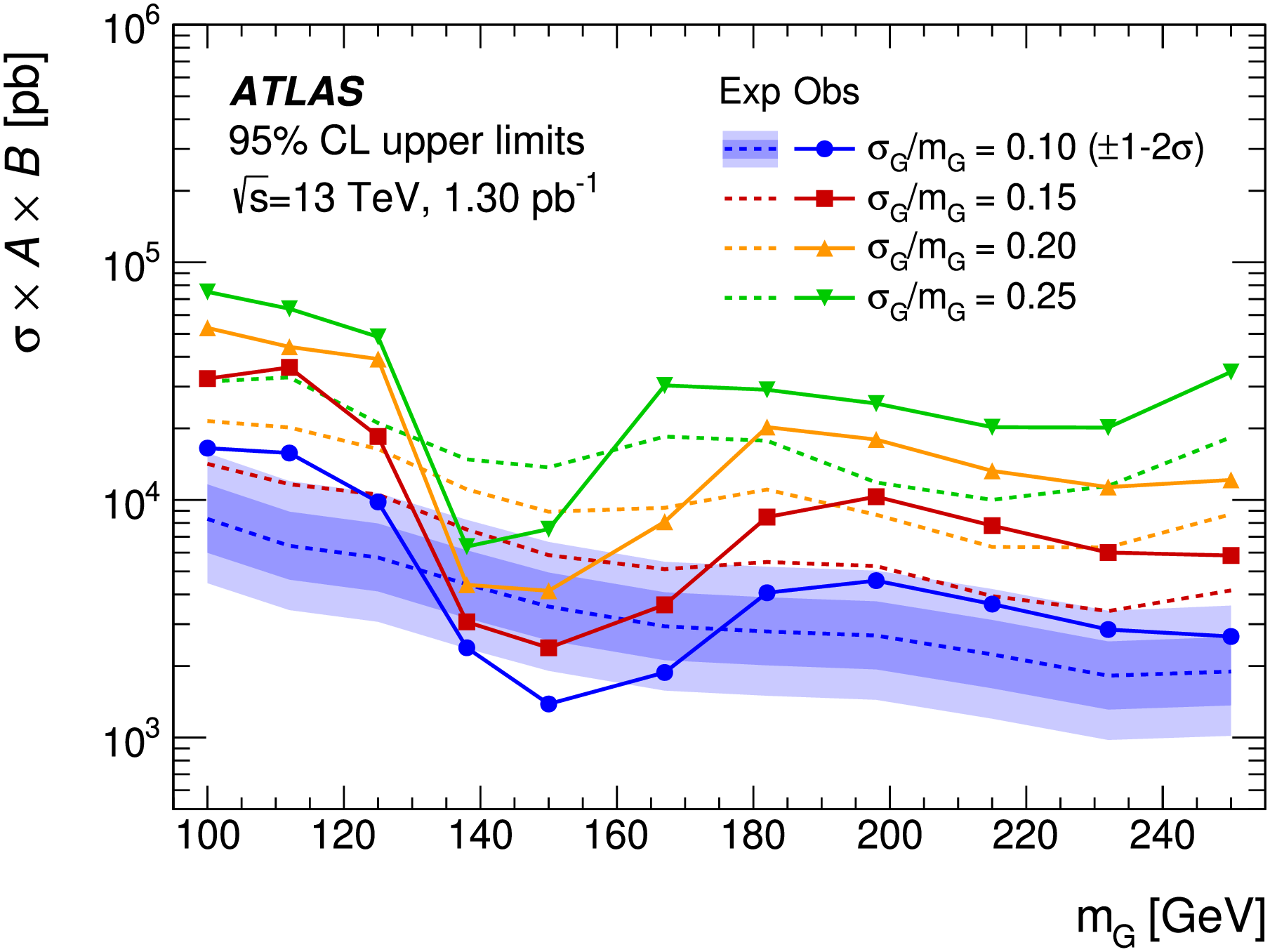
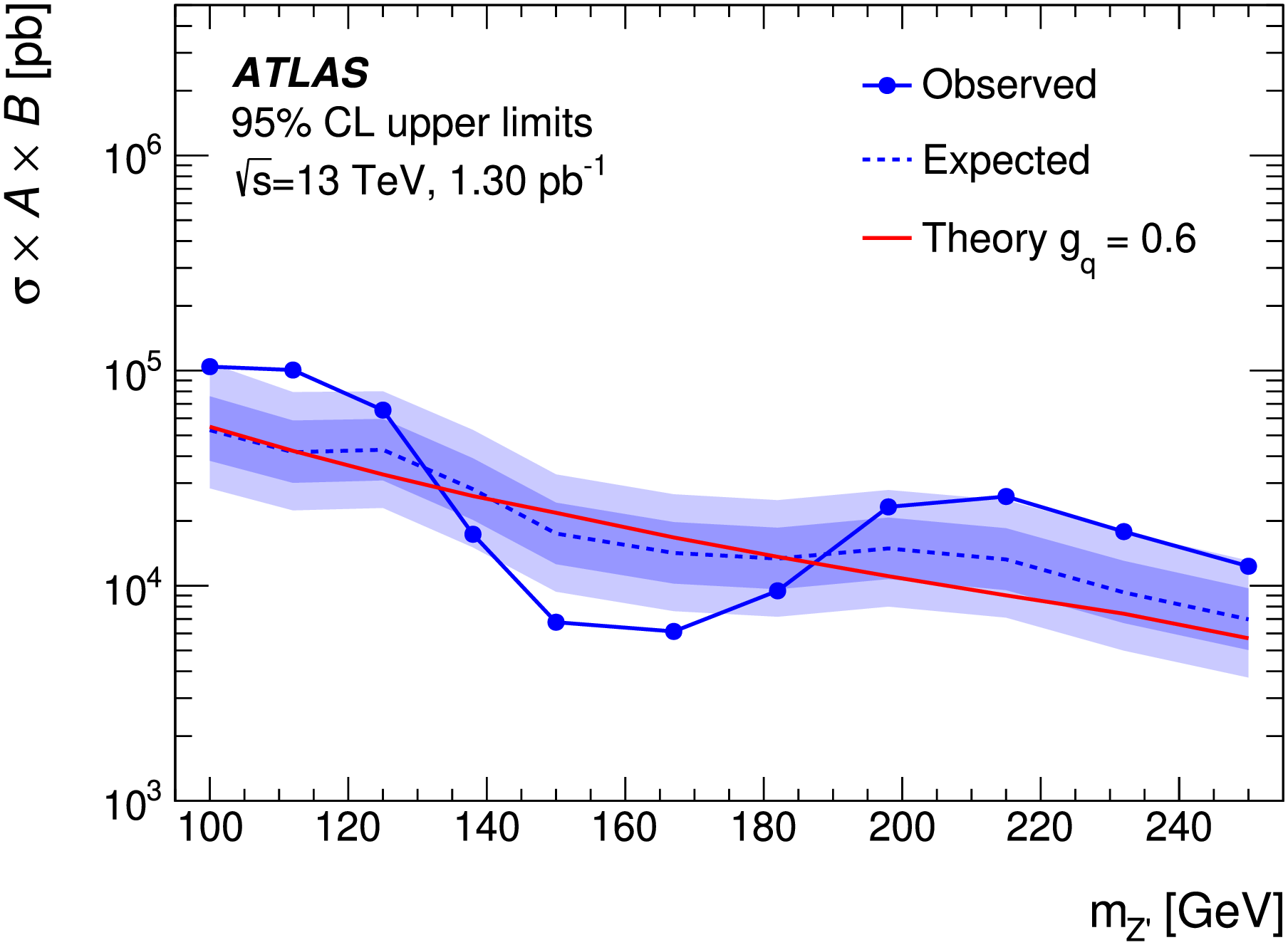
A search for dijet resonances in the mass range of 100-250 GeV is presented using proton-proton collision data recorded by the ATLAS experiment at the Large Hadron Collider at a centre-of-mass energy of 13 TeV. Conventional searches for hadronic resonances in the sub-TeV regime are heavily constrained by high jet trigger thresholds required to manage the overwhelming rate of Standard Model multijet background processes described by quantum chromodynamics. To overcome this limitation, this analysis uses a novel strategy that separately reconstructs multiple proton-proton interactions per bunch crossing, known as pile-up collisions. The dataset was collected by the ATLAS experiment using single-electron and single-muon triggers in 2016-2018 corresponding to an integrated luminosity of 1.30 pb-1, which represents the effective luminosity of pile-up collisions recorded alongside triggered events. This constitutes the first application of pile-up collisions to probe low dijet mass scales. No significant excess is observed above the background expectation and exclusion limits are set for a generic Gaussian model and a simplified dark matter model featuring an axial-vector mediator with coupling to quarks.
Expt(3)
Page 11
arXiv:2606.02067
ATLAS Collab.
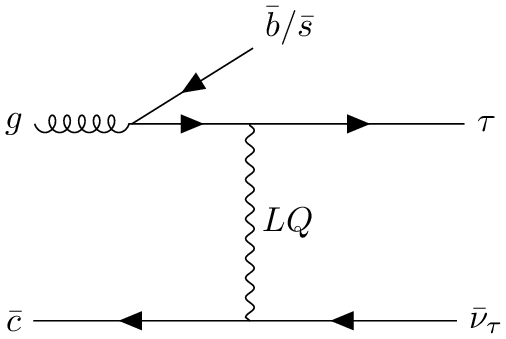
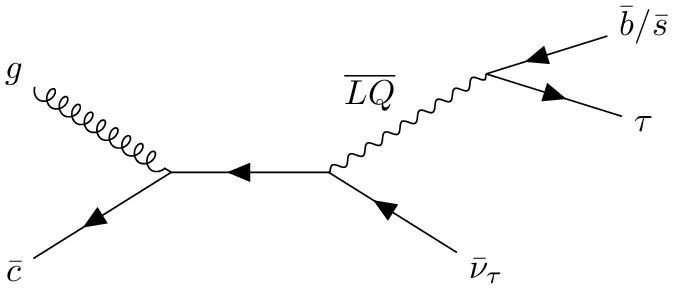
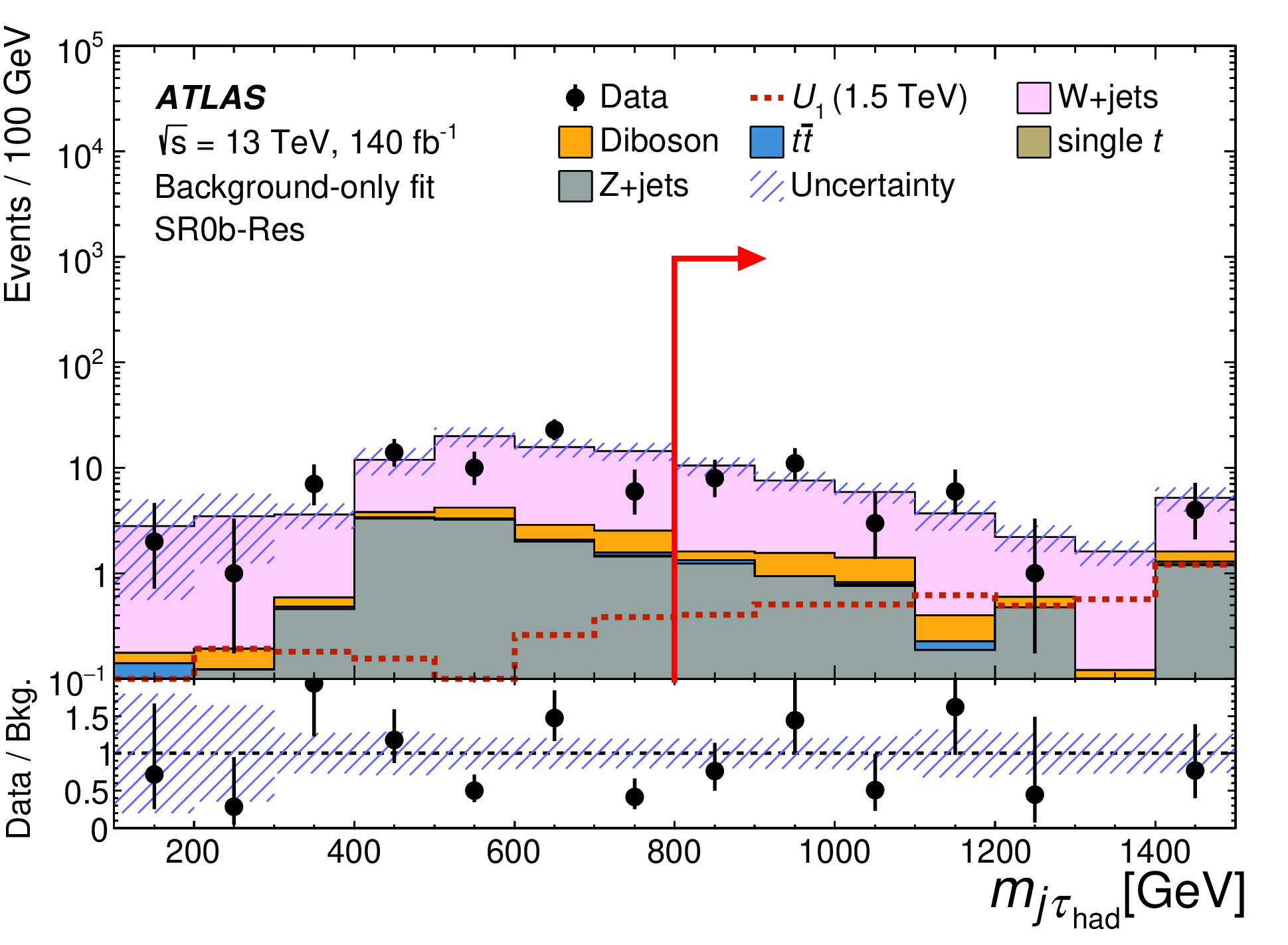
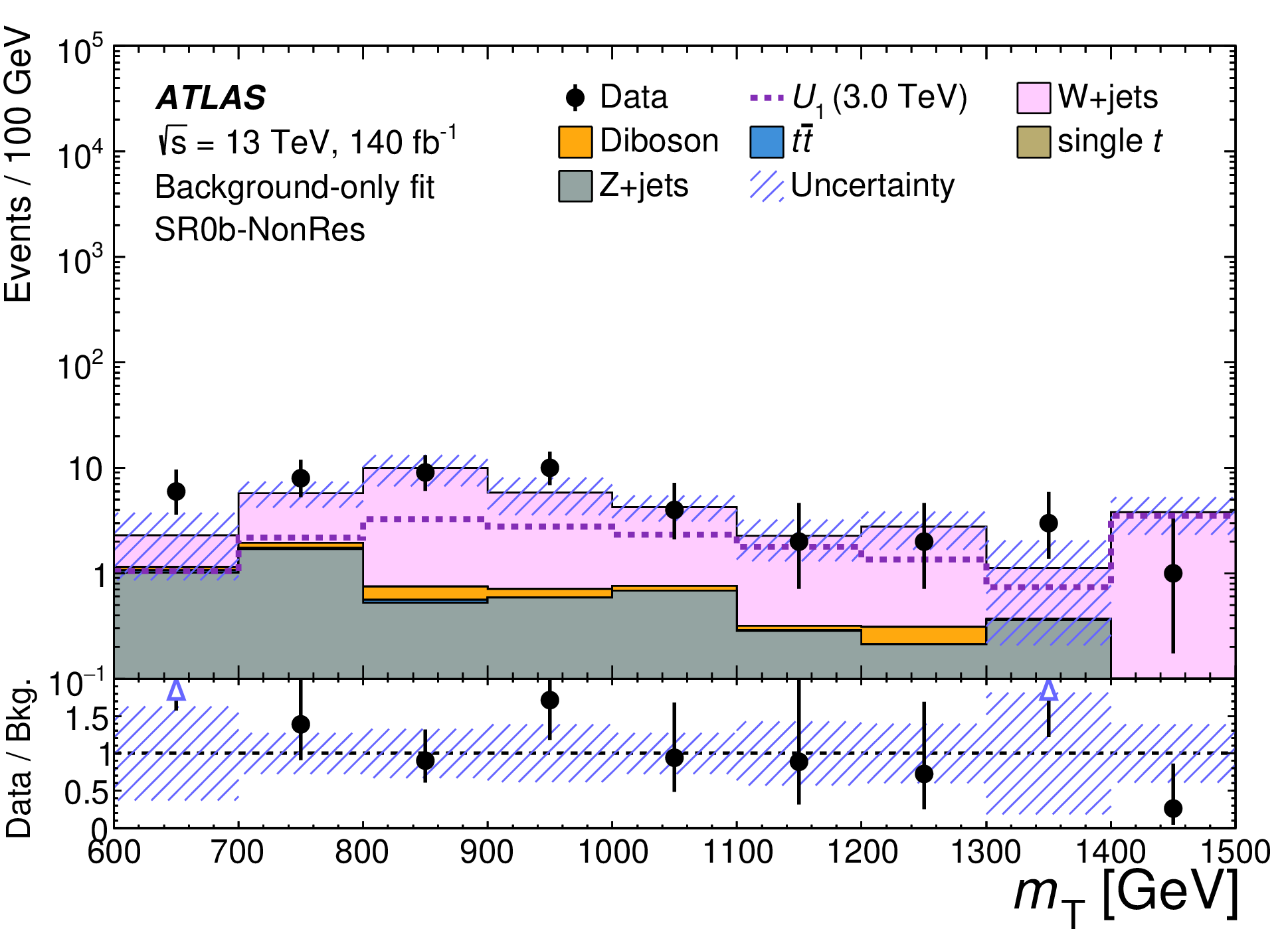
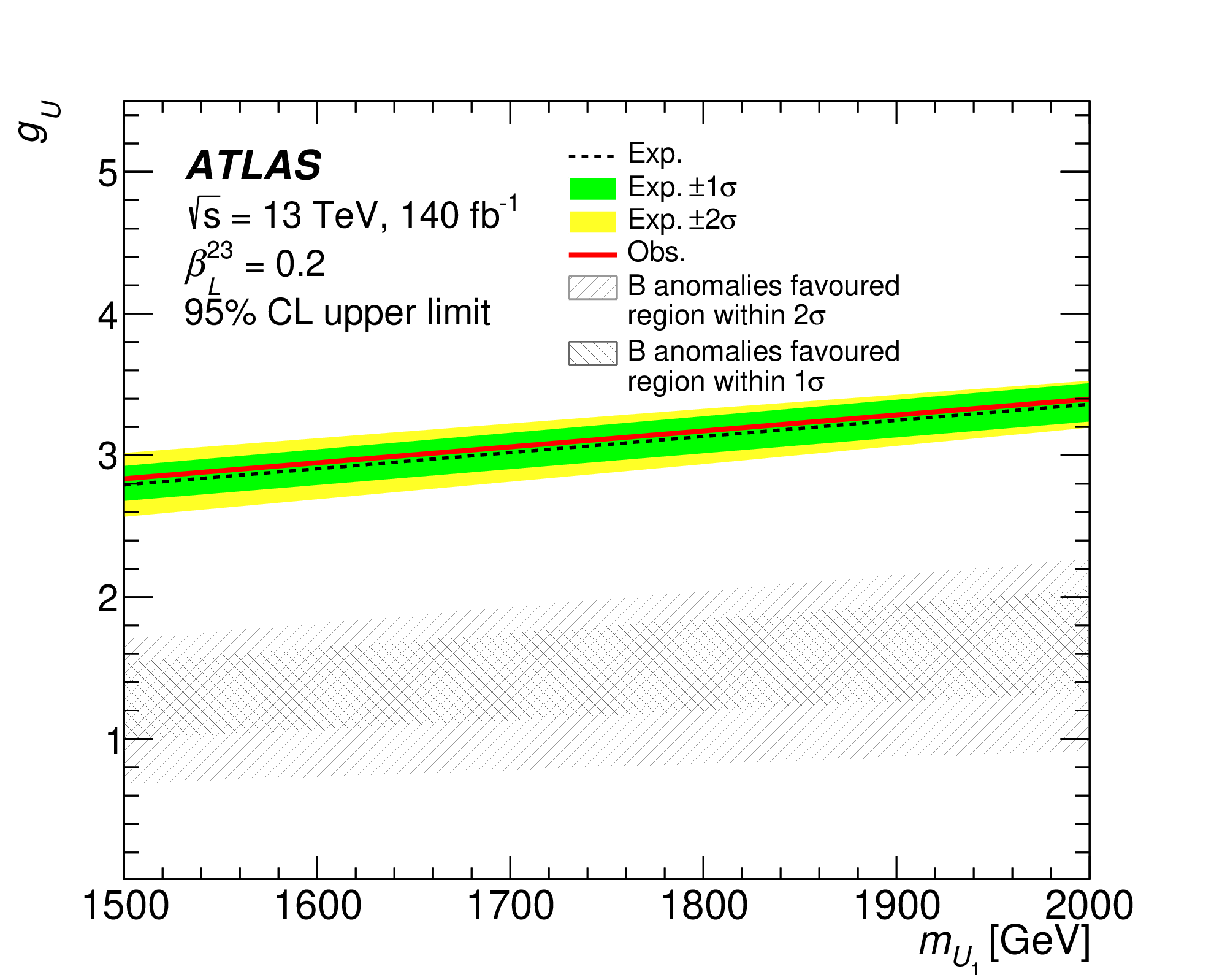
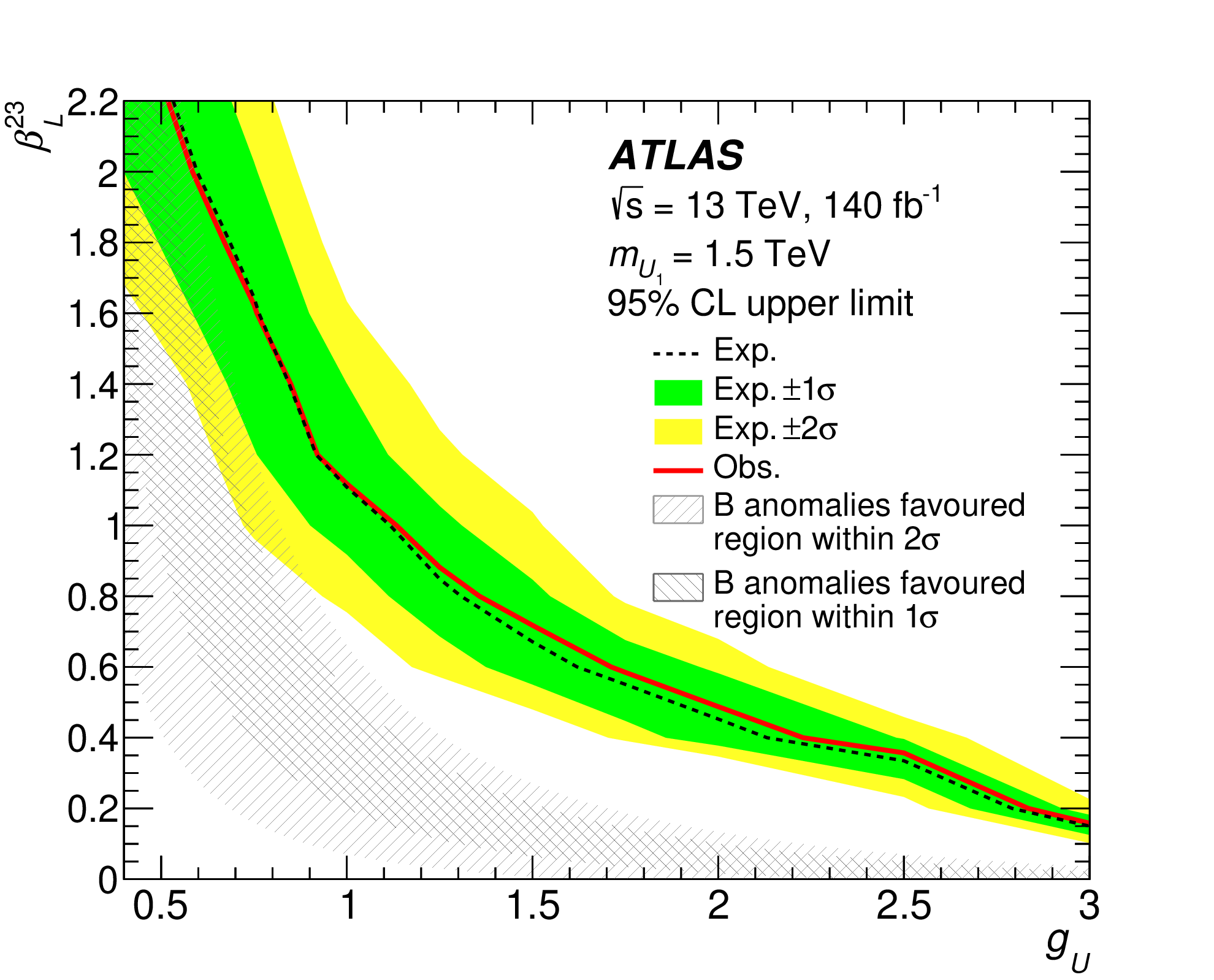
A search for leptoquark signals is performed in final states with a hadronically decaying τ-lepton and missing transverse momentum, using data from proton-proton collisions at a centre-of-mass energy of 13 TeV recorded by the ATLAS detector at the Large Hadron Collider during Run 2 (2015-18), corresponding to an integrated luminosity of 140 fb-1. The analysis is designed to probe both resonant production and non-resonant t-channel exchange of the leptoquark, covering a wide range of coupling scenarios. No excess above the Standard Model background prediction is observed. Limits are set on the couplings in the benchmark U1 vector-leptoquark model at 95% confidence level for masses between 1.5 TeV and 3.0 TeV.
Pheno(1)
Page 17
arXiv:2605.29289
M. Buckley, D. Shih, I. Wang
The CMS collaboration has reported a measurement of Υ decays to ditaus using 61.9 fb-1 of scouting data. If interpreted as the decay of Υ(1S,2S,3S), the measured ditau rate is more than ten times that seen in the dimuon final states at the ~3σ level, and is likewise inconsistent with the branching ratios measured at B-factories. If confirmed with more data and at higher significance, such a violation of lepton flavor universality would necessitate new physics. In this Letter, we present a simple model with a light pseudoscalar coincidentally near the Υ(1S) mass, which mixes with two Higgs doublets in the alignment limit. Such a particle naturally decays primarily to taus and evades all existing experimental constraints, while implying a number of predictions that can be tested in the near future.
ML(1)
Page 18
arXiv:2606.04755
P. Lugato et al
We present Archi, an open-source, end-to-end framework for scientific collaborations that combines the systematic ingestion and organization of heterogeneous data sources with the deployment of configurable, private, and extensible agents that retrieve and reason over them. An instance of Archi has been deployed for the Computing Operations team of the CMS experiment at CERN's LHC since February 2026 as a support agent for technical operators, offering retrieval and analysis capabilities by combining documentation, historical data, and live monitoring systems. We evaluate the system on operator feedback and a question set collected from production usage, graded by human and automated panels. The system proves effective at operational tasks, resolving real-world queries posed by CMS operators. We also observe that locally-hosted, open-weight models perform competitively, enabling fully private management of sensitive data.
ML(2)
Page 19
arXiv:2605.31103
O Amram, M Letizia, M Kuusela
Searches for new phenomena in complex scientific data are predominantly model-dependent, optimized for specific hypotheses, and therefore limited in their coverage of the space of possible signals. Recently, new AI-based model-agnostic search strategies, many of which have been pioneered in high-energy physics, have been proposed which provide a complementary paradigm, prioritizing broad exploration over tailored analyses. These techniques offer an opportunity to enhance the overall discovery potential of modern experiments, especially in regimes where theoretical guidance is scarce. In this document, we review the conceptual framework behind the main classes of AI-based model-agnostic strategies. We discuss the potential pitfalls of these methods, and strategies for their validation and interpretation. We aim for this document to serve as a useful reference both for practitioners and for researchers interested in learning more about these model-agnostic search strategies.
Go Back