CMS(1)
Page 2
CMS-EGM-24-002
Highly boosted dielectron identification in proton-proton collisions at √s = 13 TeV
Page 1
April 27th, 2026
Page 2
CMS-EGM-24-002
Highly boosted dielectron identification in proton-proton collisions at √s = 13 TeV
Page 3
CMS-EGM-24-002
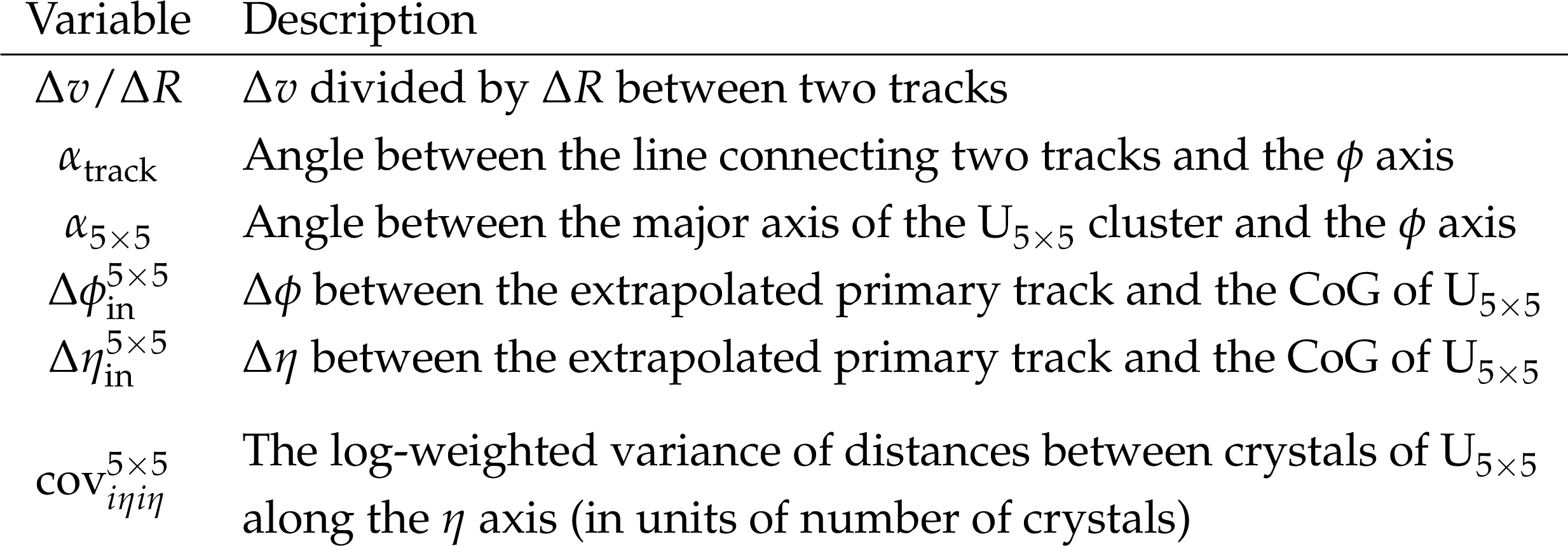
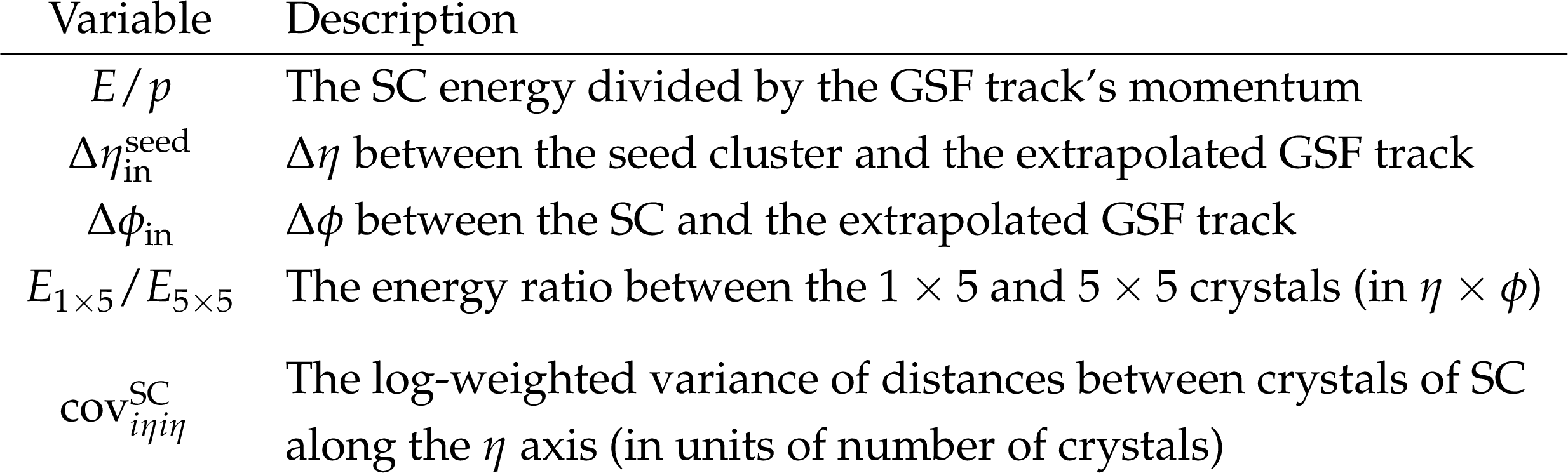
Page 4
CMS-EXO-24-006
Search for heavy resonances decaying into four-lepton final states via light bosons in proton-proton collisions at √s = 13 TeV
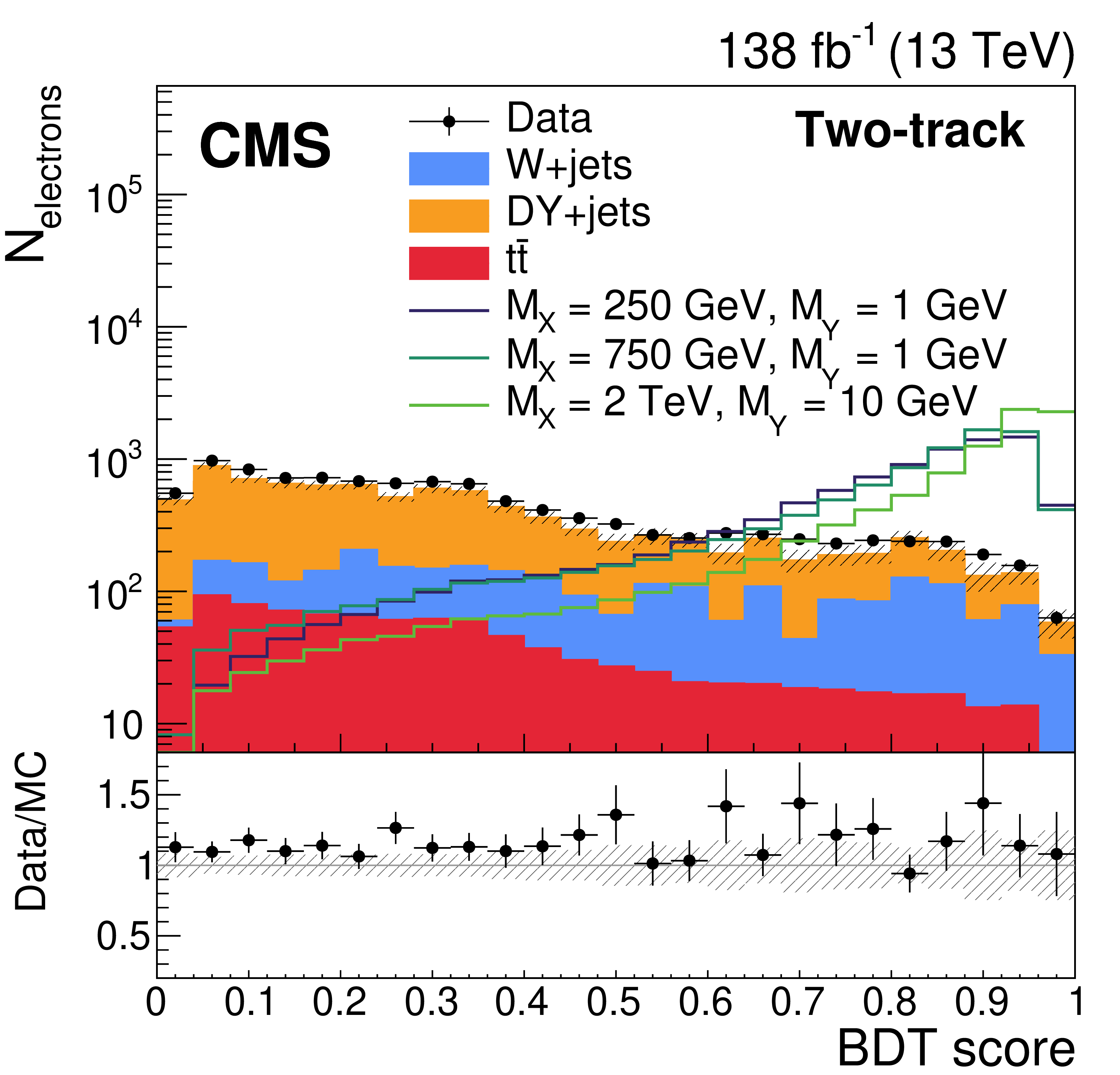
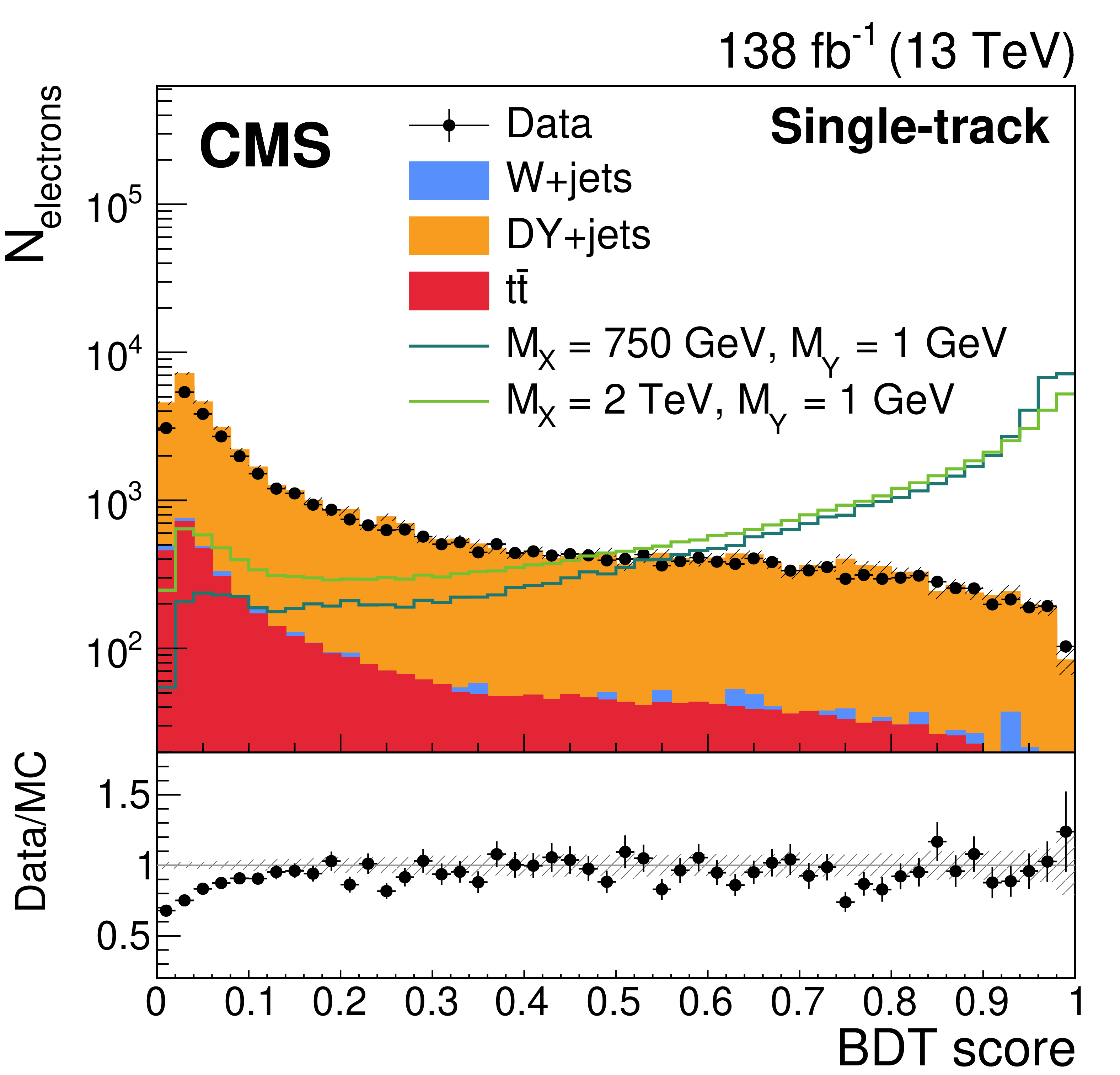
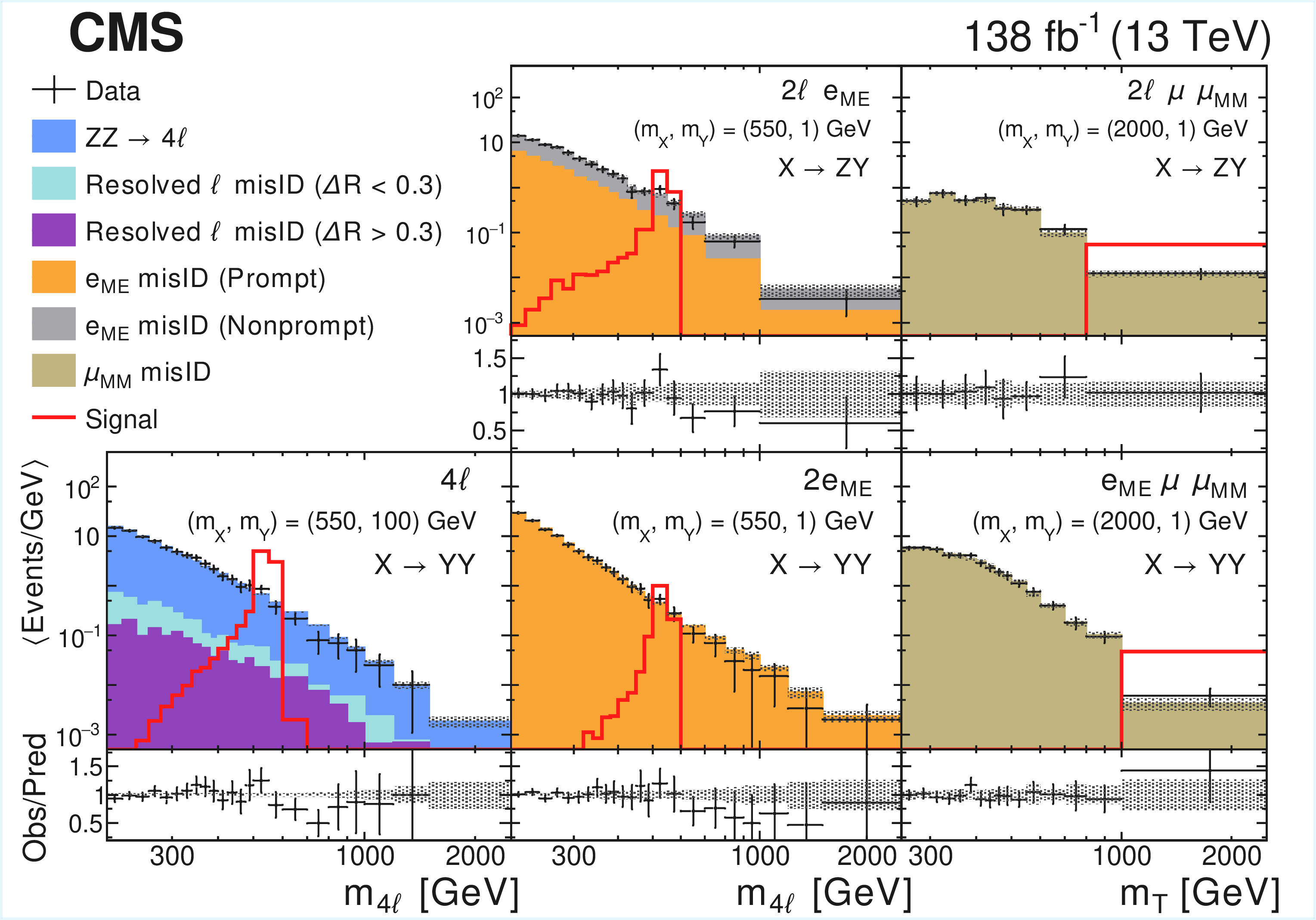
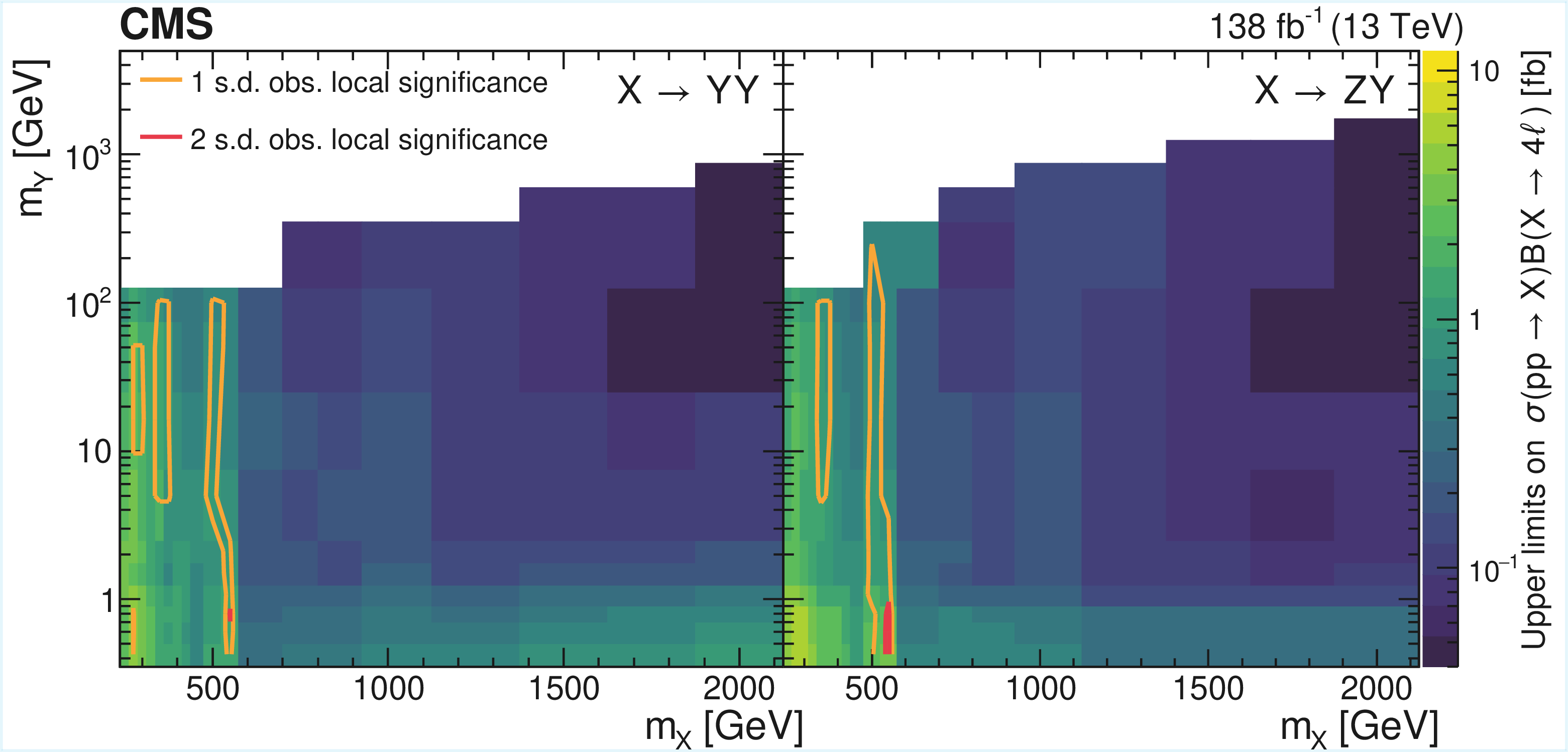
A search for a resonance heavier than 250 GeV decaying into four leptons via two intermediate bosons is presented. The search uses proton-proton collision data at √s = 13 TeV collected by the CMS experiment, corresponding to an integrated luminosity of 138 fb-1. Novel techniques are used to enhance the sensitivity to a collimated pair of dileptons reconstructed as a single merged object, resulting from the decay of an intermediate light boson. No significant excess of data over the background predictions is observed. Upper limits are set on the production cross section for a four-lepton resonance, including the previously unexplored phase space at the LHC with a dilepton mass of 0.4 -- 15 GeV.
Page 5
CMS-EXO-24-006
Page 6
CMS-EXO-24-006
Page 7
CMS-EXO-24-028
A search for microscopic black holes, string balls, and sphalerons in proton-proton collisions at √s = 13 TeV
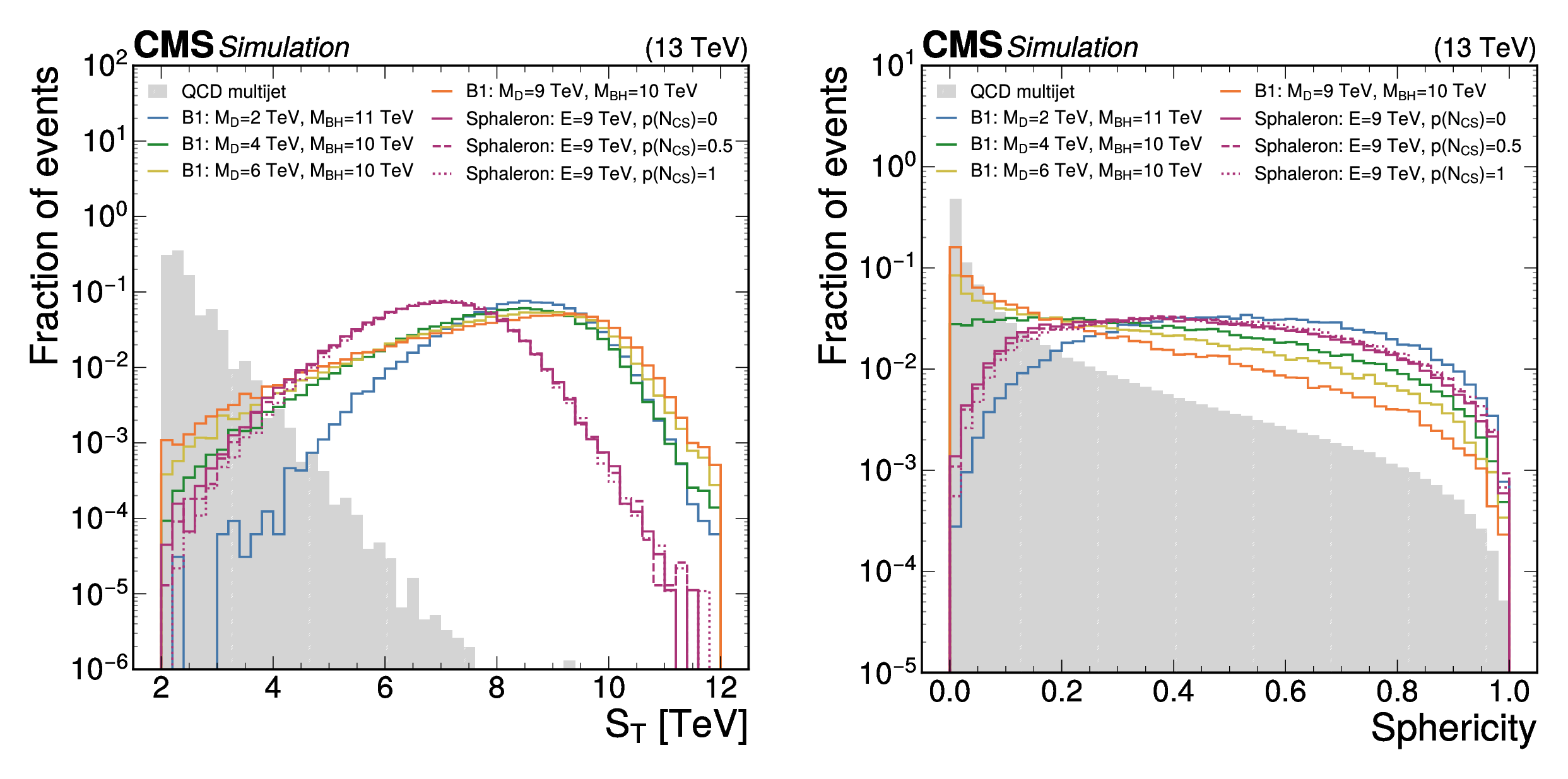
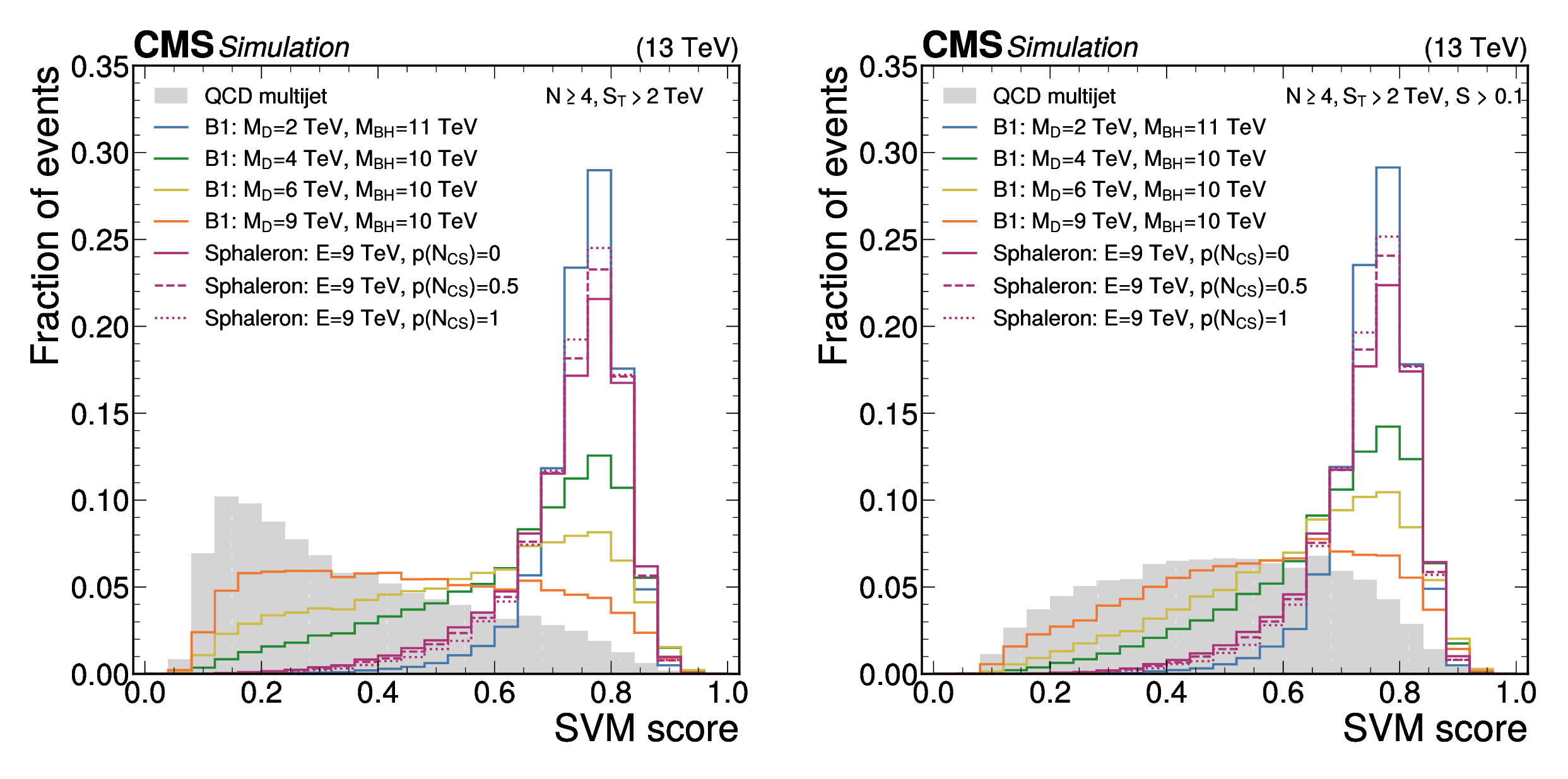
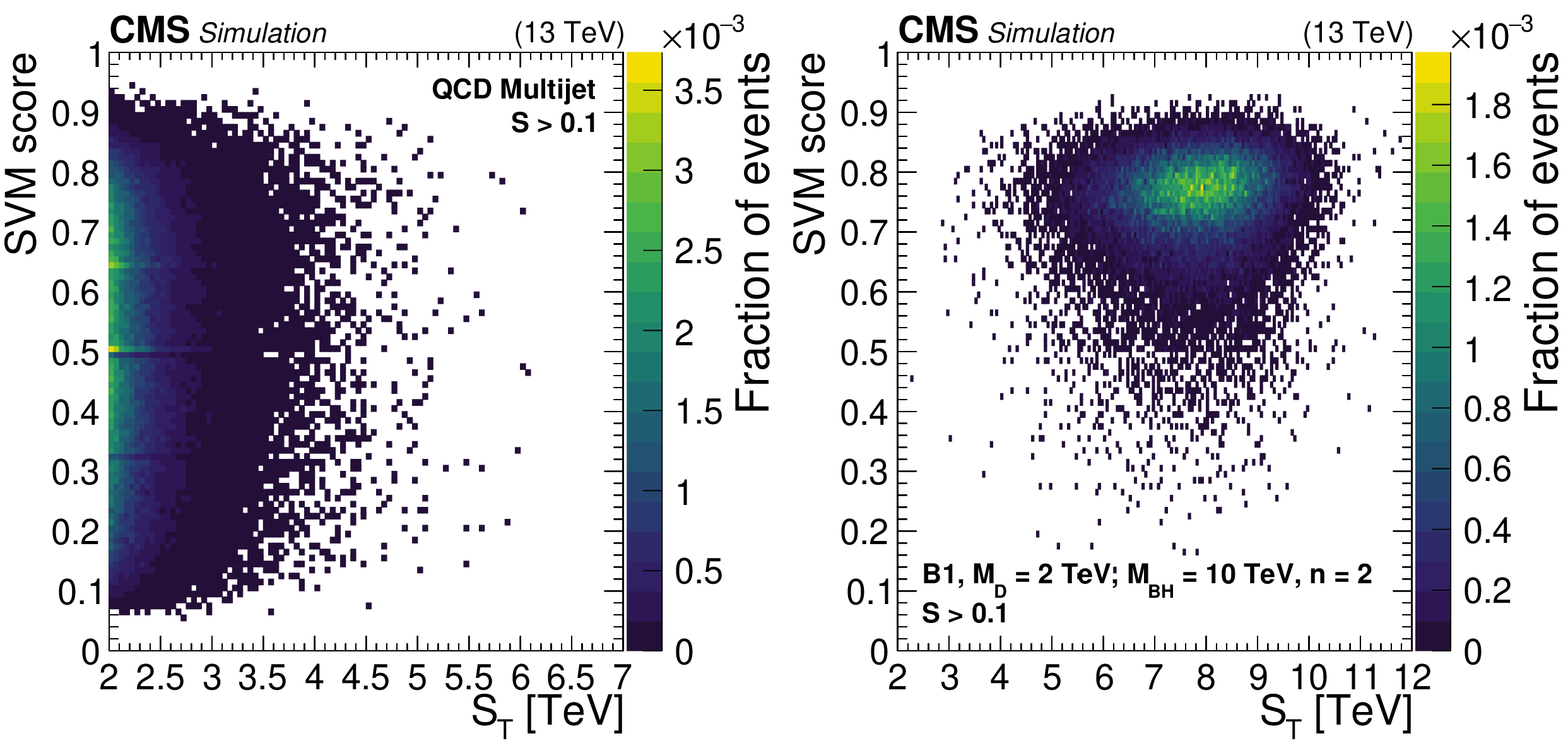
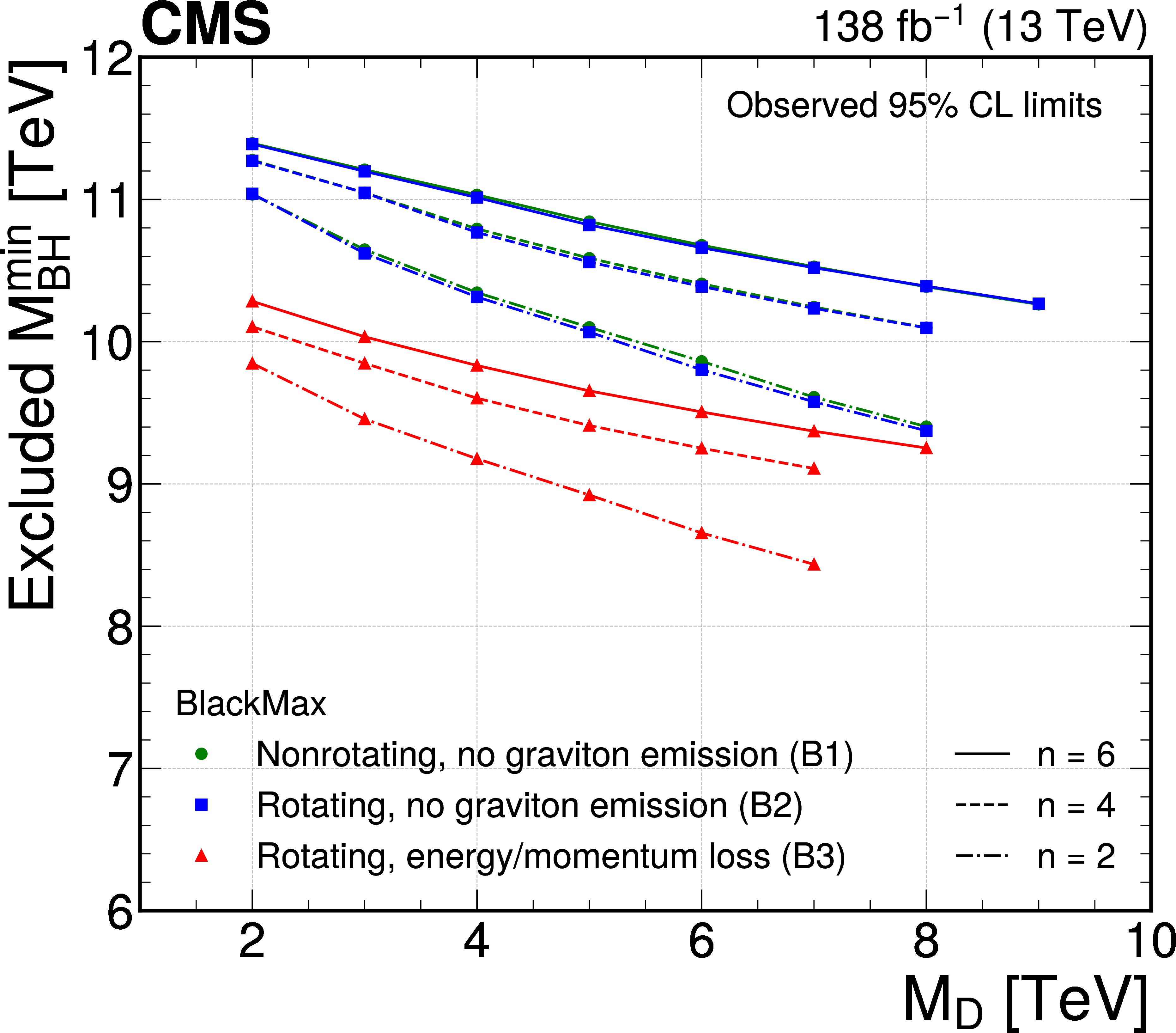
A search for microscopic black holes, string balls, and electroweak sphalerons using proton-proton collisions at √s = 13 TeV recorded with the CMS detector at the CERN LHC during the 2016-2018 data taking, and corresponding to an integrated luminosity of 138 fb-1, is presented. Two search strategies based on control samples in data are used. Model-independent limits on the cross section of physics phenomena with multiple energetic jets, leptons, and photons are set using a method that relies on the shape invariance of the scalar sum of the transverse momenta of all objects in the event. Model-dependent limits on black hole and sphaleron production are set using a newly introduced method that has been developed for the identification of collider events with distinct kinematic features by separating them into classes based on phase space proximity. In the context of models with large extra dimensions, semiclassical black holes and string balls with masses below 8.4 - 11.4 TeV and 9.0 -10.7 TeV, respectively, are excluded at 95% confidence level, significantly extending the reach beyond previous searches. Results of a dedicated search for electroweak sphalerons are used to derive an upper limit of 0.0034 at 95% confidence level on the fraction of quark-quark interactions above the nominal sphaleron transition energy threshold of 9 TeV.
Page 8
CMS-EXO-24-028
Page 9
CMS-EXO-24-028
Page 10
CMS-EXO-24-028
Page 11
CMS-EXO-24-028
Page 12
CMS-B2G-22-001
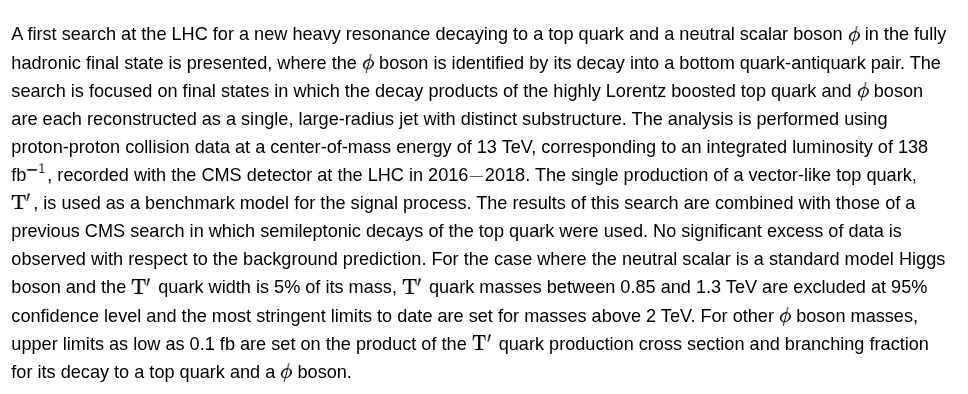
Search for a new heavy resonance decaying to a top quark and a neutral scalar boson in proton-proton collisions at √s = 13 TeV
Page 13
CMS-JME-25-001
Particle transformers for identifying Lorentz-boosted Higgs bosons decaying to a pair of W bosons
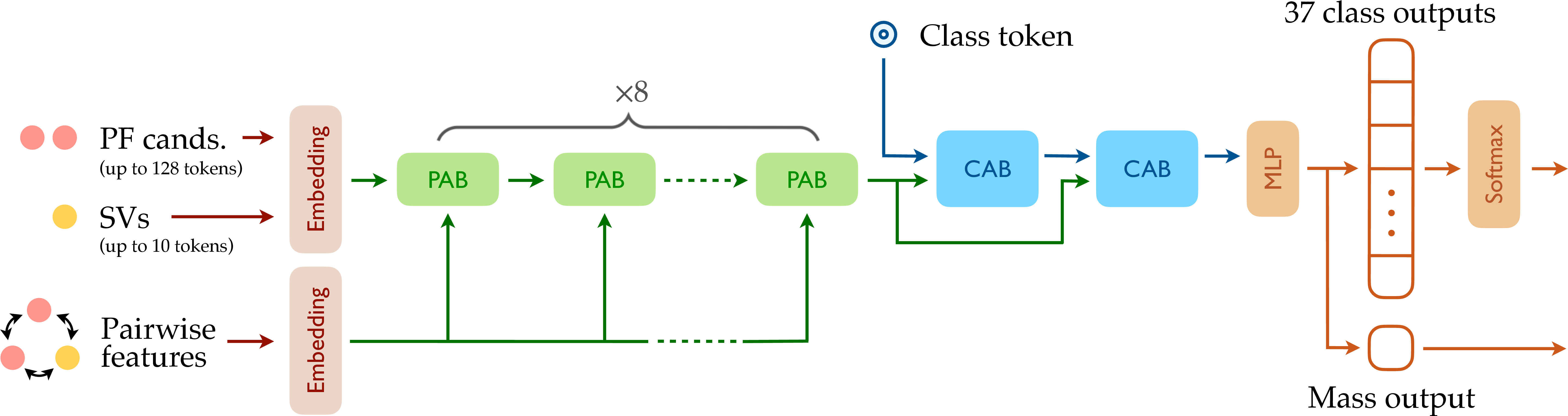
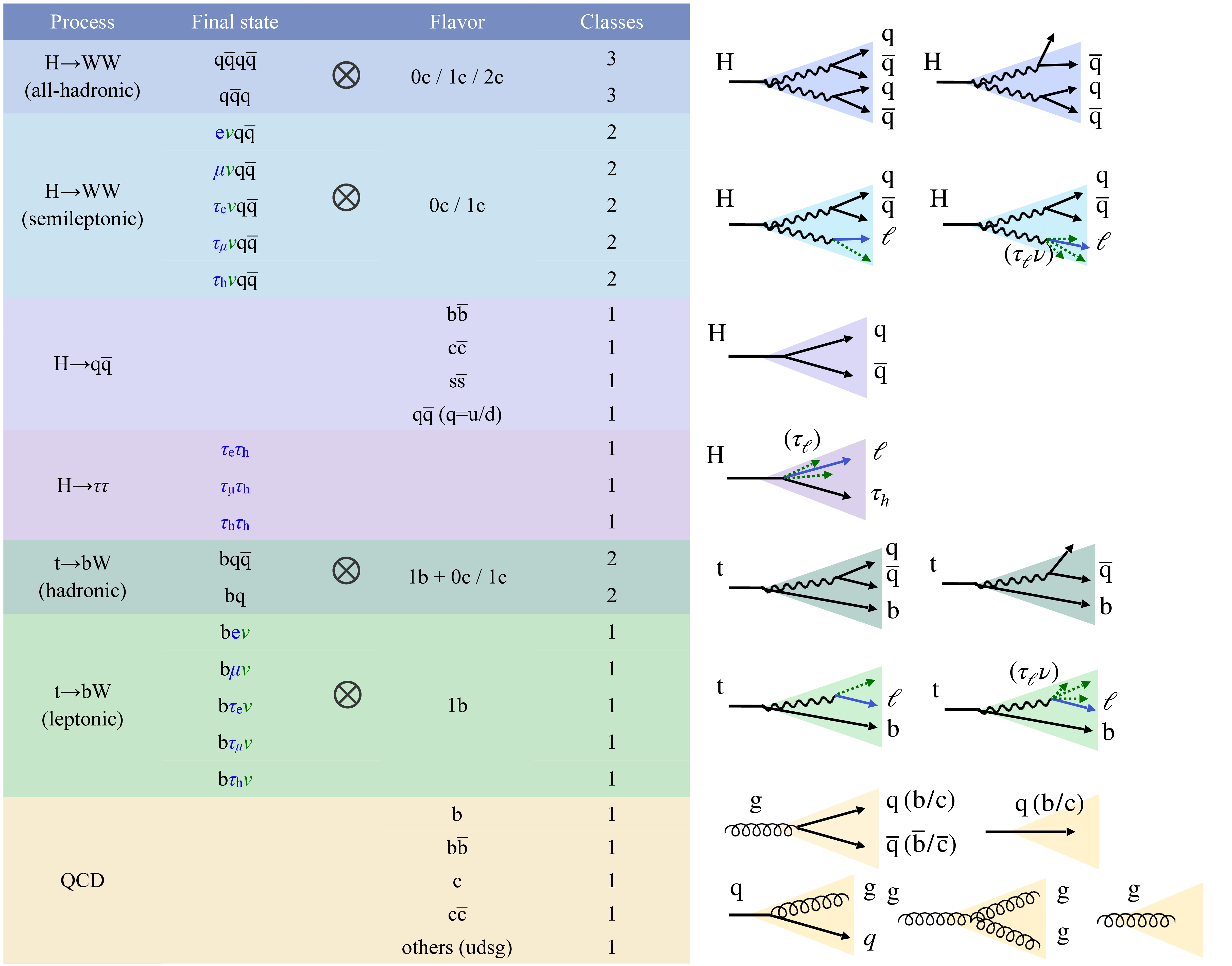
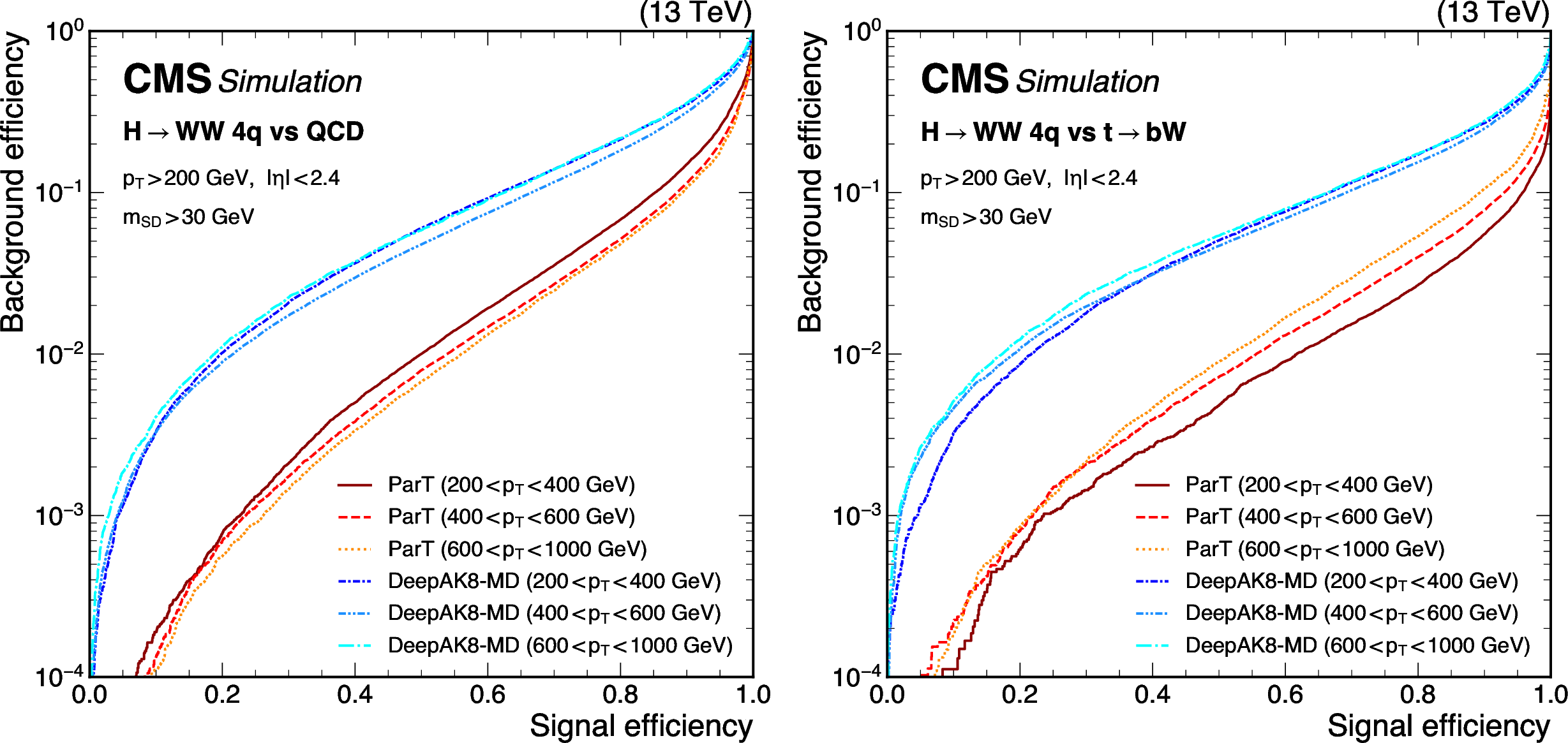
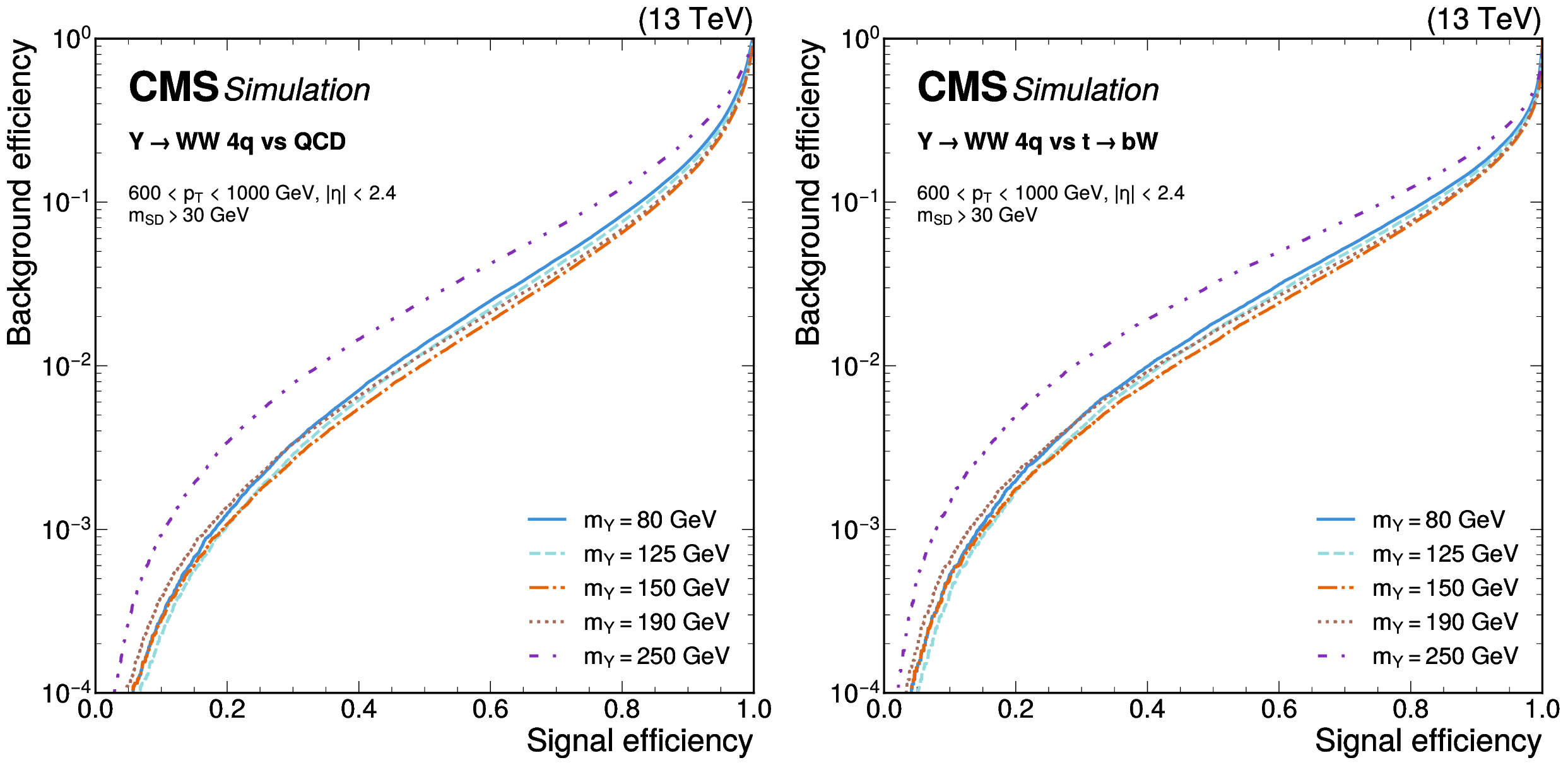
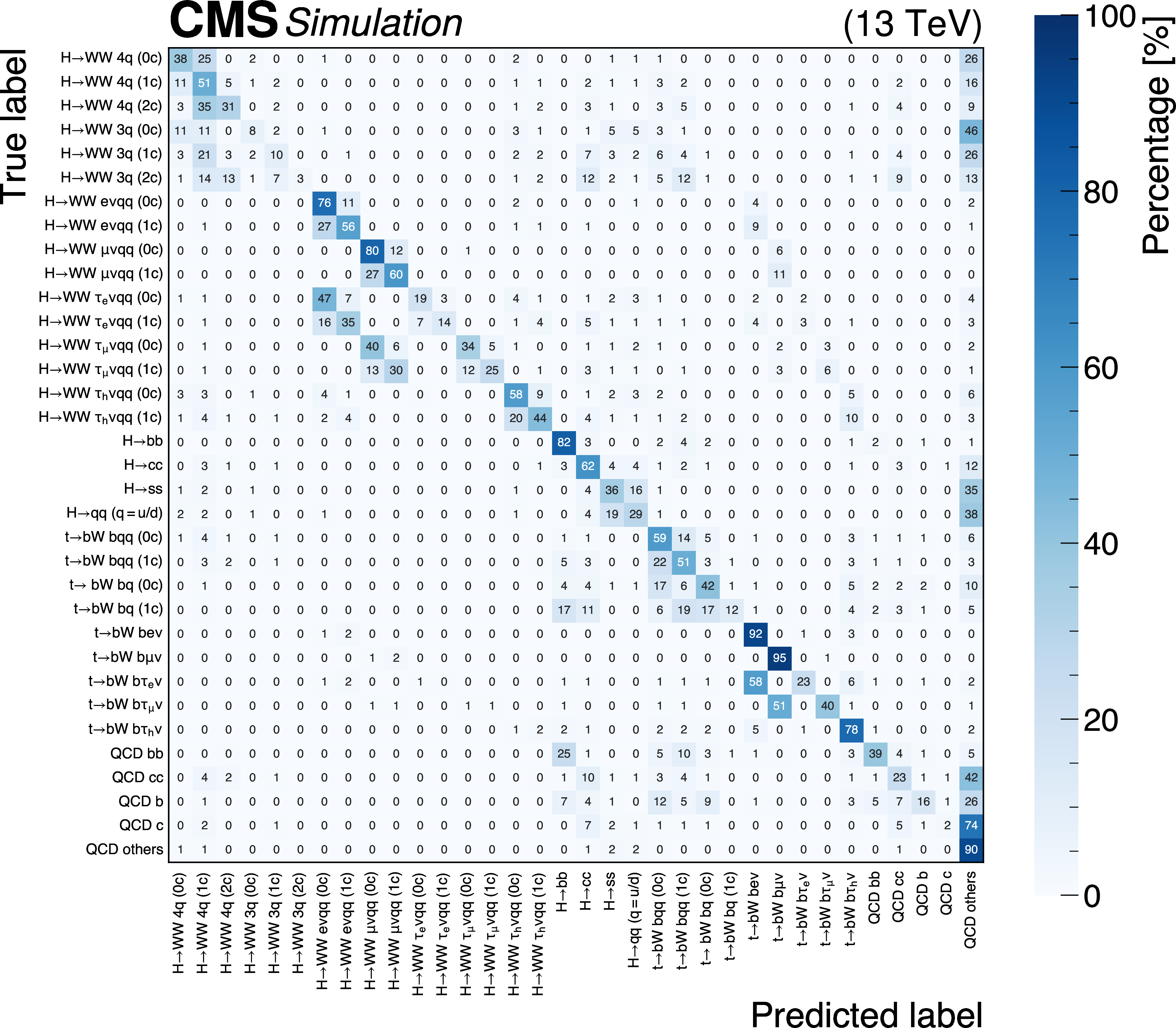
A novel deep neural network classifier, a “Particle transformer” (PaRT), is introduced for the identification of highly Lorentz-boosted resonances reconstructed as single, multipronged jets in measurements and searches performed by the CMS Collaboration at the CERN LHC. Based on a self-attention mechanism that allows the model to weigh the importance of different particles, PaRT is trained on a wide variety of topologies, notably demonstrating strong performance for the first time on jets originating from boosted Higgs boson decays to W bosons. The PaRT algorithm achieves a tagging efficiency of more than 50% for such jets at a background efficiency of 1%, while maintaining decorrelation from the jet mass. A calibration is performed in proton-proton collision data collected by CMS at a center-of-mass energy of 13 TeV, with a data set corresponding to a total luminosity of 138 fb-1. Data-to-simulation selection efficiency scale factors are measured to be in the 0.9-1.0 range, with relative uncertainties between 7 and 23%. The tagging capability of PaRT enhances the sensitivity of standard model measurements and searches for beyond-the-standard-model resonances decaying to hadronic diboson systems.
Page 14
CMS-JME-25-001
Page 15
CMS-JME-25-001
Page 16
CMS-JME-25-001
Page 17
CMS-JME-25-001
Page 18
A Scientific Human-Agent Reproduction Pipeline
J. Birk et al ( arXiv:2604.18752)
…. We present SHARP (Scientific Human-Agent Reproduction Pipeline), a structured framework for reproducing scientific analyses through human-agent collaboration. SHARP decomposes a reproduction task into discrete steps, which an AI agent executes autonomously using specialized subagents for code generation, testing, and quality assurance. At defined checkpoints, the researcher reviews progress, provides feedback, and steers the analysis - keeping the human firmly in control of scientific judgment while the agent handles implementation…..
Kitchen Sink Anomaly Detection
R. Das et al ( arXiv:2604.20965)
…. In this work, we address both limitations: we formulate a number of new simulated signal benchmarks, which we make publicly available in a format fully compatible with the LHCO R&D benchmark; and we explore a high-level, yet highly agnostic, observable set consisting of Energy Flow Polynomials in addition to the usual subjettiness variables. We evaluate this "kitchen sink" observable set for both an idealized anomaly detector and the CWoLa hunting task, along with three baseline observable sets (the Baseline LHC Olympics set, subjettiness observables, and Energy Flow Polynomials).…..
Masked-Token Prediction for Anomaly Detection at the Large Hadron Collider
A. Visive et al ( arXiv:2604.21035)
…. We present the first application of masked-token prediction, a technique from Large Language Models, to this problem. A lightweight encoder architecture trained solely on background events captures the structure of Standard Model (SM) physics; at inference, sequences deviating from this learned structure are flagged as anomalous…. We further show that the tokenization strategy significantly impacts performance: deep-learned tokenization via vector-quantized variational autoencoders (VQ-VAE) outperforms look-up table tokenization. .…..