Go Back
CMS(1)
Page 2
arXiv:2602.20477
CMS-B2G-24-006
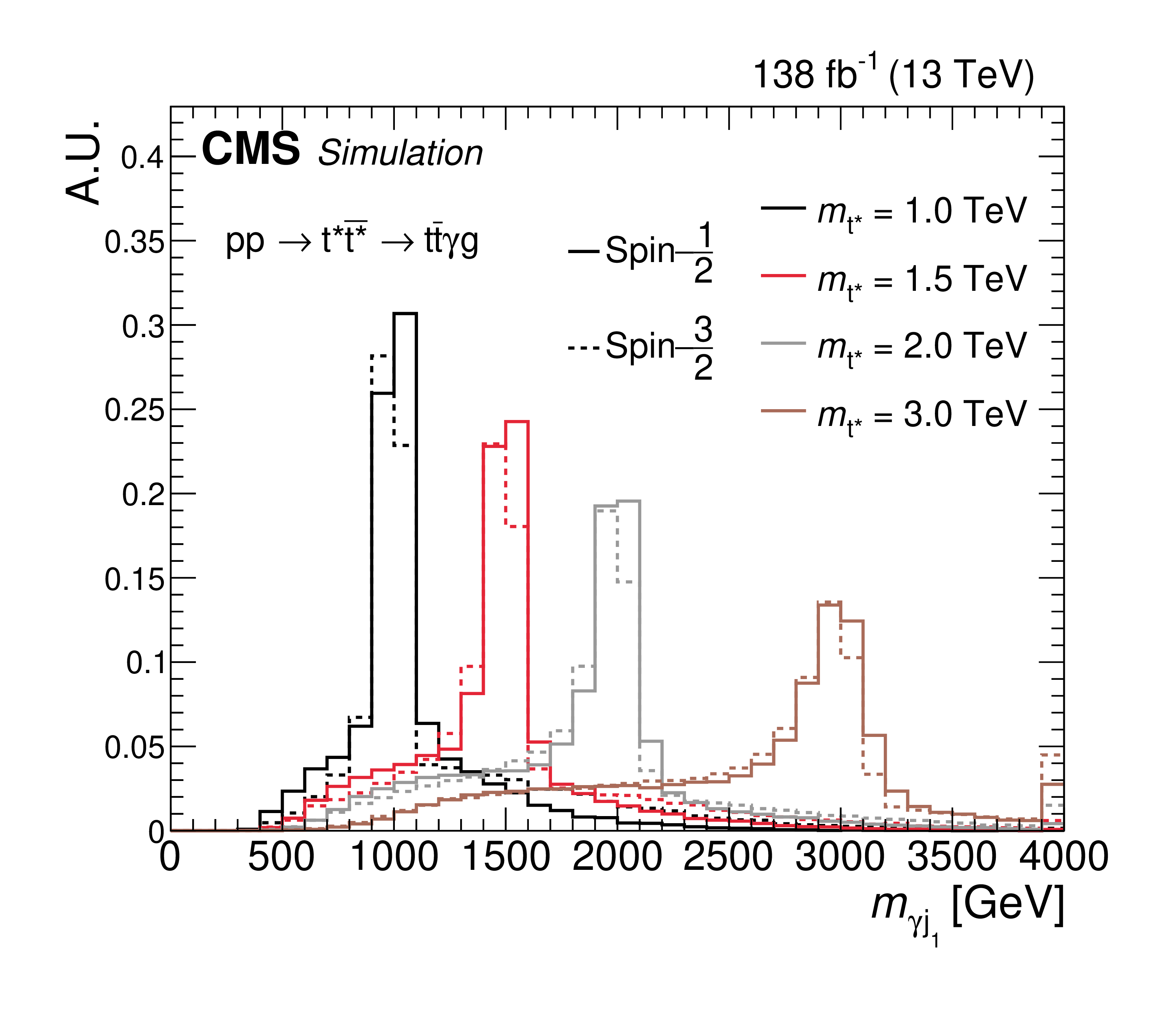
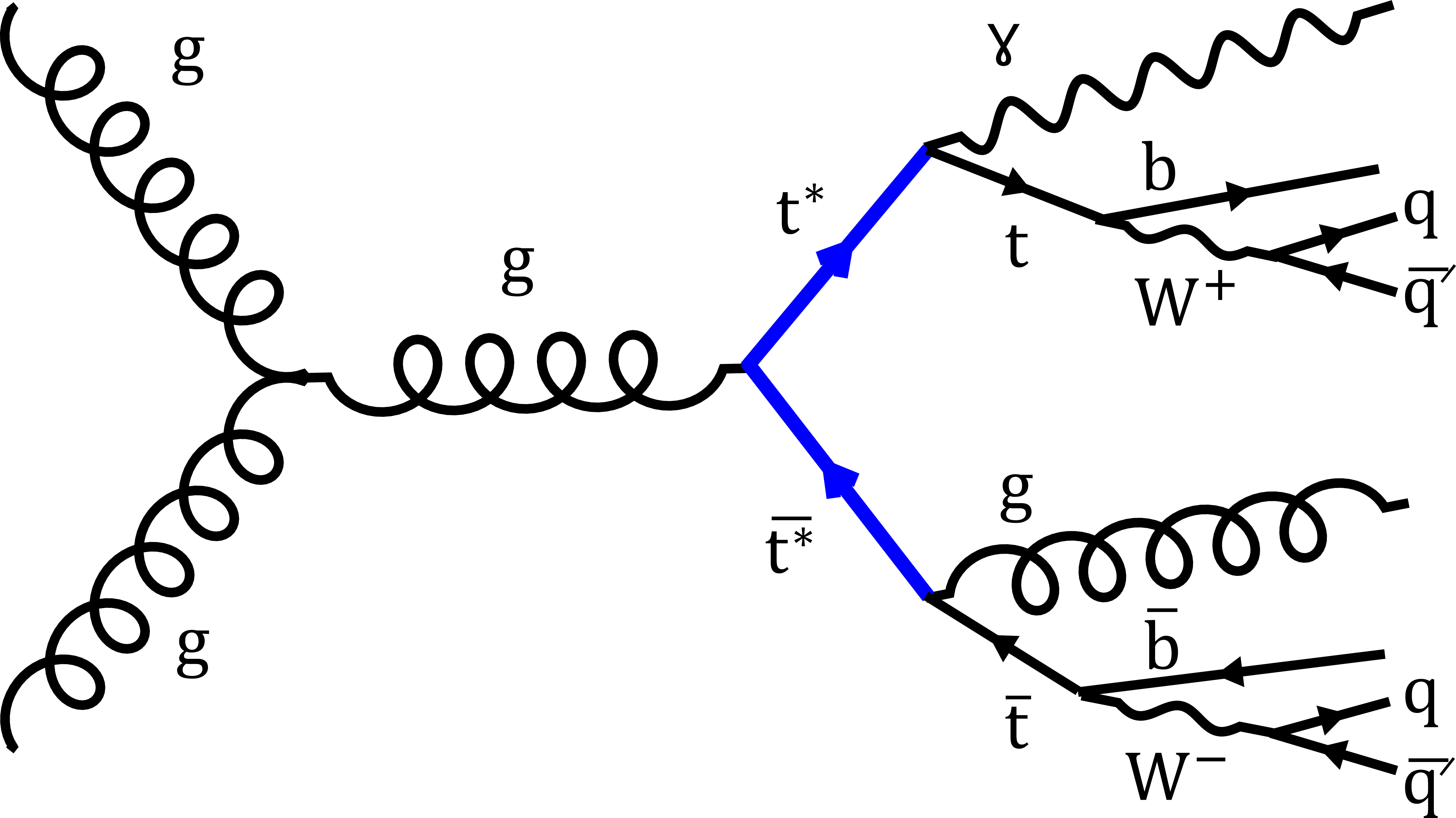
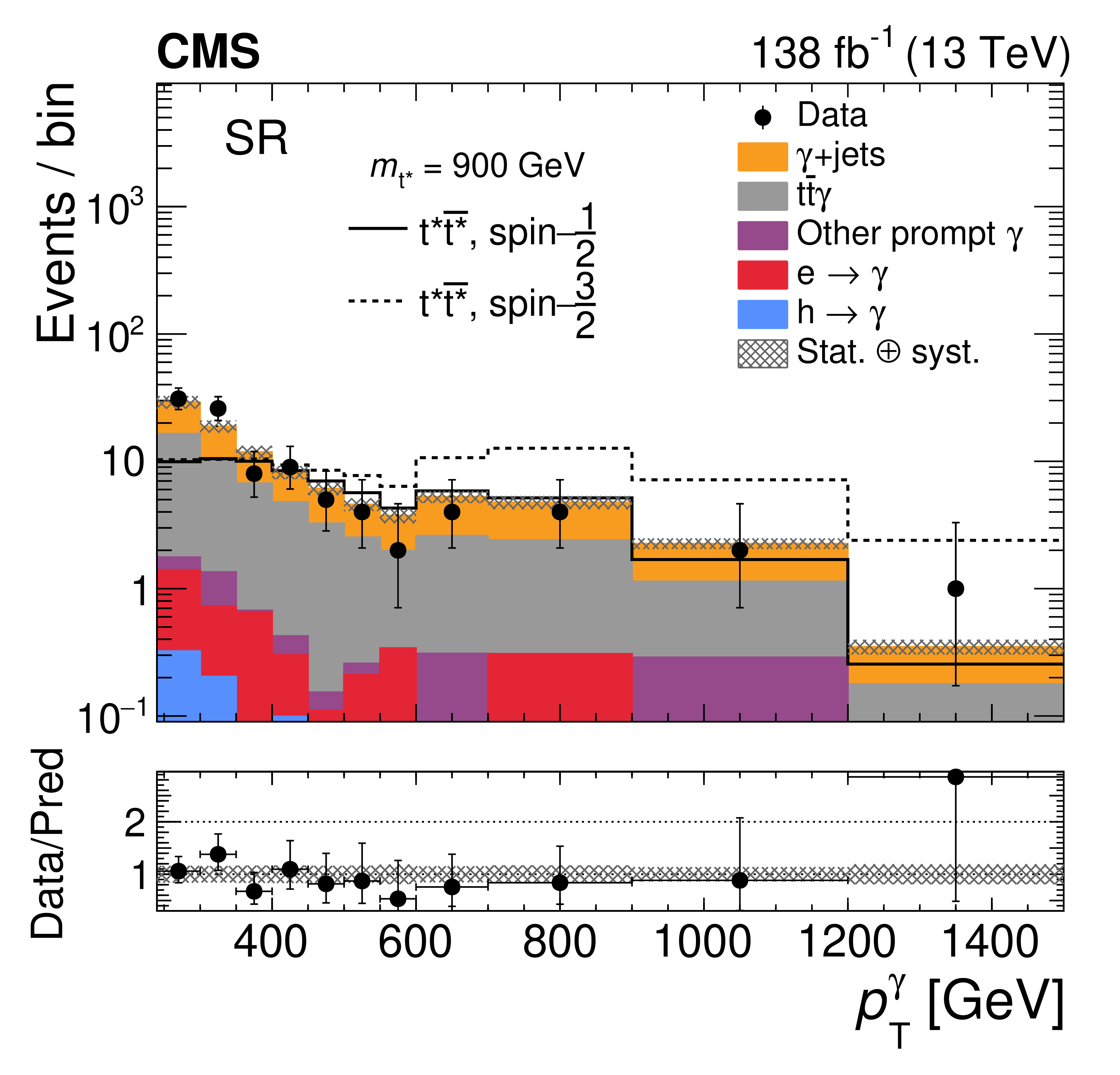
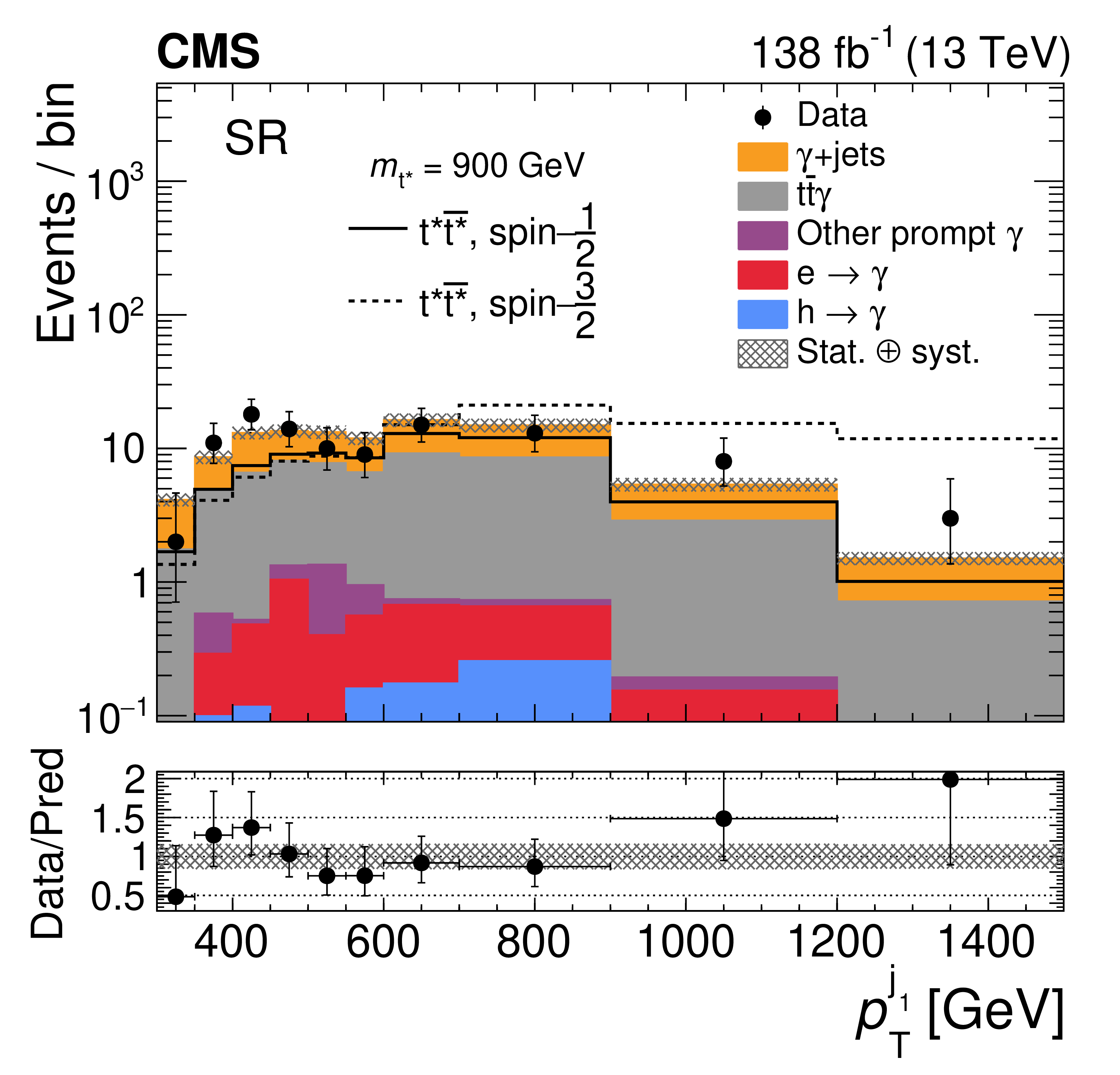
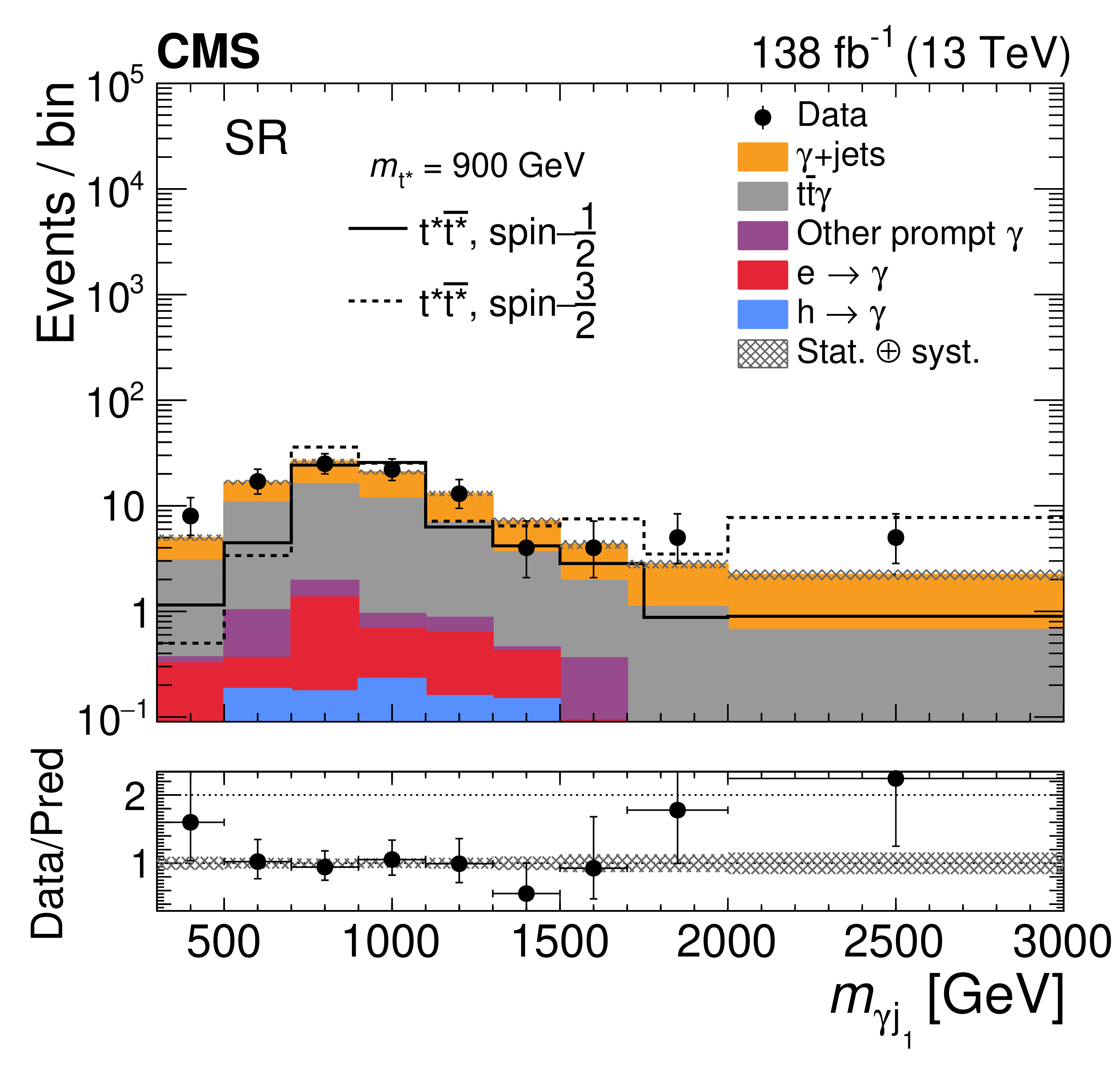
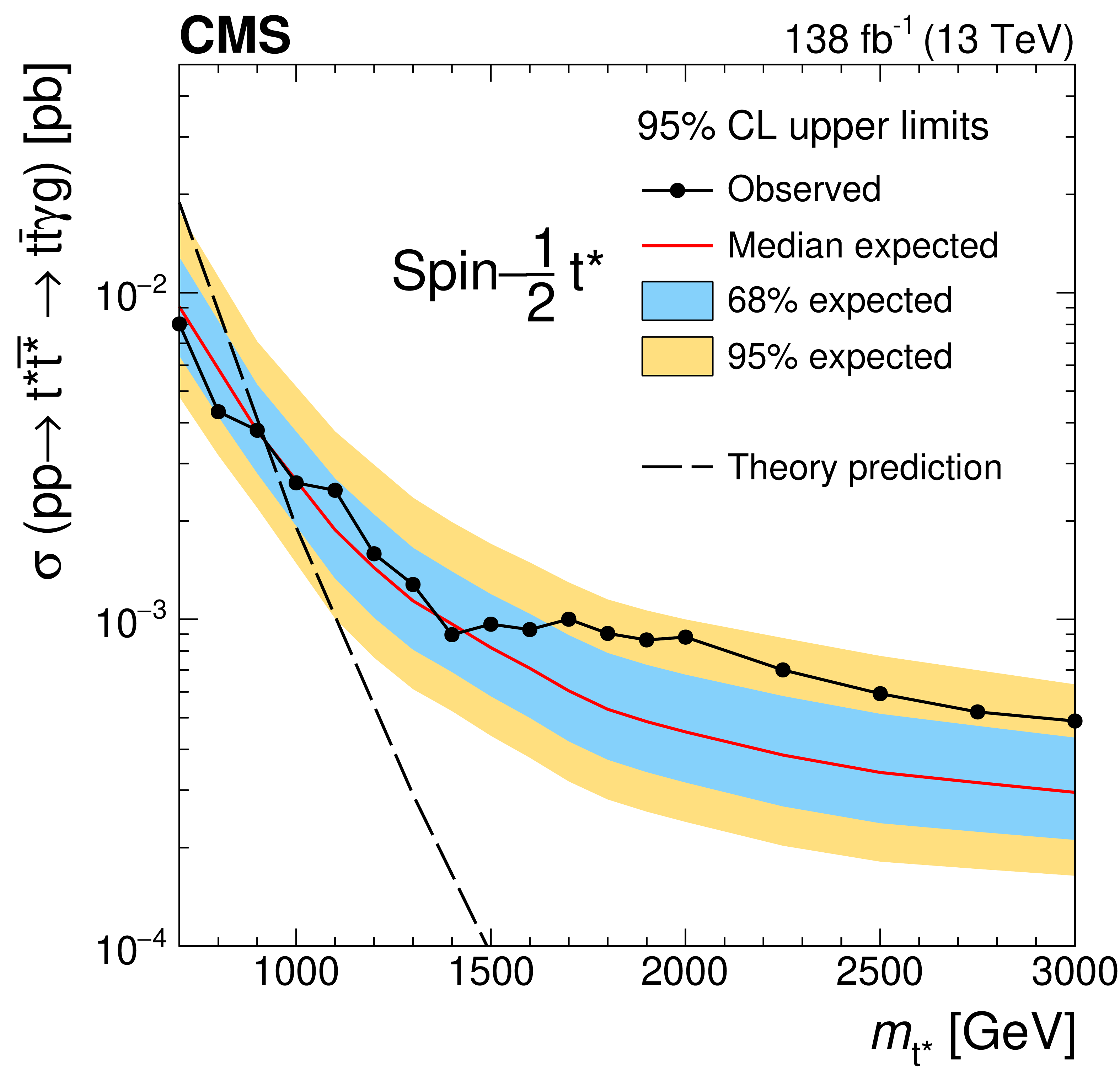
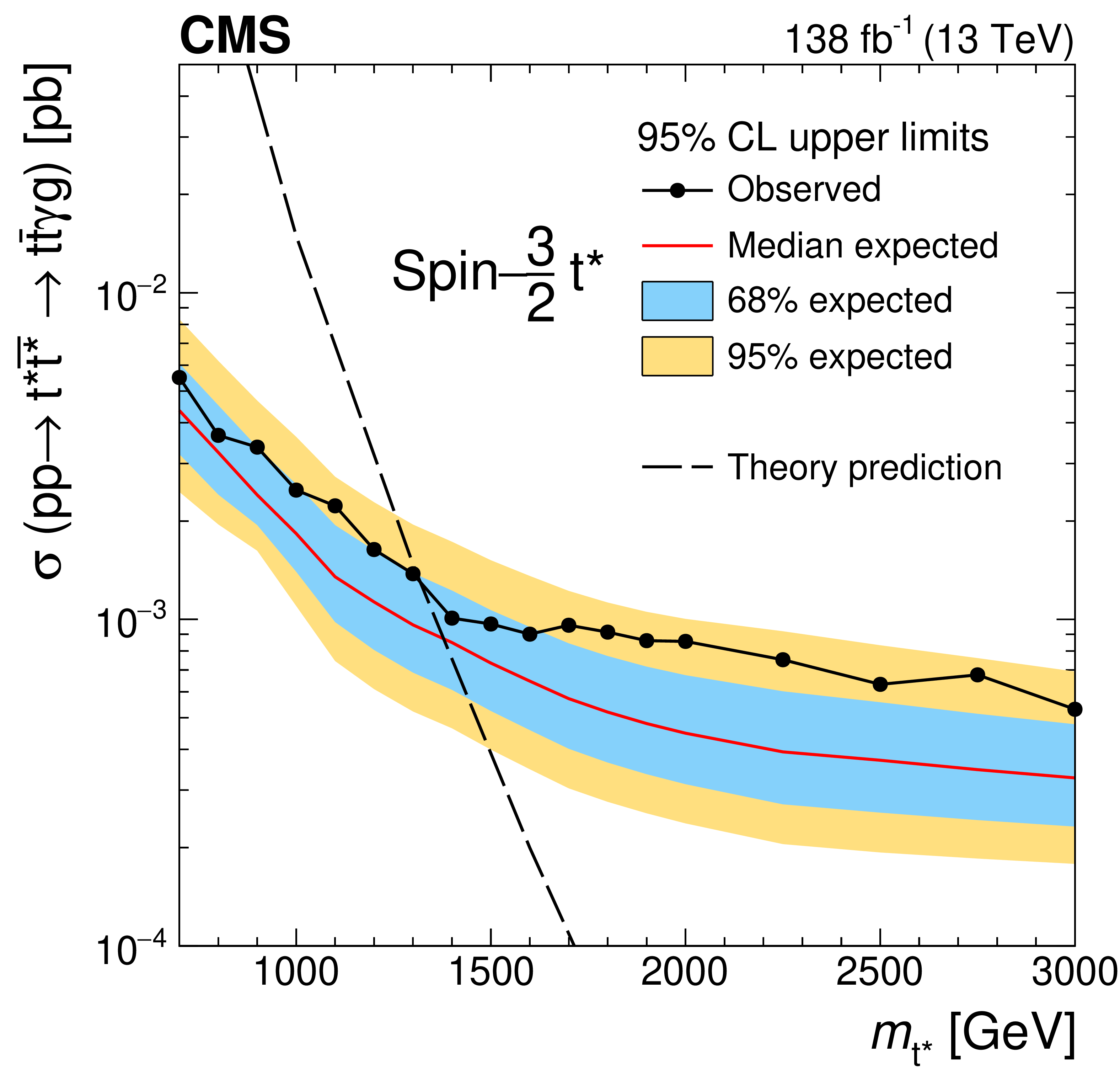
A search for the pair production of heavy spin-1/2 or spin-3/2 resonances (t*) in proton-proton collisions at √s= 13 TeV is presented. Data collected with the CMS detector at the CERN LHC from 2016 to 2018 corresponding to an integrated luminosity of 138 fb−1 are used. The analysis targets benchmark signal scenarios where one t* decays into a top quark (t) and a photon (γ), and the other into a t quark and a gluon (g), i.e., pp→ t* t* → t t γ g. All-hadronic final states from the t pair decay chain are selected using jet substructure techniques. The signal is probed as a function of the t* candidate mass, which is reconstructed using the photon and a top quark candidate jet. No significant deviation from the background-only hypothesis is found. Observed (expected) upper limits on the signal cross section at 95% confidence level are set, excluding masses of spin-1/2 t* particles below 930 (930) GeV and spin-3/2 t* particles below 1330 (1390) GeV. This analysis marks the first search for heavy resonances in the ttγg channel. Exploiting the high-energy photon to reduce the backgrounds, this search achieves sensitivity competitive with pp→ t* t* → t t g g searches for spin-1/2 t* despite the small expected t* → t γ branching fraction.
CMS(2)
Page 6
arXiv:2603.03250
CMS-HIG-24-014
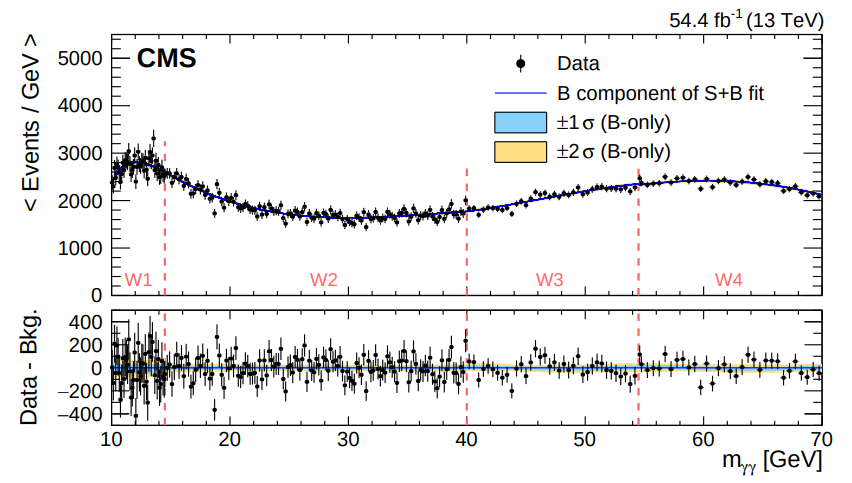
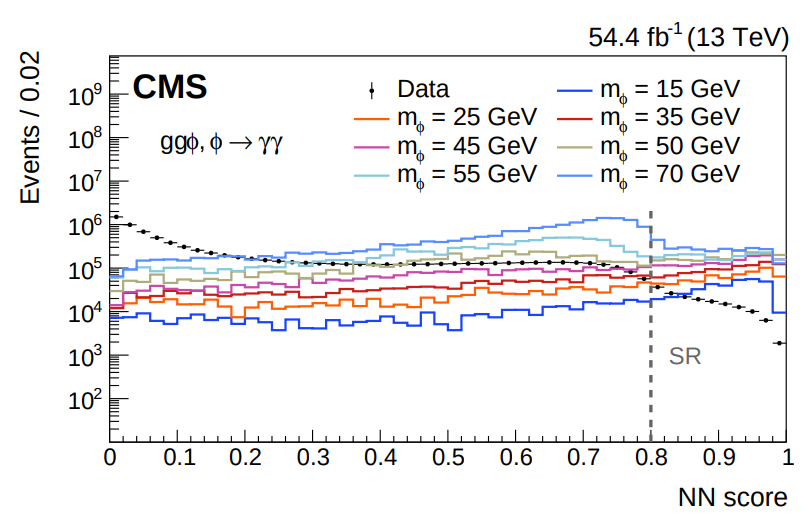
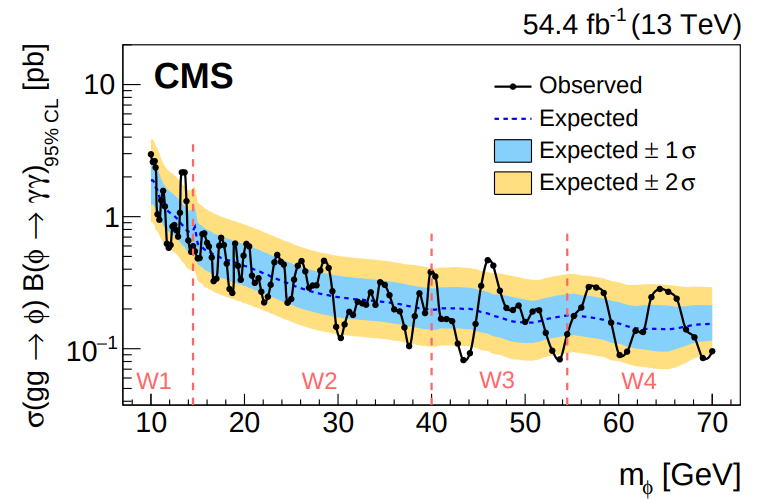
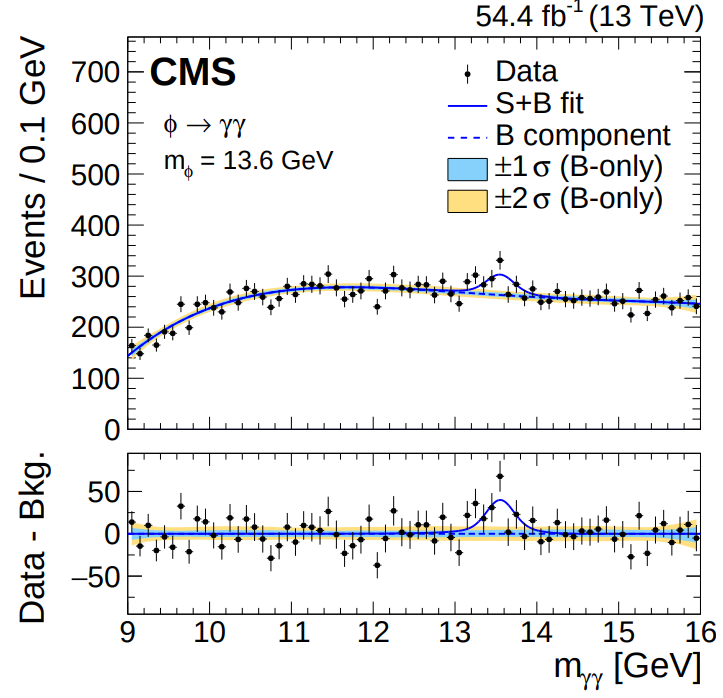
The existence of a new spin-zero particle with a mass below the electroweak scale is predicted by several theoretical models. Searches for resonant production of photon pairs at the LHC are able to probe these models. We present a search for a narrow resonance produced through gluon fusion that decays into a pair of photons with an invariant mass between 10 and 70 GeV, using a proton-proton collision data set from the CMS experiment. This data set, corresponding to an integrated luminosity of 54.4 fb-1, was recorded in 2018 at a center-of-mass energy of 13 TeV using a newly introduced diphoton trigger that enabled exploration of the low-mass diphoton spectrum. No significant excess above the expected background is observed. Upper limits are set on the product of the gluon fusion production cross section and the branching fraction of the diphoton decay of a narrow resonance. An interpretation of these limits within an effective field theory framework for axion-like particles is also provided.
Expt(1)
Page 9
arXiv:2603.01991
ATLAS Collab.
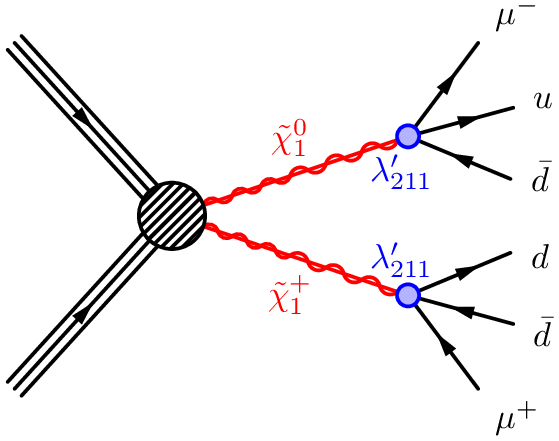
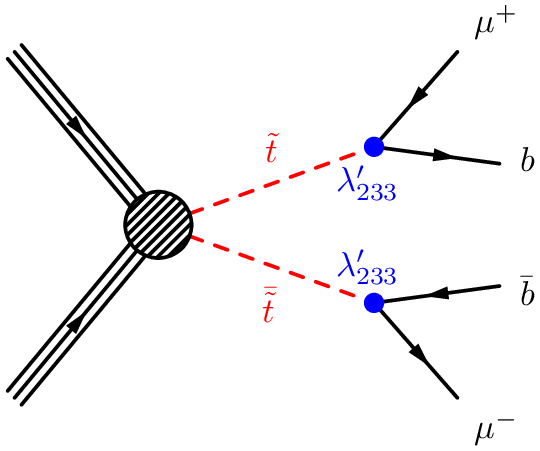
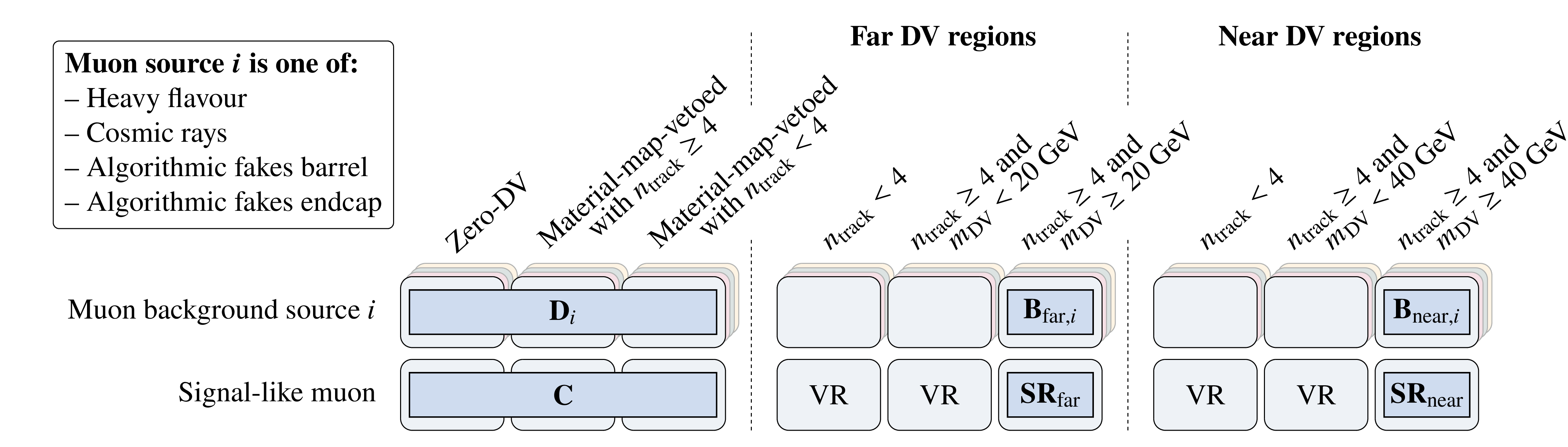
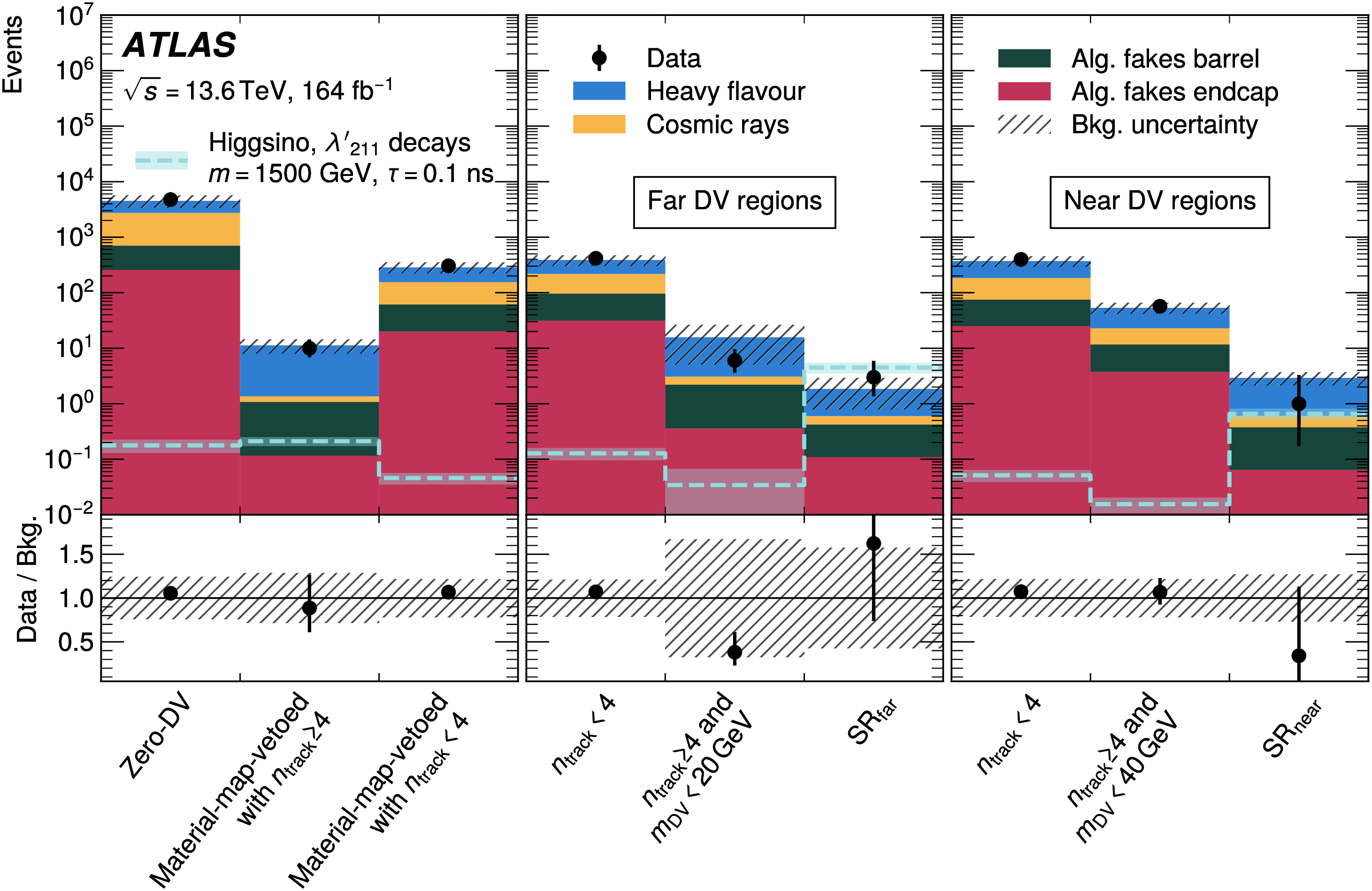
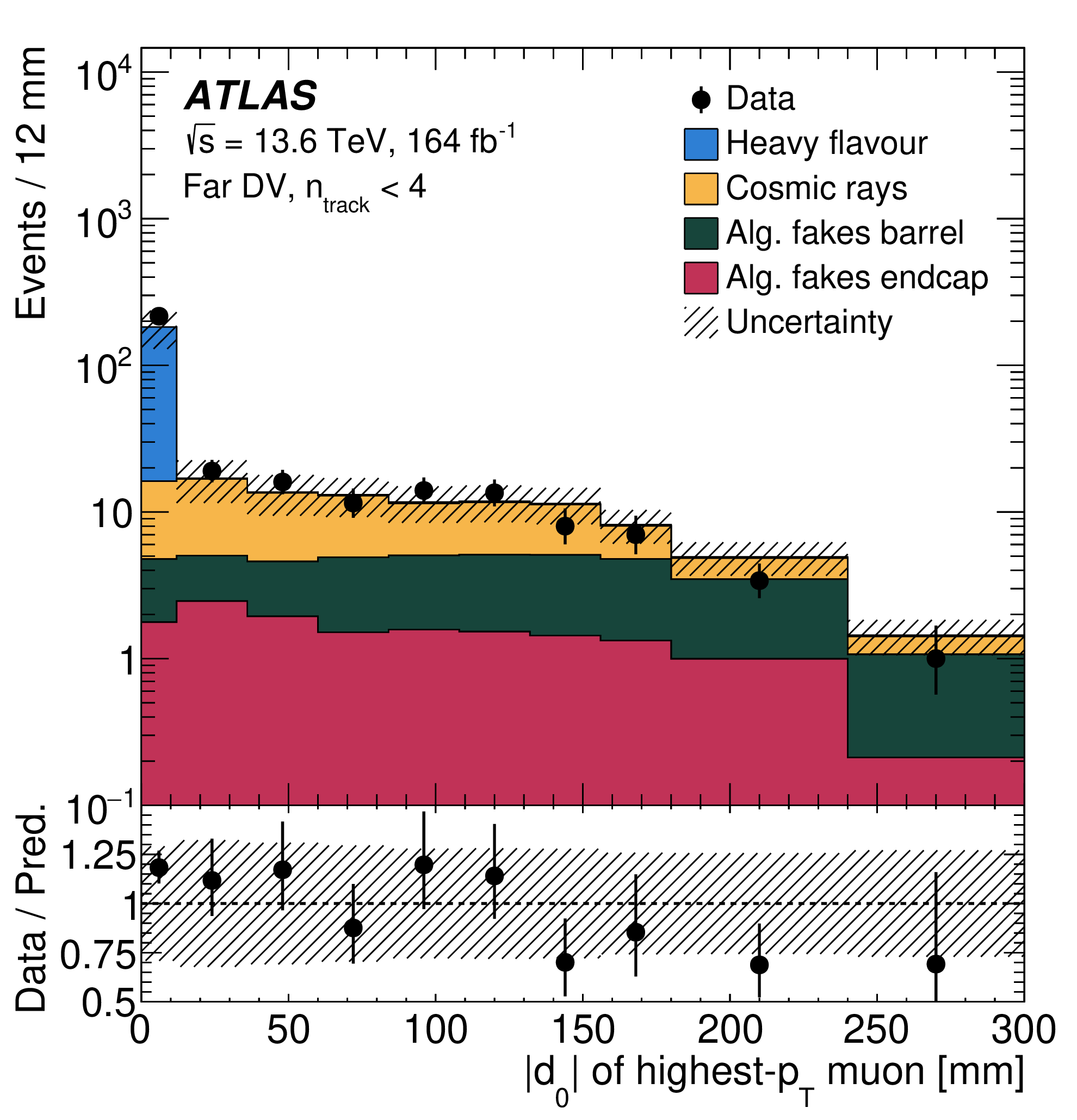
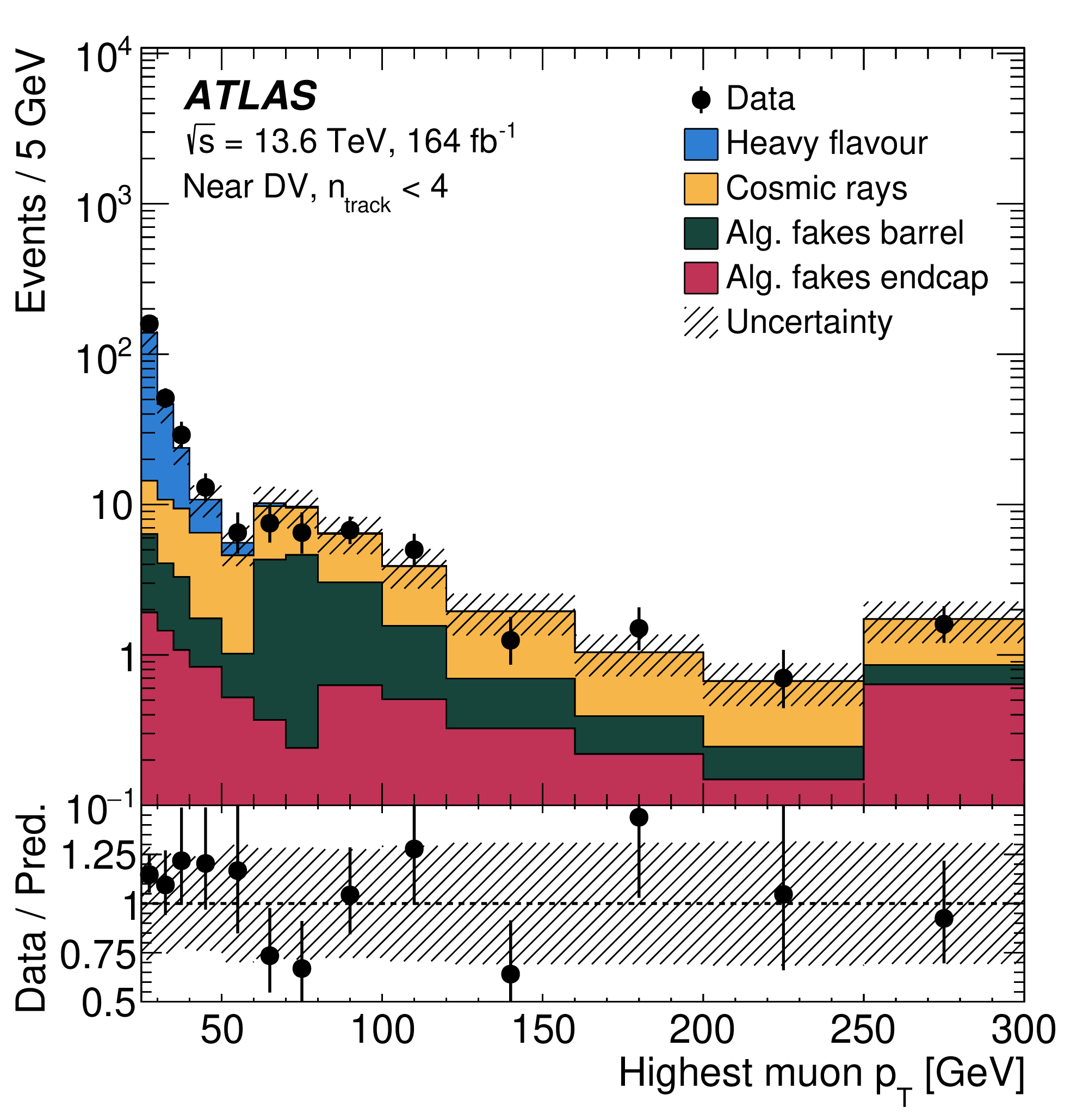
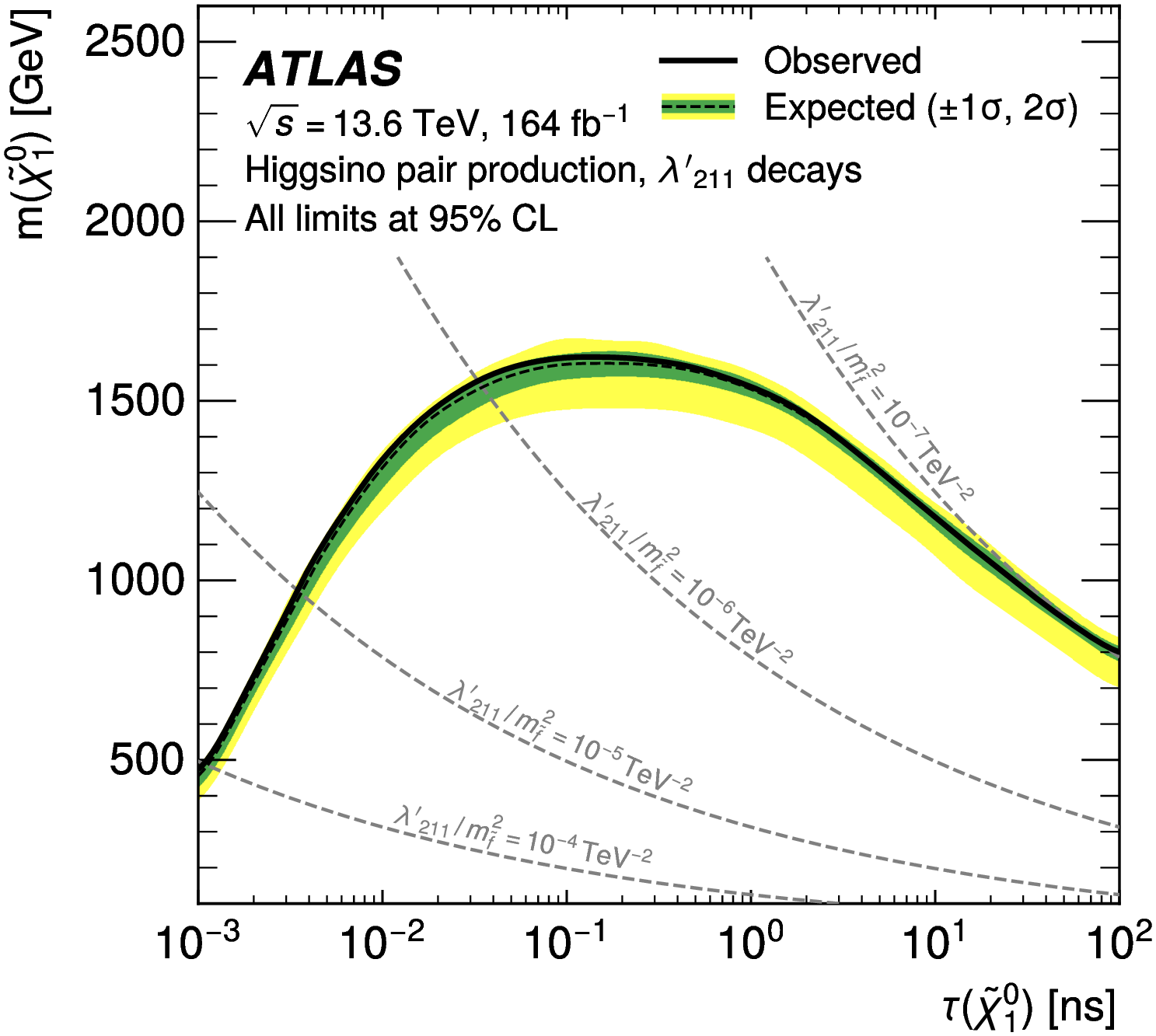
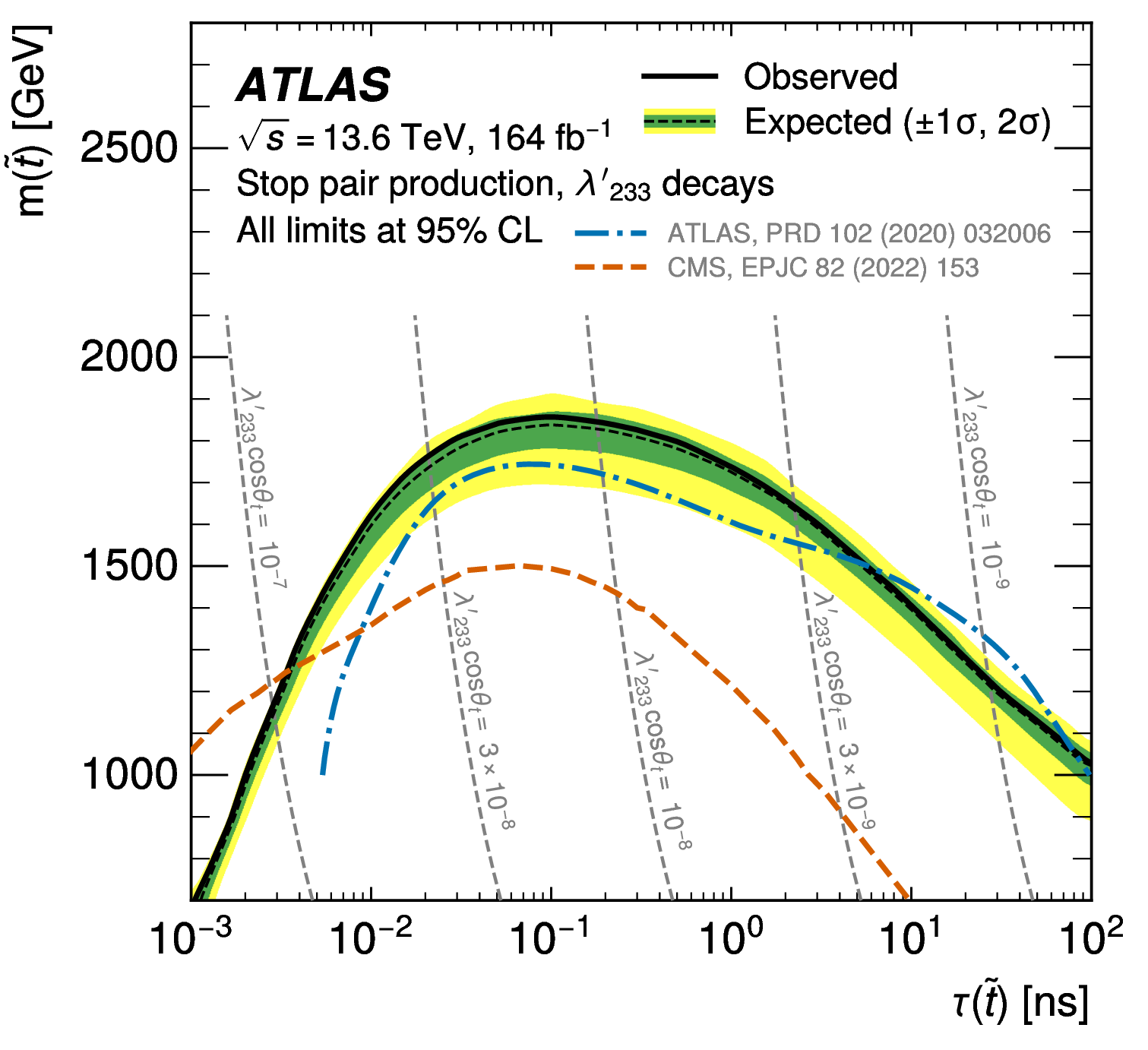
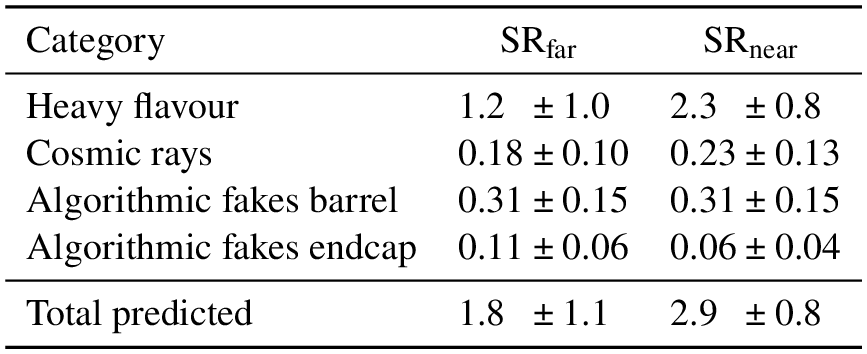
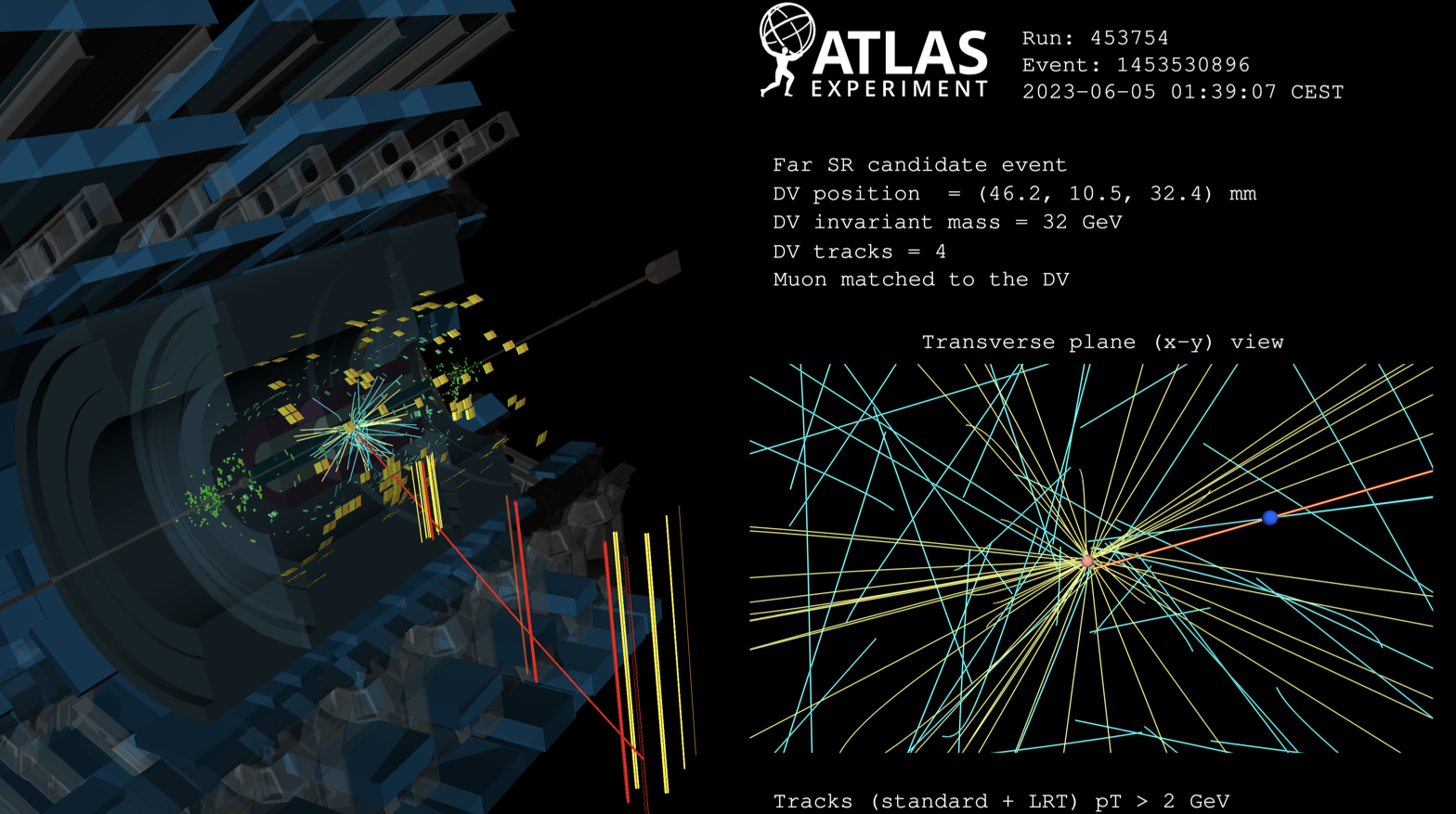
A search is presented for massive long-lived particles in events featuring at least one displaced vertex and at least one displaced muon, using proton-proton collision data collected by the ATLAS detector at the Large Hadron Collider from 2022 to 2024 at a centre-of-mass energy of 13.6 TeV. The data sample corresponds to an integrated luminosity of 164 fb-1. The analysis targets scenarios in which long-lived particles decay inside the ATLAS inner detector, resulting in a topology of at least one massive, displaced vertex (DV) with multiple associated tracks, and at least one muon with a large transverse impact parameter relative to the primary interaction point. The muon is not required to be associated with the DV. Two signal regions are defined by the transverse distance of the reconstructed DV from the interaction point. Background contributions are estimated by using fully data-driven techniques. No significant excess above the expected background is observed. Upper limits at 95% confidence level are set on the visible cross-section and on the production cross-sections of several benchmark models of -parity-violating supersymmetry.
The event features a displaced vertex (indicated in blue in the transverse plane view) reconstructed from four tracks, located at a transverse distance of about 47 mm from the primary vertex (pink), and with an invariant mass of about 32 GeV. The event has an additional muon (red) candidate, which has a transverse impact parameter of about 3 mm, and that is matched to the displaced vertex. Only primary (yellow) and large-impact-parameter (cyan) tracks with a pT of at least 2 GeV are shown.
Page 14
 Go Back