CMS(1)
Page 2
arXiv:2602.17509
CMS-SMP-22-004
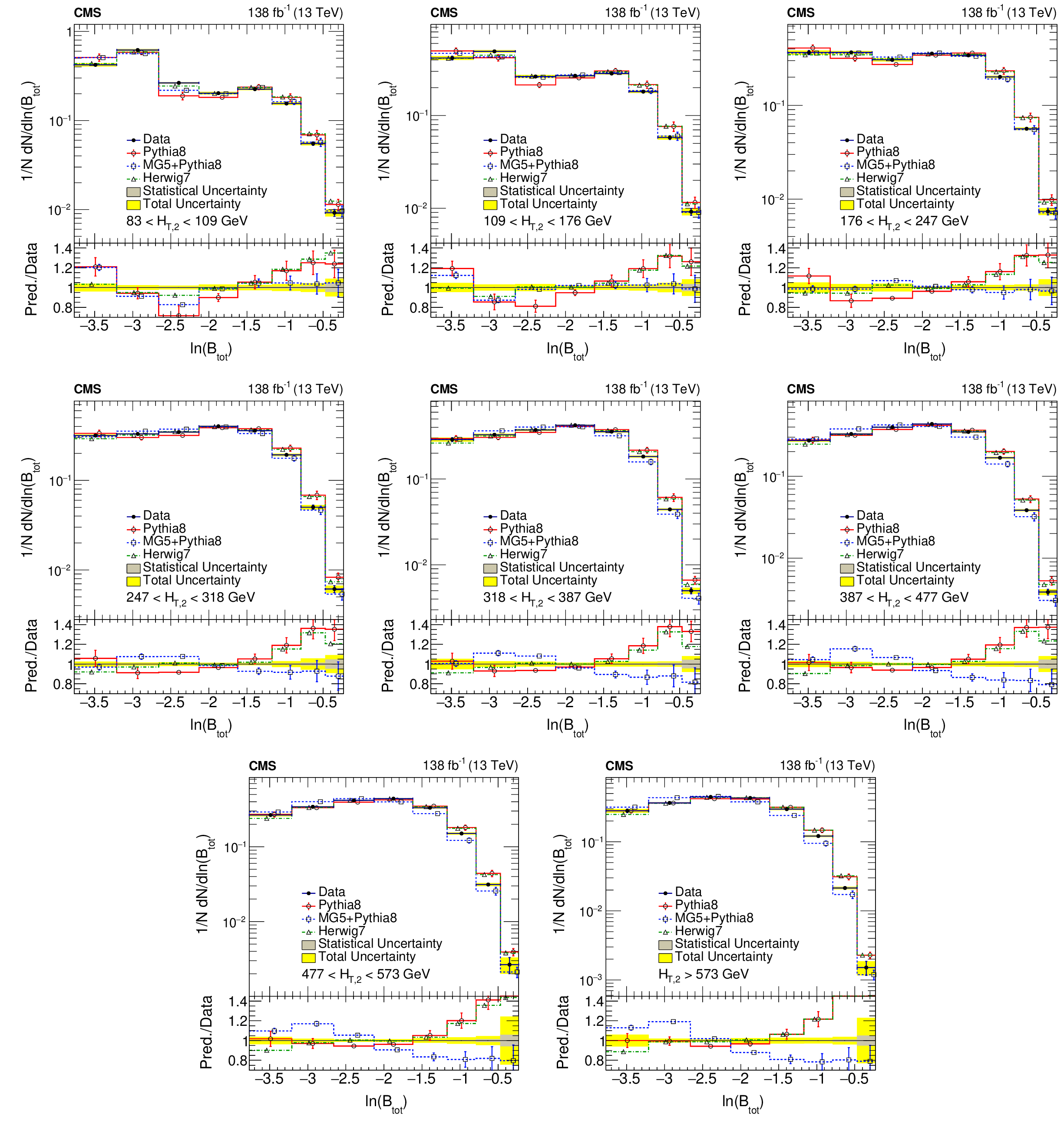
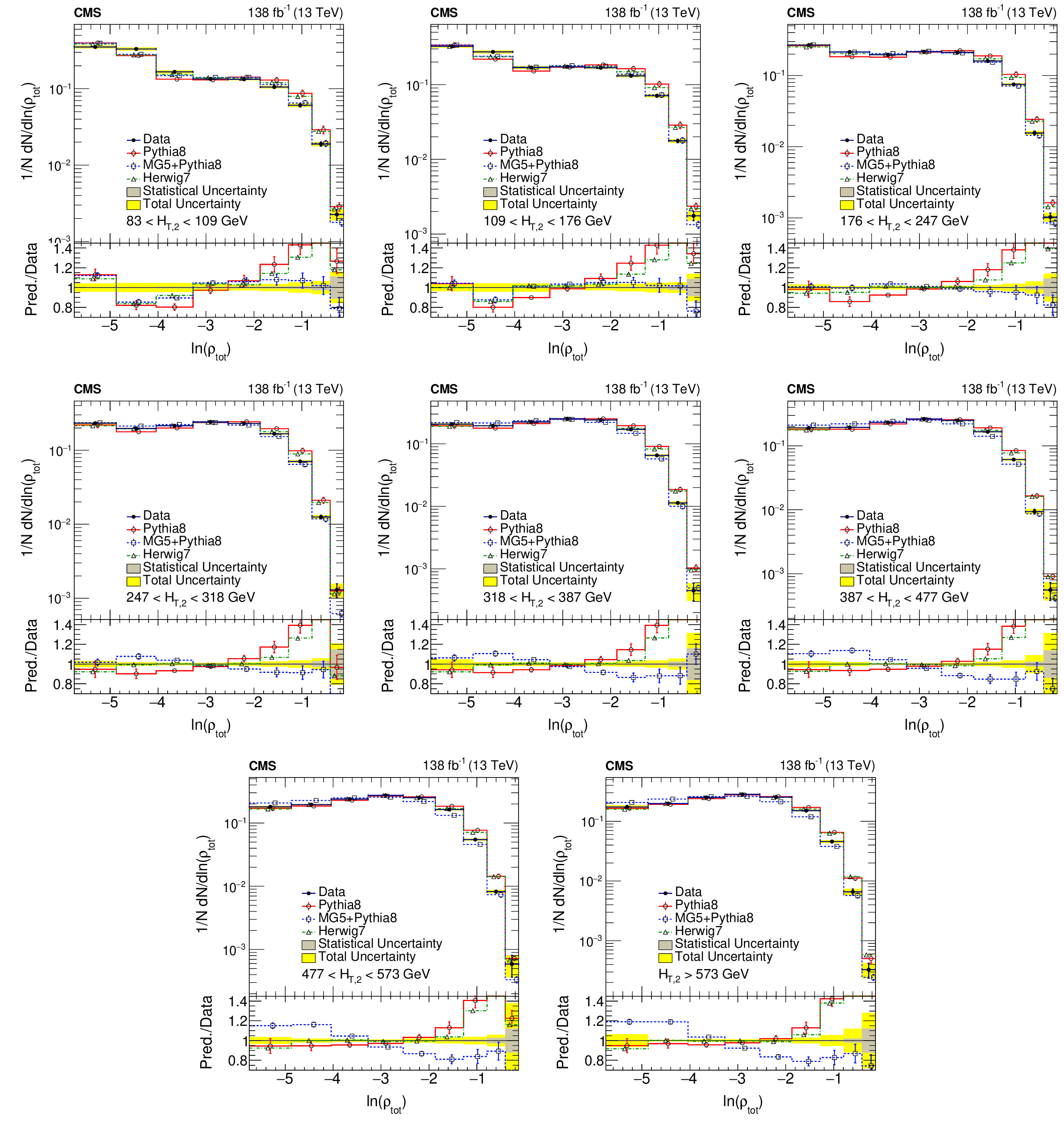
Event shape variables, constructed from the four-momenta of the final-state objects in an event, are sensitive to the predictions of quantum chromodynamics in multijet production. A measurement of five event shape variables is presented, using proton-proton collision data collected at a centre-of-mass energy of 13 TeV with the CMS detector during 2016-2018, corresponding to an integrated luminosity of 138 fb-1. The variables are evaluated using the charged particles inside jets. After correcting for detector effects, their distributions are compared with the results from the predictions from a number of models for multijet production. Overall, there is general agreement between several theoretical predictions and the data.
ML(2)
Page 10
arXiv:2602.15039
Justin Hill, Hong Joo Ryoo
We present GRACE, a simulation-native agent for autonomous experimental design in high-energy and nuclear physics. Given multimodal input in the form of a natural-language prompt or a published experimental paper, the agent extracts a structured representation of the experiment, constructs a runnable toy simulation, and autonomously explores design modifications using first-principles Monte Carlo methods. Unlike agentic systems focused on operational control or execution of predefined procedures, GRACE addresses the upstream problem of experimental design: proposing non-obvious modifications to detector geometry, materials, and configurations that improve physics performance under physical and practical constraints. The agent evaluates candidate designs through repeated simulation, physics-motivated utility functions, and budget-aware escalation from fast parametric models to full Geant4 simulations, while maintaining strict reproducibility and provenance tracking. We demonstrate the framework on historical experimental setups, showing that the agent can identify optimization directions that align with known upgrade priorities, using only baseline simulation inputs. We also conducted a benchmark in which the agent identified the setup and proposed improvements from a suite of natural language prompts, with some supplied with a relevant physics research paper, of varying high energy physics (HEP) problem settings. This work establishes experimental design as a constrained search problem under physical law and introduces a new benchmark for autonomous, simulation-driven scientific reasoning in complex instruments.